
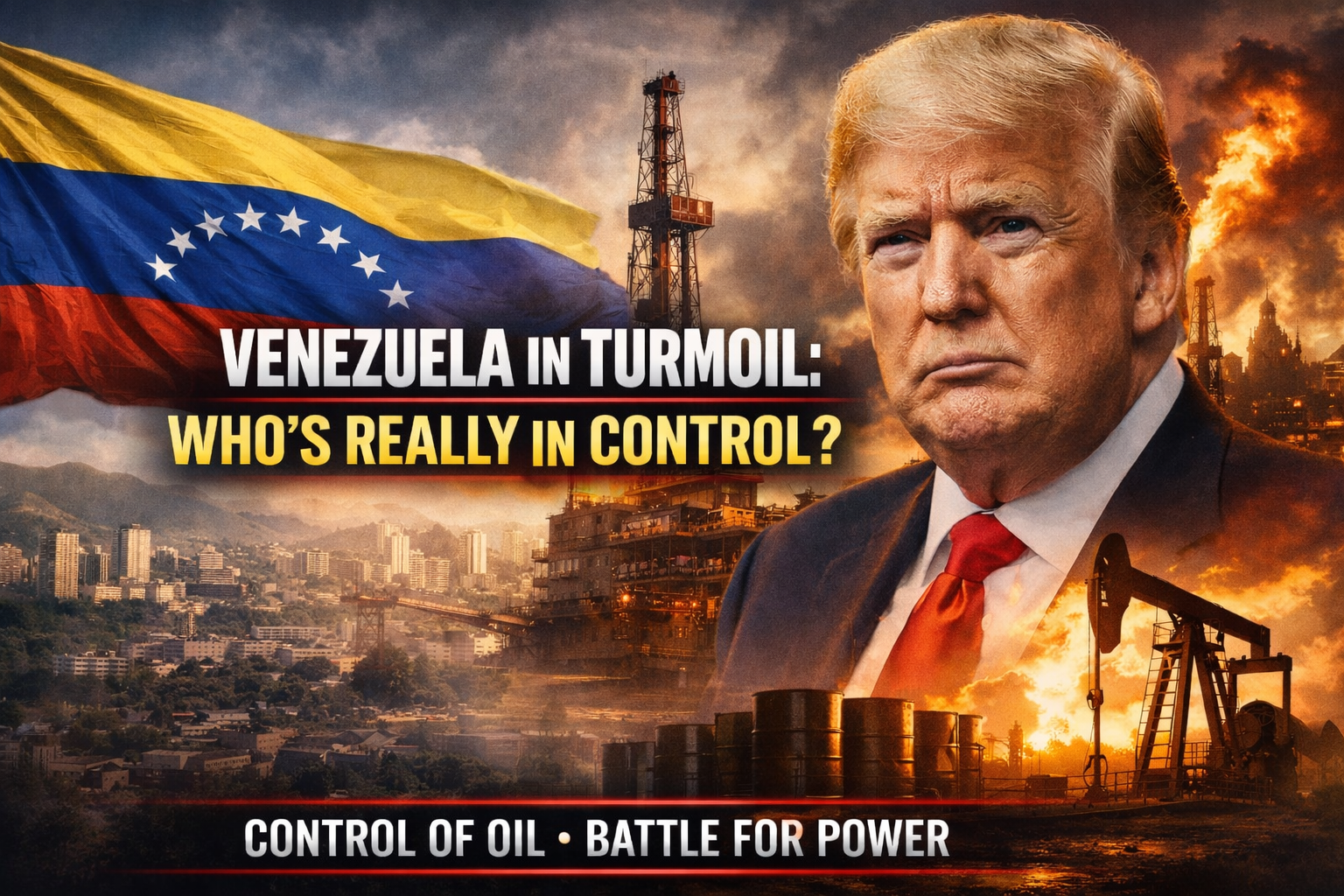
Venezuela’s political landscape changed overnight after a bold US military operation led to the capture of President Nicolás Maduro and First Lady Cilia Flores. The raid, ordered by former US President Donald Trump, stunned Latin America and triggered global debate. Within hours, Maduro was removed from power and taken to the United States to face serious criminal charges, including alleged drug trafficking and weapons offences. Both have denied all accusations. Trump declared that the US would oversee Venezuela until a stable political transition could be arranged, adding that Washington would control the country’s oil sales.
Who Is Running Venezuela Now
Despite Trump’s strong claims, the day-to-day control of Venezuela remains in local hands. Delcy Rodríguez, Maduro’s former vice-president and close ally, was sworn in as interim president by the National Assembly. Under the constitution, she can temporarily lead the country while decisions about elections are made. Rodríguez has used strong language against the US action, calling it illegal, but at the same time she has worked carefully with Washington to avoid further conflict. Her government has released some political prisoners, reopened talks with US officials, and started economic reforms.
While opposition leaders hoped this moment would bring immediate change, Rodríguez still has the backing of Maduro’s ruling party and the military, which keeps her position secure for now.
Trump’s Big Oil Strategy
The real focus of Trump’s plan appears to be oil. Venezuela holds the largest proven oil reserves in the world, yet years of mismanagement, corruption and sanctions have reduced production sharply. Trump says American companies can rebuild the sector with huge investments and restore output to previous levels. His administration wants the US to supervise oil exports and place revenues into monitored accounts, claiming the money will benefit Venezuelan citizens and help stabilize the country.
Trump argues that increased Venezuelan production would also lower global fuel prices and strengthen US energy security. However, legal experts question whether the US has the right to control another nation’s resources. Many countries, including Russia, China and several Latin American governments, have criticized the move as interference.
What Happens Next
Venezuela now stands at a crossroads. Rodríguez holds political control at home, while Trump pushes economic control from abroad. Elections, international pressure, and oil negotiations will decide whether the country regains full independence or remains under heavy US influence.
Will this intervention bring stability — or create another long conflict over power and oil?