
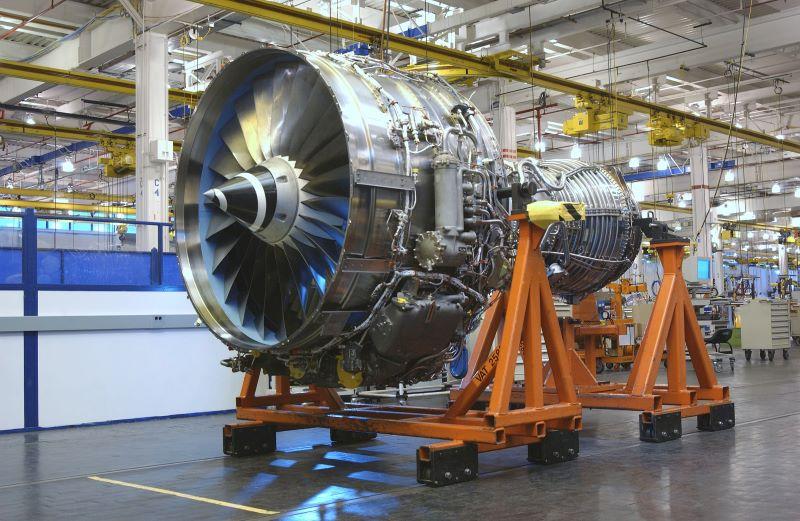
FTAI Aviation has started a new venture entitled FTAI Power, which will repurpose retired jet engines as electric generators in artificial intelligence service centres. The establishment of this new business venture underscores a considerable global growth in demand for energy to support ongoing expansion of artificial intelligence infrastructure.
From Jet Engines to Electricity Generators
The CFM56 aircraft engine has been chosen for repurposing by the company because it is one of the most widely used jet engines in the world and powers many of today’s most popular airplanes, including the Boeing 737 and Airbus A320. Since many older aircraft will be retired in coming years, numerous CFM56 engines will become available for repurposing after they are removed from the aircraft, even though they still have years remaining for continued service.
The company will transform each of these engines into an aeroderivative gas turbine that can be used to provide electricity to larger Data Centers. Each engine will be converted to provide approximately 25 megawatts of power; this amount of energy is sufficient for powering AI servers that require high levels of energy consumption.
Faster Power for a Growing AI Market
Data-centre developers are facing one of their greatest challenges with slow grid connections in these regions. In many areas, it can take years for a company to receive the approvals and develop the networks for new power supplies. FTAI is providing a solution that provides a quicker means to address this issue.
Due to the compact design and modular nature of FTAI’s aircraft-derived turbine technology, companies will be able to use these turbines in less time than using current industrial turbines. FTAI expects to produce its first turbines in 2026 and is anticipating that its scale will be greater than 100 units per year, which would create an annual potential of over 2.5 gigawatts of capacity.
Strong Supply and Vertical Integration
FTAI’s strategy is based upon both scale and ownership. Globally, there have been over 22,000 CFM56 engines produced and currently, FTAI has either an ownership stake or access rights to over 1,000 engines, which gives it an advantage in terms of supply chain and in terms of purchasing power. FTAI also operates more than one million square feet of maintenance facilities across the globe and has established several long-term supply contracts for parts with various manufacturers.
Engines that are of no use for flight because they did not qualify due to fuel efficiency or emissions regulations can still be used as reliable stationary power sources; thus, they are being adapted to operate under more stable conditions.
A Proven Trend with Investment Momentum
FTAI is not the only firm in the aerospace-to-energy conversion arena. There are also several other firms such as ProEnergy who are currently converting retired Boeing 747 engines into power generation units that output approximately 48 megawatts. ProEnergy has purportedly sold more than one gigawatt of output to numerous data centre clients.
With the increasing number of companies converting aircraft engines into electric generating sources, there is an obvious trend indicating that the aerospace and energy industries will converge over time. As a result of the rapid growth of artificial intelligence, aircraft engines no longer serve as merely aviation assets; instead, they will serve as reliable, long-term, sustainable energy sources for one of the world’s most fertile business sectors.