
When a Credit Report Can Hurt Your Chances of Being Hired

A background check can be the deciding factor in whether someone gets hired or not, and many people looking for jobs don’t realise this. Employers can use different areas of a person’s background when looking at applicants’ backgrounds, but today less than half of all employers are allowed to check a candidate’s credit report as part of a background check. Employers are no longer permitted to view an applicant’s credit report because it can lead to unfair judgements based on financial problems. New Laws Limiting Credit Checks Recently, New York has become the 11th state to pass a law that prohibits most employers from using credit reports when they make hiring or promotion decisions. The effective date of this new law is April 18, 2023. In addition to New York, other states that have laws prohibiting this practice include California, Colorado, Connecticut, Hawaii, Illinois, Maryland, Nevada, Oregon, Vermont and Washington. Additionally, many cities and counties have passed local laws that restrict this practice. What makes New York’s law unique is that it has a much broader application. Individuals that reside in New York but apply for jobs in other states will continue to be protected under this new law. Because of the increasing number of restrictions against using credit reports, many national employers are choosing to stop using them altogether, even in states that still allow this practice. When Credit Reports Are Still Used Except for the above, employers may be prohibited from using a person’s credit report in an employment decision when the person is applying for a job or if the applicant already has a job. However, employers can still review credit reports of those applying for specific jobs. These job categories generally consist of government, law enforcement, national security, and any position requiring the handling of a company’s money or any other sensitive information. In banks and financial institutions, credit reports can only be used when applying for certain regulated positions. The premise for the risk associated with individuals under financial duress is that they may be at a higher risk for committing fraud or theft against the company. Although this is not true in every instance, it continues to be the basis for employers allowing background checks, including credit reports, for specific positions. What Employers Look For Credit issues alone aren’t typically a dealbreaker for employers. Rather, the employer will assess how serious or recent the credit issue is to determine whether to proceed with the applicant. Examples of serious credit issues include long-term overdue bills, being in collection accounts, and debts written off as bad debt, especially for positions involving financial accountability. On the contrary, an employer should typically disregard both medical debt and student loans as reasons for not hiring an applicant, unless the debts or loans would affect the applicant’s ability to perform the job functions related to those debts or loans. Furthermore, employers have a responsibility to explain to applicants the reasons why credit history is an important consideration in relation to the position they are applying for and not to make unfair or discriminatory employment decisions based upon an applicant’s credit history. How Job Seekers Can Protect Themselves If an employer is going to run a background check or pull a credit report, they must ask you for written consent, which is generally when you have received a job offer. It’s wise to review your credit reports regularly on your own so that you can identify any errors. An honest explanation of your situation is usually the most helpful if there are legitimate issues on your report. The more clearly you describe the circumstances, the less likely it is that there will be a misunderstanding about your situation. You have the right, under the law, to obtain a copy of your report and dispute any errors prior to the final hiring decision being completed.
Starmer Tells Trump Tariffs Over Greenland Are Wrong as Tensions Rise With US Allies
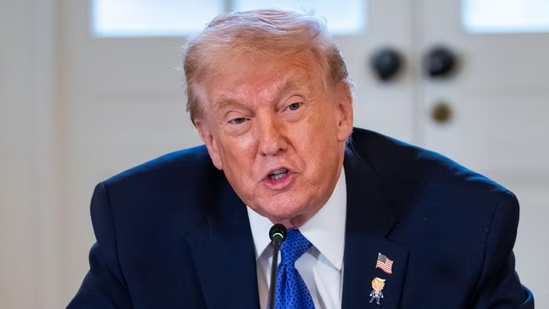
According to a report from Britain’s Prime Minister Sir Keir Starmer’s office, he delivered a message to US President Donald Trump telling him that imposing tariffs on countries friendly to the US because of the situation in Greenland “would be wrong”. The phone conversation occurred Sunday, making it the first time the two presidents had spoken since Trump announced he may pursue new trade penalties related to Greenland. Tariff Plan Raises Tensions President Trump recently announced that tariffs could be imposed by the United States on products produced in eight European countries (e.g., the United Kingdom) beginning February 1, 2020, potentially increasing to 25% by June 30, 2020, unless an arrangement can be made to facilitate the acquisition of Greenland by the United States. This proposal has unsettled Europe and residents of Greenland, which is an independent region belonging to Denmark. Sir Keir has continuously stated that the fate of Greenland should be determined by the people of Greenland, in conjunction with Denmark, rather than by foreign governments. NATO and Security Concerns According to a spokesperson for the UK Prime Minister’s office following their telephone conversation, Sir Keir Starmer expressed to Mr Trump on behalf of the NATO Friends and Allies Group that security in the Arctic Region is vital for all NATO Member Nations and that penalising NATO Allies through tariffs for cooperating in securing our common security is unacceptable. Before having his discussion with Mr Trump, Sir Keir had discussed the topic with other European leaders such as Danish Prime Minister Mette Frederiksen, European Commission President Ursula von der Leyen, and NATO Secretary-General Mark Rutte. It should be noted that Denmark has categorically stated that Greenland cannot be sold and that any form of military action against Greenland would jeopardise the security of the entire NATO alliance. Furthermore, Greenland’s leaders have made it abundantly clear that they wish to remain part of Denmark as opposed to being annexed by the United States. Europe Stands United The eight nations that have been threatened with tariffs issued a joint statement indicating that this action will hurt the relationship of the United States with Europe. These nations include Denmark, Finland, France, Germany, the Netherlands, Norway, Sweden and the United Kingdom. While all stated their strong support for Denmark and Greenland, they also expressed their continuing commitment to Arctic security. President Trump claimed that Denmark does not have the ability to protect Greenland from threats created by both Russia and China. Although there has been no decision against using military action to obtain Greenland, the Trump administration indicated that purchasing it is the preferred way of acquiring it. UK Political Reaction Sir Keir’s remarks constitute an exception, in terms of a public disagreement with a US president who has been a close partner of his in the past, and demonstrate his unease with the direction of American trade policy. All UK politicians, regardless of party affiliation, condemned the threat of tariffs as counterproductive, and a number warned that taking action against a NATO ally would be detrimental to the long-term strength of the alliance. Why Greenland Matters Greenland’s geographical location provides an opportunity for the United States to strategically observe activity in the Arctic. The U.S. also has established a military presence in Greenland and also has shown great interest in harvesting the natural resources of Greenland, which will be more readily accessible with the rapid climate change occurring throughout the world.
India and the European Union Near Landmark Trade Deal as US Talks Stall

India and the European Union are in the final stages of talks aimed at achieving an agreement to create a Free Trade Deal Agreement, which has been pending since before India gained independence. The conclusion of this Free Trade Agreement will be an important addition to the array of Free Trade Agreements that presently exist between various countries and regions of the world, including the Asia-Pacific region and North America. Trade Secretary Rajesh Agrawal confirmed that negotiation between India and the EU is nearing completion and should be completed as soon as possible. The Free Trade Agreement to be finalised will have the most significant impact upon India’s global position in terms of trade. In addition to indicating that the EU will become an even greater trading partner for India than it already is, Agrawal also indicated that this Free Trade Agreement will enhance India’s potential to diversify its export markets by providing additional opportunities to do so. Since its inception in 2004, bilateral trade between the EU and India has been estimated at €120 billion in 2023, which makes the EU India’s largest trading partner and represents the longest continued growth of bilateral trade between any two trading borders in Europe. High-Level Diplomacy Accelerates Negotiations There has been significant political activity occurring at senior levels within the European Union and India that has contributed to the momentum that is building regarding a trade agreement between the two regions. The President of the European Council (EC), Antonio Costa, along with the President of the European Commission (EC), Ursula von der Leyen, will be travelling to India from January 25th to January 27th, 2023, during which time they will be co-chairs for an India-EU Summit with India’s Prime Minister (PM), Narendra Modi. There are ongoing discussions among government officials working for the European Commission regarding the possibility of announcing a successful conclusion to the trade agreement at this international event. According to sources involved in the ongoing negotiations, the European Commission has also expressed cautious optimism for internal negotiations among the member states and anticipates a successful conclusion to the trade agreement. To expedite the negotiations between Europe and India, Prime Minister Modi and President von der Leyen agreed to accelerate the time frames for completion of the negotiations, with a target conclusion date of 2025. The urgency of reaching a successful trade agreement has further increased because of the imposition of tariff increases by U.S. President Donald Trump on a variety of products imported from several countries, including India. Cars, Steel, and Carbon Levies Remain Key Obstacles While strong steps have been made towards improving the relationship between the EU and India, several areas of concern remain unresolved. The automobile and steel industries are the two biggest areas that are causing negotiation problems between the parties involved. The European Union is urging India to significantly decrease the amount of tax needed to import European vehicles, as the tax for all forms of vehicles from Europe to India, in some cases, has exceeded 100%. However, India is adamant that it is hesitant to lower the import vehicle tax in lieu of the domestic manufacturing and job sector. Conversely, India is also expressing concern about the EU’s carbon emissions border adjustment mechanism and how this initiative may affect the export of Indian steel to Europe through the imposition of additional costs based on carbon emissions. Indian negotiators also emphasise that the above-mentioned proposal would limit the amount of steel imported into the EU due to the combination of tariff rates and the aforementioned safeguard measures. Agriculture Kept Out to Protect Farmers For the country of India, agriculture has been established as a definite, unmovable boundary. Agriculture officials confirmed that sensitive agricultural and dairy products have been excluded from any future negotiations. The Indian Government has continually stated that agriculture and dairy are two sectors that remain completely protected and will not be opened for trade agreements. The Indian Government will protect the lives of millions of poor subsistence farmers who rely on traditional farming for their survival. In contrast to the EU’s interest in tariff reductions for goods such as wine, spirits, and meats, as well as medical devices, India has targeted its negotiation objectives mainly on obtaining duty-free access for labour-intensive products, as well as expedited acceptance of regulatory approvals for India’s automotive and electronics sectors. Beyond Goods: Services, Investment, and Green Growth This proposed agreement builds upon merely trading goods; instead, both parties hope it creates opportunities for greater collaboration in a wide variety of service sectors (e.g., digital trade), investment, IP, and green technologies. Investing in Indian manufacturing, renewable energy, and infrastructure should provide a boost for European companies and help them to align with India’s future growth and sustainability objectives. The challenges remain regarding creating and enforcing similar regulatory structures and ensuring protections in sensitive sectors, such as labour, health, and the environment, in compliance with the Paris Climate Agreement. The EU has also continued to insist upon formalised commitments pertaining to labour standards, environmental protections, Paris Climate Agreement compliance, etc.; therefore, negotiations on these topics remain ongoing and continuing. A Strategic Signal Amid Global Trade Uncertainty The India–EU trade agreement would indicate that the global economy is moving further towards fragmentation, and this will provide a message about how important this agreement between India and the European Union (EU) is for Europe and how European nations will benefit from access to the vast Indian consumer marketplace of more than 1.4 billion people. The Agreement will also provide India access to the wealthiest economic bloc through enhanced opportunities for the importation of Indian goods and services. In the meantime, the failure of the U.S.-India trade talks to progress since last year’s breakdown should, at least partially, be compensated for by providing India with a stronger trade priority than what was previously established. The EU’s formalisation of this agreement between India and the EU also strengthens India’s capacity to become a more prominent actor in terms of integrating
Trump’s Iran Tariff Warning Sparks Global Trade Fears Amid Growing Unrest in Iran
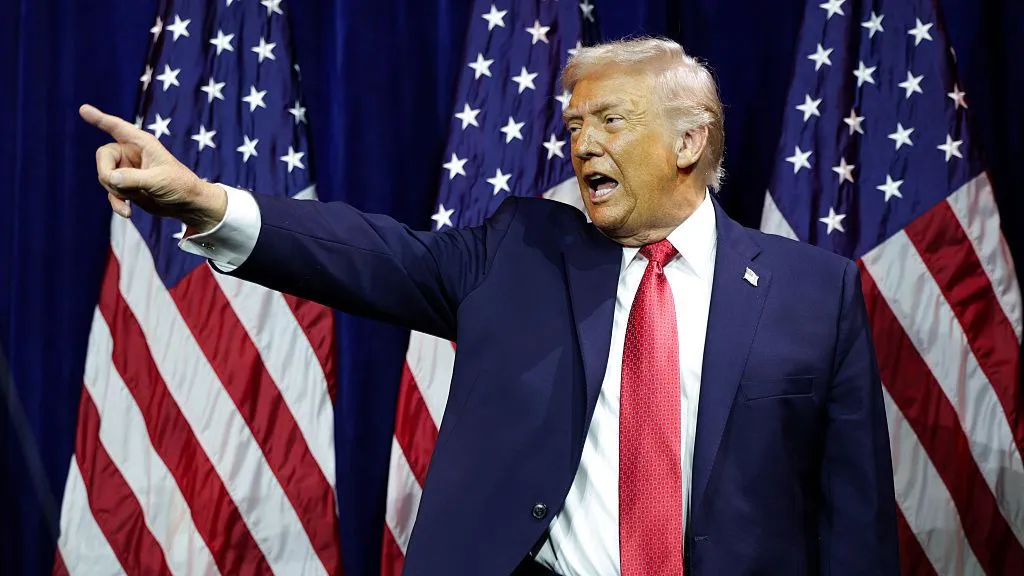
Donald Trump (former US president) has also warned other nations that if they conduct commerce with Iran, they are at risk for being charged an immediate 25% tariff from the United States. On his account, the former president posted this information on his social media (Truth Social). According to the post, the order will be ‘decisive’. There has been no mention of the timing or manner in which these tariffs will be enacted. White House Gives No Further Details Following President Trump’s comments regarding the renegotiation of international trade agreements, there has been no additional guidance provided by the White House with regard to the potential impact on certain countries or specific goods that may be subject to increased tariffs as a result of elevated trade relations between Iran and the US. This uncertainty creates concern within the business communities of numerous nations trading with Iran as well as the USA due to their respective ties to both economies, especially when discussing matters related to the energy and shipping industries. Iran’s Currency Crisis Deepens At the same time that Iran is experiencing a significant economic crisis due to the value of the national currency (the rial) dropping significantly over the last 12 months and recently reaching an all-time low in value against the US dollar, inflation is currently above 40%, and the cost of essential items is also increasing dramatically. As a result, for many households, the cost of living on a day-to-day basis has become impossible to manage. Protests Spread Across Iran The growing public anger over increased prices and high numbers of job losses caused protests throughout Iran. At the end of December 2022, many local shop owners in Tehran closed their shops and marched in protest because of yet another sharp decline in the value of the Iranian currency, the rial. Originally protests focused solely on economic issues, but claims of economic injustice and systemic abuse of political power have now evolved into larger demonstrations that challenge Iran’s Supreme Leader Ayatollah Ali Khamenei and his regime. These recent events represent some of the most serious challenges faced by the Iranian government in recent years. Deaths, Arrests, and Information Blackout Human rights organisations state that there has been a significant crackdown on protestors. The US non-profit group Human Rights Activist News Agency indicates that approximately 500 people who were protesting and 48 members of the security forces were killed; however, many other organisations indicate that the actual death count could be much higher. Thousands of individuals have been arrested as well. Since Thursday night, an internet blackout has made it difficult to verify facts. Many countries’ media, including BBC and Reuters, cannot get reliable news from within Iran. Although Donald Trump warned of future sanctions, he also stated that the Iranian government reached out to him about negotiating; however, increased international sanctions and significant corruption continue to have a negative impact on the Iranian economy.
Trump Calls Himself ‘Acting President of Venezuela’ in Truth Social Post
When U.S. President Donald Trump posted an image on his social network, “Truth Social,” named “Acting President Of Venezuela.” The image was posted on January 11th, 2026, had a caption of “acting president of Venezuela,” with an image of Mr. Trump in his formal portrait, and stated that he had been the “Acting President of Venezuela, Incumbent January 2026.” In addition, it states that Mr. Trump was both the 45th and the 47th USA president, starting from January 20th, 2025. This post was made at a time when there are increasing tensions after a significant U.S. military operation took place in Venezuela this month. U.S. Military Operation and Capture of Nicolás Maduro On January 3, 2026, US troops seized Venezuelan President Nicolás Maduro in a sudden nocturnal mission. The incident occurred following a pre-planned sequence of joint armed actions against the South American nation in response to significant recent increases of economic and diplomatic exertion directed towards it for what appeared to be the mutually beneficial extraction of its vast oil reserves. In the wake of the successful operation, Mr. Trump disclosed that US operatives had been present in Venezuela prior to the operation and further RFC’ed the US with the task of temporarily overseeing governance in the capital, Caracas, until such time as a “safe, proper, and judicious” transition could be made. President Trump stated to reporters shortly after the incident that the United States would continue to manage Venezuela until a more stable government was selected. Trump’s Claim Over Venezuela’s Governance Mr. Trump stated during a press release that the military operation was “one of the most powerful, effective, and incredible displays” of U.S. confidence and capability. Further, he indicated that the current U.S. government intends to take advantage of the extensive Venezuelan oil reserves by producing large quantities of oil and exporting it to other nations during a transition to an interim president. In a social media post on Truth Social, Mr. Trump claimed to have been acting in the role of Venezuela’s interim president and received worldwide criticism for his announcement. Venezuela’s Constitutional Response In the aftermath of Mr. Maduro’s removal, the Venezuela Supreme Court’s Constitutional Chamber quickly acted, on January 3, by directing Vice President Delcy Rodríguez to take on the responsibilities of Acting President to maintain continuity of government and protect Venezuela’s territorial integrity. Even when taking on this new role, Ms. Rodríguez required the United States to release Mr. Maduro, arguing he is still the legitimate representative of Venezuela while also denouncing foreign intervention in the sovereignty of her country. Global Reaction and Uncertainty Ahead The events surrounding these issues have led to a broad range of reactions both politically and internationally, including many countries and organizations expressing their concerns about the legality of U.S. military actions and their implications for international law. While diplomatic relations are strained, the uncertainty about Venezuela’s political future continues due to the competing names for government authority and the increased demands from global organizations to address these issues.
Doing Business Became Tougher in 2025, Says World Economic Forum Survey

Companies globally conducted a new survey by the World Economic Forum (WEF). The survey indicated that due to a significant slowdown in global cooperation, the global economy will be much more difficult for companies to navigate as they move forward into 2025 than it was in 2024. Examples of this global cooperation decline include reduced trade, technology development, and climate change, along with creating safer places for people to live and work. The survey results were published prior to the WEF’s annual meeting this January 2023 in Davos, Switzerland, as part of the Global Cooperation Barometer 2026 report. World Economic Forum Survey Shows Rising Business Pressure A total of 799 business executives participated in the online survey across 81 countries. Of these 799 respondents, approximately 43% believed that in 2025 it would be harder to conduct business than it was in 2024. Seven per cent indicated they thought that things would be better, while the balance of respondents either felt things were going to remain unchanged or were uncertain about their response and did not wish to share their views. Most executives cited increasing obstacles to global trade and the movement of talent and investments across borders as contributing to the increased complexity and cost associated with their businesses; almost 40% of executives reported that the added complexities and costs resulting from these challenges were significant. Trade Tensions and Tariffs Added Uncertainty The WEF report also highlighted that U.S. tariff announcements in 2025 raised serious concerns about the future of global trade. Former U.S. President Donald Trump announced new tariffs in April 2025, putting pressure on global supply chains. Although several tariffs were later reduced through trade deals, the uncertainty caused businesses to rethink their strategies. Interestingly, six out of ten executives did not list trade as a major issue. This suggests that many companies have adjusted their plans to handle changing trade conditions. Cooperation on Security and Climate Slows The survey showed that global cooperation on peace and security weakened further in 2025. About 42% of executives believed cooperation declined, while only 13% saw improvement. Climate and natural resource collaboration also faced challenges, with 29% saying it became harder. Despite this, there was some positive news. Investment in renewable energy rose nearly 10% in the first half of 2025, and solar and wind capacity increased sharply, showing progress in clean energy efforts. Experts More Concerned Than Executives A separate WEF poll conducted in September among Global Future Council members showed deeper concern. About 85% of experts believed global cooperation had declined, a much higher number than among business leaders.
Key Catalysts That Could Push Bitcoin and the Crypto Market Higher in 2026
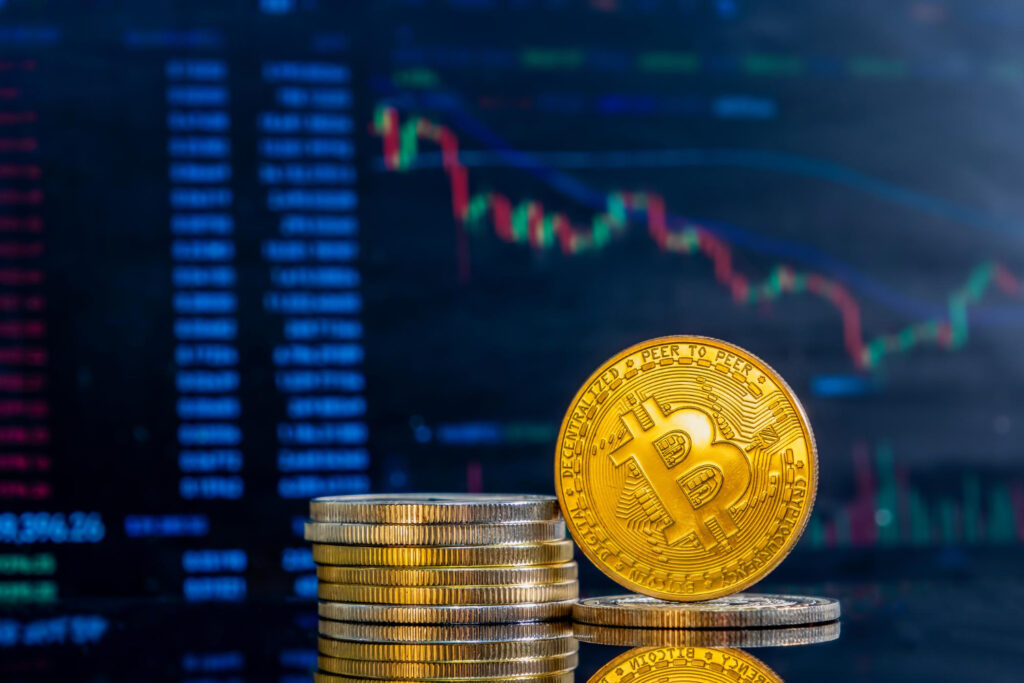
main reasons that he and many other analysts expect will lead to an increase in Bitcoin and the wider cryptocurrency market in 2026. Hougan pointed to the stability of the cryptocurrency ecosystem as well as the stability of equity markets and “regulatory clarity”, which would be provided by the Clarity Act, as key reasons for the predicted Bitcoin and broader cryptocurrency market growth in 2026. Stable Crypto and Equity Markets The first requirement for a sustained rally is stability within the crypto market itself. Hougan pointed to the absence of any repeat of an “October 10–style” liquidation event—a market shock that weighed heavily on crypto prices during the fourth quarter of 2025. At the time, fears that large market participants might be forced to unwind positions created persistent selling pressure. “These potential sales hung over the market like a heavy fog,” Hougan wrote, noting that those concerns have now largely faded, removing a major overhang and clearing the way for renewed upside momentum. Equity market stability is the second critical factor. Hougan warned that a sharp downturn—such as a 20% correction in the S&P 500—would negatively impact all risk assets, including cryptocurrencies. “The equity market needs to remain stable rather than surge or crash,” Ryan Yoon, senior analyst at Seoul-based Tiger Research, told Decrypt. Yoon added that once equity markets reach a certain level of stability, investors naturally begin seeking higher returns in alternative assets like crypto. Recent data, however, suggests near-term volatility. Bitcoin’s rally cooled this week, triggering liquidations and net outflows of $243 million from U.S. spot Bitcoin ETFs. While BlackRock’s IBIT recorded $228 million in inflows, these were offset by significant outflows from Fidelity’s FBTC (-$312 million) and Greyscale’s GBTC (-$83 million), according to SoSoValue. Regulatory Clarity as a Long-Term Tailwind The catalyst for the biggest impact that is yet to come is legislation. The Clarity Act (proposed legislation on the structure of the cryptocurrency market), which is a proposal to clarify the definition of digital assets in the U.S. and establish greater clarity around the regulation of those assets, is expected to pass by January 15, according to David Sacks, the White House’s crypto czar. “If this bill can get through the markup process, that will then be a huge step forward in getting it passed,” said Hougan. He went on to say that without legislation, the current pro-crypto regulatory structure is at risk of being undone by future administrations. Market Outlook Looking into the future, researchers see fluctuations in price levels in this market over the next few months resultant of U.S. government spending policies, political changes within the United States, etc. In the medium term, the largest source of capital flowing into the marketplace will be via institutional investors using physical exchange-traded funds. These purchases should foster a “strong get stronger” effect in the marketplace.
Trump Says Venezuela Will Hand Over Up to 50 Million Barrels of Oil to the U.S.

The former President of the United States, Donald Trump, said on January 6th, 2026, that the country of Venezuela would be giving the United States 30 million to 50 million barrels of oil as the result of recent actions taken by American forces to assist in the country’s stabilisation. The oil price will be that of the open market, and U.S. President Donald Trump will have control over the proceeds from the sale. According to Trump, those proceeds are meant to assist both Venezuelans and Americans. In a statement released via social media, Trump indicated that the arrangement would be transparent and would eliminate the possibility of corruption, adding that previous administrations of Venezuela had taken advantage of their country’s wealth in natural resources (oil). This announcement reflects an escalation of the U.S. government’s involvement in Venezuela’s political and energy sectors. Maduro Captured in U.S. Military Operation On January 3, the U.S. military carried out an exceptional mission in which it captured and extradited apparent dictator Nicolás Maduro from Venezuela to New York City (NYC). Maduro was brought before a NYC federal court on January 5, 2023, and entered a plea of “not guilty” regarding various years-long U.S. federal drug trafficking warrants against him. Delcy Rodríguez, the previous Vice President of Venezuela, took over Maduro’s position and became the interim President of Venezuela when he was removed. Rodríguez condemned the U.S. military’s operation as an infringement on international law, while Washington has portrayed the mission as a critical first step to eliminating narco-trafficking networks and restoring the country’s democratic governments. Trump Claims Venezuela “Stole” American Oil Industry Following Maduro’s capture, Trump made multiple comments asserting that Venezuela’s national oil industry was founded on American know-how, talent, and investment and had been taken forcibly from the United States by the socialism introduced by Chávez. “Venezuela’s oil industry was developed by American talent and drive and skill,” said Trump. “They took it away from us through force, which was likely the largest theft of American assets or property in the history of the United States.” International legal experts in energy disagree with Trump, stating that while it was a controversial nationalisation process, it was done so under the authority of the sovereign and included compensation structures; however, most U.S. companies later sought to challenge this. How the Oil Will Be Transported to the United States President Trump explained that they plan to put oil into storage tankers and send them straight to our docks regardless of any foreign buyers. Chris Wright, the US Energy Secretary, is working with senior oil executives in Miami on logistics for this operation. Secretary Wright believes that the first shipments of oil may occur soon since most of the oil is currently stored, and there is no immediate need to produce more oil. According to administration officials, transferring oil to domestic markets will create stability in the global oil market and provide immediate revenue for the government. The Future of Venezuelan Oil Production Donald Trump mentioned to NBC that there are possibilities for the revival of Venezuelan oil production within an 18-month time frame. This would be contingent upon a large amount of money being invested into the operation. He also stated that he believed U.S. oil companies might return to Venezuela, but the federal government would likely reimburse the companies for any investments they made into building and maintaining the infrastructure. “A large amount of money has to be invested,” Trump stated. “Oil companies will spend it and then be reimbursed through us or through their revenues.” At present, Chevron is the only major U.S. oil company operating in Venezuela, as most other companies left the country after the Venezuelan government nationalised the oil industry. If a major revival is to occur, it will require extensive refurbishment of the dilapidated and outdated refiners, pipelines, and export terminals. Global and Regional Implications Venezuela contains the largest verified amount of oil in the world, so the U.S. move is geopolitically important. Analysts believe the oil transfer will change the distribution of energy around the world, especially for China, which has purchased a large quantity of oil from Venezuela in recent years. The action taken has brought condemnation from international politicians and human rights advocates. They claim that taking control of a foreign country’s natural resources creates an undesirable model for other countries and could lead to future conflicts between nations. However, some advocates in the U.S. believe this action is beneficial to both the Venezuelan government and its citizens because it decreases corruption and ensures that the profits from Venezuela’s oil do not go to criminals. What Comes Next The Energy Secretary, Wright, is monitoring all logistics of the agreement and negotiations with oil corporations and laying the ground for both processes to coincide with one another. In addition to this, worldwide financial markets, as well as international political decision-makers, are closely observing this unique situation; how things ultimately turn out will likely affect not just the economic viability of Venezuela but also potentially the direction that the USA’s energy diplomacy in Latin America takes.
Oil Prices Decline Despite Major Geopolitical Development
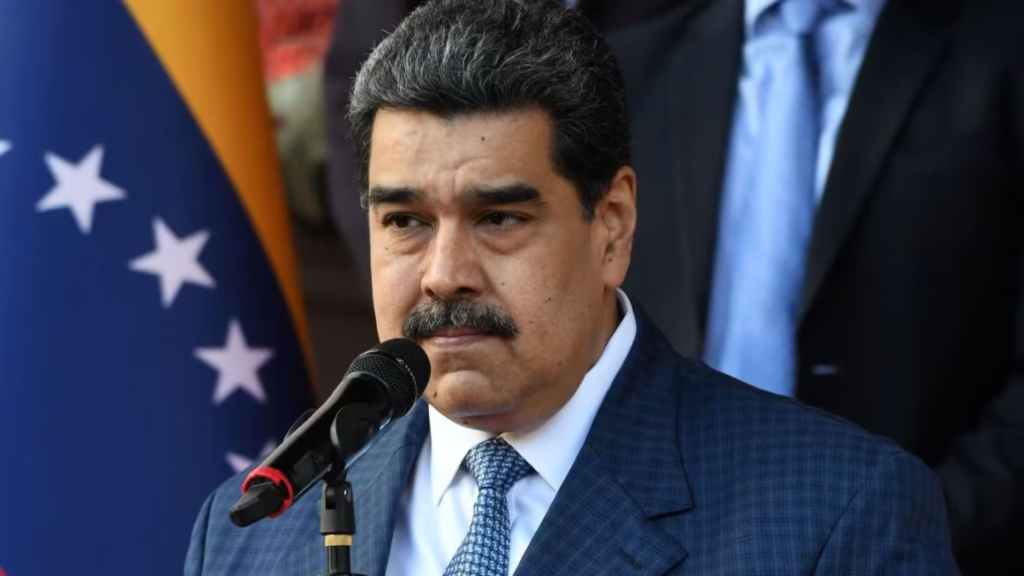
While oil prices dipped on Monday, January 5th, 2026, due to rising geopolitical tensions created by US actions in capturing Venezuelan President Nicolas Maduro during their surprise operation over the weekend. This news has generated much discussion within the news media and around the world; however, it appears that financial markets have remained relatively uninfluenced by this event, as it is considered that there is not expected to be a short-term negative effect on energy supplies. There were slight increases in US benchmark prices of crude oil after the start of trading; however, these early increases have been reversed, and now the price has decreased 36 cents to US $56.96 per barrel. Additionally, the prices of Brent (the global price of crude oil) also have decreased 34 cents to US $60.41 per barrel. The price of oil is currently trading at or near its lowest price point in approximately six months due to the abundance of supply provided by producers globally, plus the likelihood of decreased future demand from some of the major consuming countries around the world, as they appear to be decreasing their consumption levels. Venezuela’s Oil Industry Faces Long Road to Recovery The energy sector in Venezuela has been in consistent decline for many years, despite the fact that Venezuela has the largest proven oil reserves in the world. Mismanaged for an extended period of time, poorly maintained equipment and a surplus of oil infrastructure will significantly reduce oil production in Venezuela today. Currently, Venezuela produces approximately 1.1 million barrels of oil per day, considerably less than Venezuela’s historic production levels. While some analysts see Venezuela potentially increasing oil production levels to double or triple in the coming years, they emphasise that years of sustained investments in oil infrastructure as well as the support of Venezuela’s governmental stability will be needed to make that happen. Markets continue to discount the likelihood of a sudden increase in U.S. oil supply or of any supply disruption caused by a U.S. military operation due to sufficient global oil inventories in supply and a lack of concern among traders regarding supply shocks. Markets Signal Confidence, Not Panic Most financial analysts have noted that despite recent media focus on Venezuela’s President Nicolas Maduro being captured, financial markets have largely shown little reaction. “We think that there is a general feeling among participants in the financial market community that the short-term impact on the economy and financial markets as it relates to the U.S. sanction against Venezuela is expected to be minimal,” said Thomas Mathews of Capital Economics. “The general consensus among financial analysts is that while Maduro’s capture is being reported widely, the short-term financial and economic implications are expected to be fairly small.” There is still considerable doubt, however, regarding President Trump’s intention to deploy U.S. troops to oversee the transition of power in Venezuela, further complicating the geopolitical landscape for investors to monitor going forward. Gold and Silver Surge as Investors Hedge Risk Oil prices have eased, while precious metals are up sharply, indicating that investors are quietly adding hedges against geopolitical risk. These gains indicate a pattern that has emerged many times before; even when investors are confident about equities, they tend to seek alternative investments and/or insurance from political instability through maintaining an allocation to fully invested safe-haven stocks and bonds. According to Stephen Innes from SPI Asset Management, “This is a sign of investor confidence with a hedge rather than pure excitement over the potential for growth in equities.” He states, “Investors want to participate in an environment that offers greater risk than they currently operate in, but they also want to safeguard themselves against rapid changes in the environment.” Asian and European Markets Rally Strongly Markets in Asia and Europe have enjoyed strong performance, supported by strengths in the technology sector. Asian markets: European markets were also generally higher today: Futures for the US equity markets also point upwards today, demonstrating the enthusiasm of investors as they begin the new trading year of 2026. Investors Look Ahead to Key U.S. Economic Data Many of the US economy reports released this week are followed closely by many people (like us) because they give them a better understanding of where the economy stands at the very end of 2025 and where it will proceed into 2026. Also, as the Federal Reserve prepares for their upcoming January 2023 meeting, the public and investors hope that this data provides clear information regarding how things will be for the US economy. Investors have been particularly focused on becoming better informed, as there continues to be strong geopolitical uncertainty and changes in interest rates and monetary policy forecasts.👉 For more expert insights on global markets, geopolitics, and business trends, visit:🔗 https://thebusinesstycoonmagazine.com/
Power Banks Can No More Be Used On Flights. Check New Aviation Safety Rules

Power Banks Can No More Be Used On Flights. Check New Aviation Safety Rules New rules for aviation safety have been enacted by the Directorate General of Civil Aviation, India’s aviation safety regulatory institute. New regulations introduced by the Directorate General of Civil Aviation prohibit all passengers from charging their phones, laptops, or any other electronic device from a power bank during any portion of the flight, including at individual passenger seat outlet locations. The new regulations were enacted to prevent an increase in the amount of reporting of incidents of lithium batteries catching fire and overheating around the world in recent months. Where You Can Carry Power Banks According to DGCA’s safety regulations, power banks and spare lithium battery packs must stay with the passenger when travelling as carry-on luggage. Due to difficulty in detecting fires that begin within the overhead compartments by the flight crew and then attempting to extinguish them prior to the spread of the fire, it is recommended that these items remain within the passenger’s vicinity, as it increases the likelihood of quickly identifying an increase in heat, smoke or odour. This will help reduce the possibility of creating a major event. Why Are Lithium Batteries a Safety Risk? Lithium-based batteries have the capacity to hold a large amount of energy in a small amount of physical space. If a lithium-based battery has become compromised due to damage, abuse (e.g., manufacturing defects), age or being overcharged, then it can rapidly heat up and ignite. Furthermore, lithium-based batteries can sustain an “ignition” and can behave differently than conventional fire. In addition, when lithium battery ignitions occur, they may produce explosions and cause significant injury or death to passengers and/or threaten aircraft safety. Airlines Asked to Strengthen Safety Measures The DGCA directed airline companies to conduct a thorough review of their existing processes around the safety of lithium batteries being placed on aeroplanes by passengers. Airline companies must increase their level of precaution against instances of battery-related fires occurring in the aircraft cabin. Airline companies should also place additional emphasis on cabin crew training regarding the detection of early warning signs (i.e., heating, smoke, and/or flames) as well as the safe and proper use of the firefighting equipment and how to protect oneself from inhaling smoke during an incident. Passenger Awareness and Onboard Announcements One aspect of the new regulations that will affect aviation operations is the increase in passenger awareness of lithium battery hazards. The new regulations require airlines to make an in-flight announcement before an aircraft’s departure that will describe the potential dangers associated with using lithium batteries, as well as explain what steps the passenger should take if they notice any warning signs from their devices during flight. Passengers must be aware of their responsibility to immediately report any abnormal behaviours of their devices, such as overheating or producing smoke or unpleasant smells, to the cabin crew. Airlines must also inform the DGCA of all such incidents. Airports to Display Safety Warnings Housing companies have asked to aid this outreach by posting these types of flyers and videos in the airport terminals, interview counter, gate checkpoint, and boarding gate. The purpose of the posting is to help educate passengers on how to properly handle their power bank and to prevent them from attempting to charge their power bank just prior to boarding. Conclusion The new DGCA regulations signal a serious safety concern related to the increased utilisation of electronic equipment by each airline during flight. The DGCA restrictions are expected to cause only minor inconveniences; however, they are also intended to help prevent serious safety incidents and save lives. Due to the increased awareness of safety issues related to electronic equipment, the training provided to crew, and greater responsibility taken by passengers, these regulations will allow for increased safety in aviation operations. Stay ahead of the headlines that impact your business and daily life.Follow TheBusinessTyphoon for clear, simple, and trustworthy news on aviation, technology, policy changes, and market trends—explained in a way that actually makes sense. Read smarter. Stay informed. Make better decisions with TheBusinessTyphoon.