
CEO Tells Staff God Appointed Him Leader During Company Meeting

The meeting was meant to be routine. More than 200 employees logged on to a scheduled company-wide Zoom call, calendars marked for project timelines and quarterly targets. For most employees, it promised the usual corporate updates. Spreadsheets. Deadlines. Strategy. Instead, what followed reportedly left many employees uncomfortable and confused. According to a former employee who later described the incident online, the chief executive opened the meeting not with business priorities but with a personal declaration. He told staff that he believed God had placed him in charge of the company. The remark reportedly changed the tone of the meeting. A Meeting That Veered off Script The company was not religion-based or affiliated with any faith. There was no indication that religion played any role in its business operations. When the CEO said his leadership came from God and addressed this before discussing day-to-day operations, it reportedly created confusion among staff. Several employees later said they were confused by the remarks. The discussion about faith continued before the meeting moved to business matters. But the shift to business didn’t take place soon enough.The meeting shifted away from planned business discussions to personal remarks. Some employees said the remarks created uncertainty about leadership decisions. Questions About Merit and Legacy After the announcement was made, many employees began to have additional questions about the reasoning behind the selected CEO. Many employees were concerned with the fact that the new CEO was not just any candidate that had been selected; he was also the son of the previous CEO. Because of this, employees reportedly questioned whether leadership was based on merit or family ties. Some employees said the incident affected morale and made them reconsider their future at the company. One former employee said morale declined after the meeting. Instead of being inspired by the statements made in the announcement, many employees began to feel like there would be limited accountability for their actions. Fallout Inside the Company Following the incident, several employees reportedly left the company, citing cultural and leadership concerns. The issue was not necessarily about the religion itself; there were many employees who shared their own beliefs. The concern stemmed from introducing personal religious beliefs into leadership messaging within a secular workplace. Employees said the blurred professional boundaries affected their trust in leadership. A Wider Debate About Power Online, reactions were swift. Some compared the episode to the old notion of the divine right of kings, where leaders claimed authority from God rather than the people they governed. Others described it as nepotism dressed in spiritual language. Commenters also raised a practical concern. When a leader presents their position as ordained, criticism can feel futile. As some commenters noted, questioning a leader who frames their authority as destiny can feel difficult. The debate continued online after the meeting. For the 200 employees who logged in expecting project updates, it was a reminder that workplace culture can shift in a moment. Not with a policy change or a merger, but with a single sentence that alters how power is perceived. And once trust is unsettled, it is rarely easy to win back.
Why Interest Rates Matter to the Stock Market?

Interest Rates Have a Major Impact on Stock Market Behaviour. The cost of borrowing money for companies & consumers will impact investors’ valuation of the stock market. If the interest rate rises, the cost of borrowing increases for both consumers & companies. The increase of borrowing costs can decrease the growth of companies, reduce profitability & make stocks less attractive. If interest rates are falling or remain constant, it allows more opportunity for companies to invest and increases investors’ confidence in being shareholders of companies. The Federal Reserve’s Role The Federal Reserve is responsible for managing short-term interest rates in America. Changes to interest rates made by the Fed influence many aspects of the entire economy, including loan rates, mortgage rates, and corporate financing. Furthermore, the Fed’s action to increase or reduce interest rates has an effect on long-term bond yields. Investors utilise long-term bond yields as a way to evaluate their expected future company earnings in 10 years in today’s terms. Even though interest rates are at levels greater than during the last ten years, the stock markets have continued to show strength, coupled with interest rates decreasing and corporations continuing to show good earnings growth. How Rates Affect Stock Valuations Generally, stable or lower interest rates support the prices of stock, as they allow companies to refinance debt and expand operations or to see how things will play out in the future. At the same time, investors tend to pay higher prices for stocks when interest rates are lower because they believe the company will earn a greater amount of money in the future. Therefore, the lower or more stable an investor can get in terms of interest rates, the more likely he/she is to purchase that stock at a higher price. What Bond Yields Signal to Investors Yields on long-term bonds show us a lot about both inflation and economic growth. When yields fall due to lower expected levels of inflation while still showing stable levels of economic growth, there is often a positive response in the equity market. In contrast, when yields increase due to concerns over inflation or government bond debt, investors normally take a more cautious approach with their investment strategy, typically demanding stronger levels of corporate earnings. Interest Rates and Market Sectors Stock market sectors and industries will have a different response to changes in interest rates. Certain sectors will benefit from a drop in interest rates, while others require a strong demand for goods/services or a certain level of growth driver to benefit from falling rates. The recent trend among investors has been to pay closer attention to companies’ performances and earnings than to interest rates themselves. Looking Ahead Increasing interest rates will continue to have an impact on the stock market, but there are also a number of other factors that influence the stock market – such as corporate earnings, economic growth and long-term planning. Therefore, long-term investors that concentrate on long-term goals typically achieve better results than those that constantly adjust their investments based upon interest rate changes.
Bitcoin Falls Below $65,000, Markets Under Pressure

For the first time in over a year, Bitcoin has slipped below $65,000, its lowest point. This fundamental downturn is caused by severe levels of fear in global equity markets and heavy selling pressure on cryptocurrencies. At press time, Bitcoin was priced at approximately $64,353, down nearly 10% for the day and more than 33% for the last 12 months. Bitcoin reached its all-time high of $126,000 in October 2025; this fall represents continued declines for the currency. What Caused the Sudden Drop Traders are pulling their investments out of riskier assets due to increasing uncertainty in the market, according to research teams at CoinDCX and CoinSwitch. With the announcement of Donald Trump’s second term as US President, many traders had high expectations for an improvement in the equity markets, but instead, policy issues are causing increased volatility. In the past 24 hours, over $1 billion of Bitcoin positions have been liquidated, primarily due to large long trades (i.e., traders who expected prices to increase and thus held Bitcoin for the long run) being sold off. This has caused an even further decline in prices. Bitcoin has also now broken below a critical level of technical support, which has triggered additional automatic selling. Broader Crypto Market Turns Bearish It is not only Bitcoin that has suffered weakness, as the total value of the cryptocurrency market has decreased to $2.23 trillion with an over 10% drop in one day. Ethereum has dipped below $2000, with large amounts being lost on other well-known cryptocurrencies such as Binance Coin, XRP, Solana and DogeCoin. The market sentiment has turned to an “extreme fear” level, indicating a cautious approach by investors. What Experts Expect Next Analysts feel that despite a large drop, the price of Bitcoin is still finding a key long-term support level at around the US$58,000 level. If prices stay above the US$60,000–US$62,000 level, it could lead to more stability in the market and/or allow for some time for the market to recover. Conversely, if selling continues, it is possible that Bitcoin will fall back down toward the US$56,000 level. Experts believe that shorter-term traders should consider being more cautious about their trading plans, while longer-term traders may see this period of time as an opportunity to purchase gradually. For the time being, crypto prices are expected to remain volatile while the markets are looking for more clarity on the economy and on policies of leading central banks.
Guide to Hyper-Personalisation: Benefits, Use and Real Examples

Today’s customers demand that brands really know them as individuals; generic offerings and one-size-fits-all messages are no longer effective. Customers are seeking content, products, and/or services that reflect their preferences, habits, and timing. Hyper-personalisation is the next progression in this evolution. It takes the basis of traditional personalisation and deepens it to be able to create hyper-personalised experiences for each individual person on an ongoing basis and in real time. What Is Hyper-Personalisation? When we refer to hyper-personalisation, we mean using customer data to create experiences that are perceived as being unique to each individual user on each occasion in which they interact with a brand. Hyper-personalisation allows you to create individualised experiences instead of categorising users into broad categories or groups. Hyper-personalisation also examines items such as the user’s browsing history and previous purchases, where they are currently located, what their current actions are, and all other relevant items in order to create an experience that is relevant to the particular user at that time and place. Hyper-personalisation aims to create a sense of usefulness from every single experience instead of creating a feeling of randomness from each experience with the user. Why Hyper-Personalisation Matters When customers find content that is relevant to them, they feel as though you understand their needs. As a result, customer satisfaction increases and long-lasting relationships are created with customers. Additionally, businesses benefit because relevant offers lead to increased sales and improved conversion rates. Over time, delivering personalised experiences to customers will lead to repeat purchases, decreased customer attrition, and increased total customer lifetime value. How Businesses Can Implement It At the heart of hyper-personalisation is the need for complete and cohesive customer data; the information needs to come from different sources, such as the web, mobile devices, purchase activity, and customer service interactions, all aggregated into one view. Businesses must then put into place systems that make real-time decisions regarding what the customer is to be shown. Experiences should be evaluated and refined over time to maintain relevance and delivery effectiveness. Real-World Use Across Industries Hyper-personalisation is used by online retailers to present customers with products they are most inclined to purchase. Banks use hyper-personalisation to provide customers with useful financial insights based on their habits when they spend their money. Healthcare platforms deliver reminders and health advice specific to each patient. Travel providers use hyper-personalisation to recommend trips and to offer upgrades based on previous travel experience. Customer support will use hyper-personalisation to address a customer’s issues with the most relevant information, allowing them to resolve issues quicker and with greater detail. Final Thoughts Hyper-personalisation helps businesses stand out by making customers feel valued. When done responsibly and thoughtfully, it improves experiences, builds loyalty, and drives growth.
Data Monetisation: Stop Losing Money on Information You Already Have

What Is Data Monetisation? Most organisations gather large quantities of data on a daily basis, but they only utilise that data within their own internal reports. At the same time, companies competing against those organisations will utilise virtually the same dataset to create revenue-generating products and/or services through a method called data monetisation. To monetise data means to leverage existing datasets to extract value from it; and as such, the initial cost of acquiring the data is now generating income instead of just being an expense. Why Data Is a Business Asset Businesses need to regard information as working capital (as opposed to something that simply takes up space). For example: The transactional history of an enterprise, how users behave, telemetry received from their machines, and their customers’ character all possess true economic value in the marketplace. When they are cleaned up, organised, and packaged properly, these types of data could help to resolve issues encountered by other organisations. Therefore, businesses that create systems designed specifically to explore, convert, and present data will reap the rewards of having continued income streams versus only occasional viewpoints. Hidden Revenue in Everyday Operations Many businesses don’t realise they’re collecting valuable data even before they collect it. User clicks demonstrate the way users interact online; payment and refund data provide evidence of fraud and product problems early in the purchasing process; supply chain data reveal changes in the demand for products or markets; profiles of customers help illustrate why customers choose to buy; and, finally, device and sensor data provide evidence of how products are performing in the real world. As a result, this type of information can be costly for others to recreate; consequently, it is considered to be an asset. Turning Raw Data Into Revenue It doesn’t get very far with a good idea about making money off data and executing it properly. Companies need to determine what data is more valuable than the cost of storing it. Systems need to be created that allow for future growth and return reliable data-driven answers to assist in better decision-making. Raw data must be converted to readable answers so that users do not have difficulty in understanding them. The most effective data product integrates smoothly into the user’s workflow, and so the user will use the product reliably. What Successful Data Monetisation Looks Like Data monetisation can cut expense items, increase income items, and help with better decision-making when executed properly. Predictive analytics can help avoid equipment breakdowns. Retail analytics data helps to enhance both sales and inventory forecasting. Payment analytics data reduces fraud and chargebacks. The one common theme across these items is the focus on genuine problems that exist in business rather than on sexy types of technology.
Saks Global Shuts Most Off-Price Stores to Refocus on Luxury Retail

According to Saks Global, they have made the decision to close the majority of their off-price locations. As a result, the majority of the Saks Off 5th stores and all of the Last Call stores will be permanently closed. Out of 69 Saks Off 5th stores, 12 will remain open and 57 will be closing. All five of the Last Call stores will also be closing. This comes after the closure of nine of the Saks Off 5th stores last November. E-Commerce Business to Shut Down Saks Off 5th’s online business is shutting down. The eCommerce division was separated from the brick & mortar stores five years ago and is now being liquidated. An online liquidation sale started recently. Saks Global recently filed for Chapter 11 bankruptcy, and this has greatly accelerated the decision-making process for these particular stores. Focus Shifts Back to Luxury According to Saks Global, the move is a step toward fully committing to the luxury retail segment, further solidifying their belief in the viability of the luxury retail segment despite other retail challenges throughout the industry. “As we focus on luxury retailers, we believe we can grow with our business and our high-end customers while also promoting more full-price sales of our core brands: Saks Fifth Avenue, Neiman Marcus, and Bergdorf Goodman.” He added, “With this emphasis, we are looking to sustain our growth for many years into the future.” Why Off-Price Is Hard to Manage According to retail specialists, it is challenging to have both a full-price and an off-price business. With proper management, off-price outlets do not negatively impact full-price sales, but with off-price outlets growing and traditional department stores shrinking, off-price retailers need to establish separate strategies and excellent execution to help them sell off excess inventory. New Role for Remaining Stores The other Saks Off Fifth locations will play an increasingly smaller role going forward. Rather than purchase brand new items specifically for an off-price environment, they will sell excess inventory from Saks Global’s portfolio of luxury brands. Most of the locations that remain open now are concentrated in Florida, with dispersed locations in New York, California, Georgia, New Jersey, and Texas. One of the New York stores is experiencing leasing issues due to lack of rent payments. What This Means for Competitors Nordstrom may gain customers by expanding its off-price Rack stores, which can help with this retreat. Retail armchair experts believe that there is a tremendous amount of opportunity for luxury off-price; however, the only way to take advantage of that opportunity is for companies to commit to having a complete off-price division.
Don Lemon Charged After Anti-ICE Protest Disrupts Minnesota Church Service

On January 18, when Don Lemon (a former CNN anchor) got arrested and charged in connection to this incident at Cities Church in St Paul, MN, Don and others were in attendance for an ongoing religious service. Don entered the church because he and others were protesting ICE. The group alleged that one of the pastors at the church had a working relationship with ICE. The protest led to escalating tensions between worshippers and protesters as the protest commenced and disrupted the service. Arrest and Court Appearance Federal agents arrested Lemon and eventually released him once he appeared in court; however, Lemon did not enter a plea. After being released, Lemon spoke with reporters and stated that he was arrested while doing his job as a journalist. He also stated that he was guilty only of reporting on the news and that he would not be silenced. Lemon described his arrest as an affront to the First Amendment. Charges Filed Against Lemon Prosecutors previously charged Lemon with both conspiracy to deprive rights and conspiracy to interfere with religious freedoms. Authorities have alleged that Lemon and others engaged in actions which amounted to a disruption of the church service; additionally, that they intimidated parishioners of the church and blocked access to the inside of the church to individuals who wished to move freely within its confines. The indictment described Lemon as assisting in maintaining confidentiality for the plan of the protest, as well as being a participant in a coordinated action when he entered the church on the date of the occurrence. What Prosecutors Are Alleging The authorities contend that Lemon and the other demonstrators occupied the primary aisle plus front seating areas of the church, creating chaos and creating fear. Additionally, prosecutors allege that Lemon confronted congregants at the church entrance and physically impeded the exiting congregants on the way out. Video evidence shows demonstrators and congregants arguing loudly with one another during the worship service. Lemon’s Response and Legal Defence Lemon claims that he was at the protest as a member of the press and is therefore not responsible for the actions of protesters. Lemon’s attorney has issued a statement indicating that Lemon will vigorously contest these charges in court and believes that this case represents an unprecedented assault on the First Amendment by the government and serves to draw attention away from other national issues. Political and Public Reactions Nationwide responses have been widespread. The Trump Administration is defending the charges as being related to an organised assault on the right to practise one’s religion freely. The White House posted a social media entry seemingly mocking Lemon’s arrest. At the same time, CNN stated that many of their journalists are extremely concerned regarding freedom of the press. Karen Bass, the Mayor of Los Angeles, stated that Lemon’s arrest was extremely shocking and very frightening. Broader Concerns About Press Freedom Recent events have brought new anxiety for free speech proponents. It also follows another very recent event in which a federal officer executed a search warrant at a journalist’s home. The ongoing protests in Minneapolis against Immigration and Customs Enforcement have added more drama to the struggle between government power and the ability for news organisations to conduct their business free from harassment.
Beth Galetti: The Amazon HR Leader Behind the Latest Global Layoffs
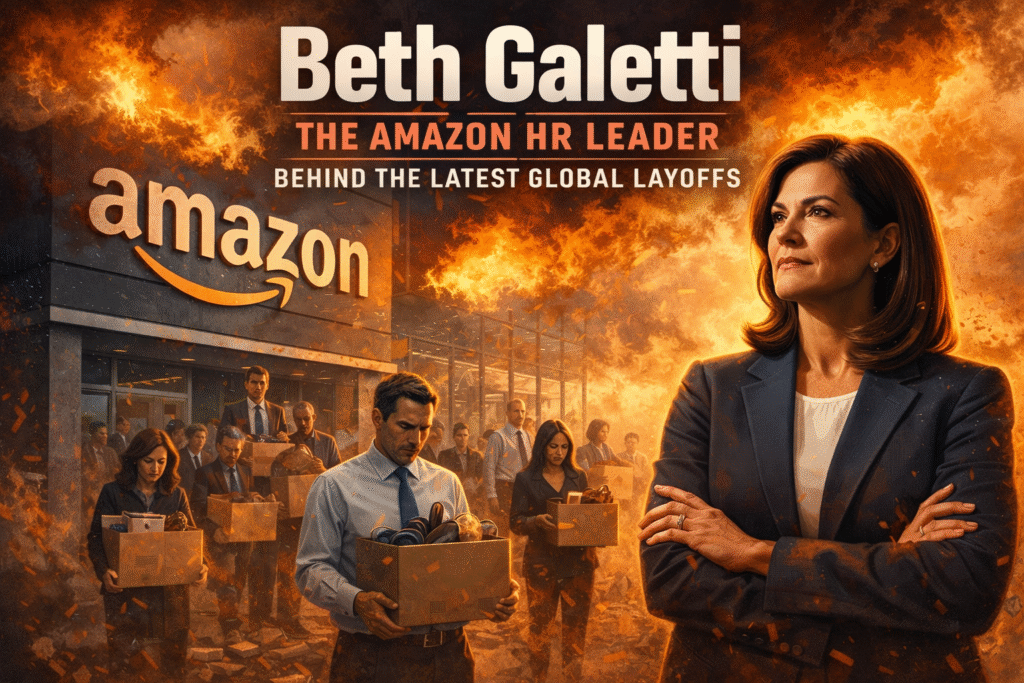
Who Is Beth Galetti? As senior vice president of people experience and technology at Amazon, Beth Galetti leads all aspects of human resources, as well as overseeing employee satisfaction and technology used by employees. This includes management of human resource systems, employee benefits plans, employee development, and internal technology platforms that facilitate the use of technology by a large number of employees around the world. Amazon’s Layoff Announcement According to Galetti, Amazon is going to eliminate approximately 16,000 jobs globally through corporate downsizing. This is the second round of corporate layoffs within a short period of time. The layoff rounds are part of Amazon’s effort to streamline its operations, which includes reducing unnecessary management layers. As outlined by Galetti, this change will allow Amazon to have more employee ownership, quicker decision-making and fewer internal bureaucracies. What the Layoffs Mean for Employees Galetti indicated through her communication to workers that impacted U.S. employees will be given 90 days to search for new positions within Amazon. Employees unable to secure a new position will receive severance payment and other forms of assistance. It states that the policies and procedures being implemented will help ensure fairness and allow for the company’s reorganisation to be more effective. Galetti’s Career Journey Beth Galetti was hired by Amazon in 2013 as a vice president of human resources. Before coming to Amazon, she worked at FedEx for approximately ten years in various senior director and senior manager positions related to technology and operations. Since joining Amazon, Beth has taken on more and more responsibilities and eventually attained the top HR leadership position in the company. Her Role Beyond Amazon Overseeing the HR systems and technology systems that support 1 million employees worldwide at Amazon is Galetti. She is responsible for many initiatives, including the employee development programme and the return-to-office policy. Galetti graduated from Lehigh University with a degree in engineering and received her MBA from Colorado Technical University. Galetti also serves on the Board of PATH, a global health nonprofit, and lives in Seattle with family members.
Big Tech vs Regulators: The Growing Battle Over Control
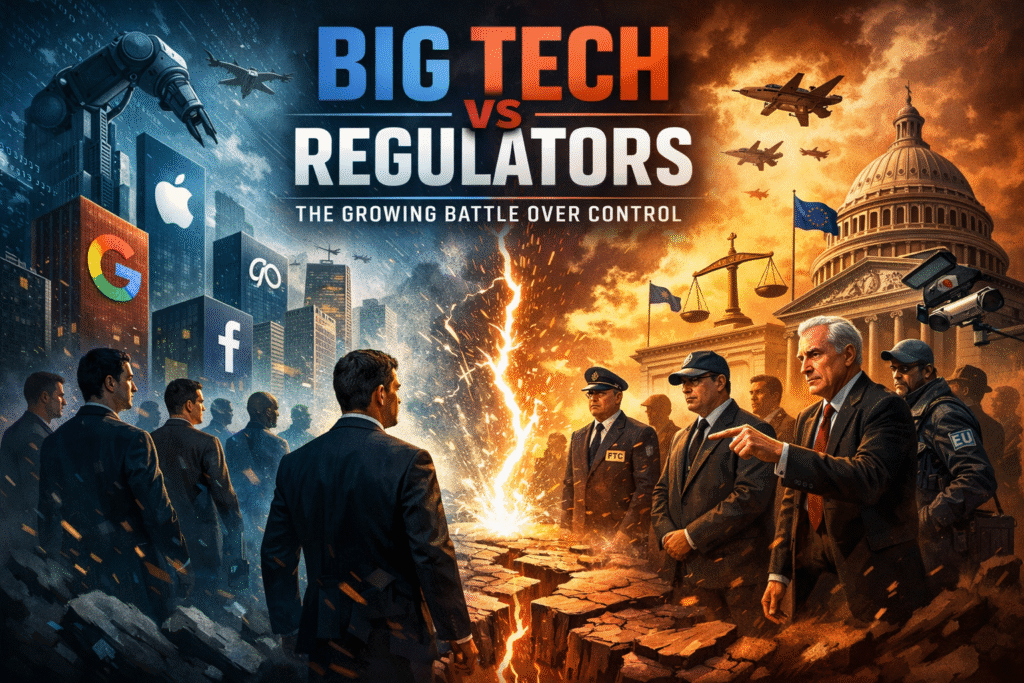
Large tech corporations are some of the most powerful entities in the world today. They include Google, Amazon, Meta, Apple, and Microsoft; they have changed how we shop, communicate, do our jobs, and think. As a result of their increasing power and influence, there is now a struggle between governments and regulators around the world regarding how much control large tech companies should have over the digital world. Why Governments Are Stepping In According to regulators, major technology firms currently dominate numerous sectors of the economy; therefore, they are preventing local start-ups from being able to thrive within their respective functionalities. In addition, government regulators want to ensure that consumers are being protected when it comes to their personal information and private information; thus, data privacy issues, online safety matters, false advertising and discriminatory business practices have become major focal points of regulatory initiatives, and therefore, new regulations are needed to not only protect consumers but also keep the market competitive. Big Tech’s Side of the Argument Large technology companies argue that if new regulation is implemented, innovation would be hindered. The technology giant asserts that many users choose their product based on price, availability, and ease of use but would not continue to do so if there was government control placed on those products because it may cause their digital service to be affected, in turn making those companies (and the United States) less globally competitive. In addition, many of the leaders of various technology companies believe that the current law is not reflective of the rapid evolution of the digital world. Key Areas of Conflict Conflicts are occurring primarily in two areas – data privacy and competition among companies via acquisitions. Governments are accusing tech companies of blocking their competition by acquiring their companies and utilising unfair behaviours. Furthermore, there is an increasing concern over the management of content. In this case, authorities are requesting tech companies take measures to monitor, regulate and control improper use of the internet as it relates to fake news and harmful content, whereas tech companies are concerned about having to circumvent past practices in their management of content and about how much responsibility will be placed upon them for free speech. Global Impact of New Rules Countries are taking unique paths; while Europe has placed restrictions on technology firms by instituting stringent rules, they have also launched several lawsuits against technology companies to enhance the level of behavioural scrutiny that applies to large technology firms. In India, for example, regulators are exploring various legal avenues related to data storage, domestic compliance, and fair competition in order for these standards to encourage the global modifications in how the industry conducts its day-to-day business. What This Means for the Future The battle of large technology firms versus government regulators is not over. With the advancement of technology, the emergence of new challenges continues. The outcome may ultimately determine the future of the internet, business creation and user rights. Finding the balance between freedom and control from each side will probably be the biggest challenge for both sides.
Breakthrough Medical Research That You May See in the Next Decade

There has never been a time when medical science has advanced faster than today. Revolutionary new treatments, improved diagnostic tools, and significant technological advances are just some of the exciting changes that will transform the way we approach prevention, diagnosis, and treatment over the next 10 years. Below are several of the exciting breakthroughs to expect in the future. 1. Gene Editing and CRISPR Advances The use of gene editing technology such as CRISPR-Cas9 has generated considerable media attention due to the promise it holds to change the way we treat DNA and thereby change the course of genetic disease. In the coming 10 years, scientists will continue to advance these technologies and develop methods to help eliminate diseases such as cystic fibrosis and sickle cell anemia, and perhaps some types of cancer, through greater accuracy and lessening the undesirable side effects of current treatment options. If successful, gene editing may soon offer patients with previously unmanageable illnesses a standard means for treating their conditions. 2. Personalized Medicine Data from patient care, which includes genetics, environments, and lifestyles, is used in personalized or precision medicine to customize the treatment a patient receives. The continued advancement of genomic science and the application of data analytics to these fields will allow for increased accessibility to personalized therapies within the next several years. The above example illustrates that the potential exists for the development of targeted therapies for a variety of conditions, including cancer, cardiovascular diseases (e.g., heart disease), and diabetes, which could allow for more specific and efficacious therapy selection without the usual trials and errors associated with traditional prescribing methods. 3. Artificial Intelligence in Diagnostics AI is changing how physicians identify and diagnose illness via machine learning algorithms through analyzing medical images, laboratory tests, and patient information quicker and often with greater precision than individuals. In the next ten years, AI may play an important role in improving the early identification of Alzheimer’s disease, lung cancer, and heart disease. With this increased accuracy in diagnosis, there is a high probability that millions of lives will be saved through early intervention. 4. Regenerative Medicine and Stem Cells Repairing or replacing damaged tissues & organs is the objective behind regenerative medicine. Stem cell-based therapy, bioengineered organs, and 3D-printed tissue all represent cutting-edge developments within this field of study. With the likely availability of heart regeneration, spinal cord injury repair, and rent tissue production scheduled for the next ten years, a new horizon appears to be approaching for many people who have experienced illness due to lack of proper care or have no access to a suitable replacement organ. 5. Advances in Immunotherapy The application of immunotherapy in the treatment of cancer has revolutionized the way in which cancer is treated and has created new ways to treat additional conditions such as autoimmune diseases, infections, and neurological disorders. In the next decade, as researchers continue to find more precise and targeted immunotherapy options, the treatments that they develop will likely be less toxic and more effective than current methods. 6. Longevity and Anti-Aging Research Science is increasingly focused on extending healthy lifespan. Research into senescence, cellular repair, and metabolic pathways may soon lead to therapies that slow aging and reduce age-related diseases. The next decade could bring medications or treatments that help people live longer, healthier lives while maintaining quality of life. 7. Telemedicine and Digital Health Innovations The COVID-19 pandemic accelerated the adoption of telemedicine, wearable devices, and remote monitoring tools. In the next ten years, these technologies will become more integrated and sophisticated, allowing doctors to monitor patient health in real time, predict illnesses, and provide care from anywhere. This shift will improve access to healthcare, particularly in remote or underserved regions. 8. Microbiome-Based Therapies Researchers are discovering that the human microbiome—the collection of microbes living in our bodies—plays a critical role in health. Future treatments may involve modifying gut bacteria to prevent or treat conditions like obesity, diabetes, autoimmune disorders, and even mental health issues. Microbiome-based therapies could revolutionize how we understand and maintain health. Conclusion The next decade promises a remarkable transformation in medicine. From gene editing and AI-powered diagnostics to regenerative therapies and anti-aging research, these breakthroughs could redefine healthcare as we know it. While challenges remain, including regulatory hurdles and ethical considerations, the future of medicine looks brighter than ever, offering hope to millions around the world.