
Jet-Set, Sustainably: How to Travel the World Without Leaving a Footprint

In an era where climate change headlines dominate the news and carbon emissions are tracked with increasing scrutiny, the concept of “sustainable travel” has transitioned from a niche interest to a global imperative. With the tourism industry accounting for nearly 8% of global carbon emissions, travelers and industry stakeholders alike are seeking eco-conscious alternatives. This blog explores how the rise of sustainable travel is reshaping how we explore the world ensuring our adventures enrich both us and the planet. Understanding Sustainable Travel Sustainable travel refers to tourism that minimizes negative environmental, social, and economic impacts. It also aims to generate benefits for local communities and preserve cultural heritage. Unlike traditional travel, where convenience and affordability often take precedence, sustainable travel encourages mindful choices—such as selecting eco-certified accommodations, supporting local economies, and reducing one’s carbon footprint. The Environmental Impact of Tourism Tourism has a sizable environmental footprint: Sustainable travel offers a path to mitigate these issues while still allowing people to connect with different cultures and environments. Planning Your Sustainable Adventure Sustainable Travel in Transportation Transportation accounts for a major part of tourism-related carbon emissions. Here’s how to make greener choices: Support Local Economies Sustainable travel isn’t just about the environment; it also emphasizes economic and social sustainability: Technology and Innovation in Sustainable Travel Modern tools and apps make it easier than ever to plan an eco-conscious trip: Eco-Conscious Activities to Consider Some experiences are inherently more sustainable than others: Challenges of Sustainable Travel Despite the growing interest, sustainable travel faces several hurdles: Travelers must stay informed and critical, seeking out verified eco-certifications and reading reviews. The Role of Businesses and Governments Corporations and governments also play a crucial role in enabling sustainable travel: How Individuals Can Make a Difference Every traveler has the power to make impactful decisions: Sustainable Travel is the Future As we move further into the 21st century, sustainable travel is becoming less of an option and more of a necessity. With conscious choices, travelers can help preserve the beauty and integrity of the places they love to visit. Whether it’s hiking through protected national parks, staying in solar-powered lodges, or dining at zero-waste restaurants, sustainable travel ensures that our explorations today won’t cost the Earth tomorrow. Final Thoughts Sustainable travel is about more than reducing emissions it’s a holistic approach to exploring the world with respect, responsibility, and reverence. As eco-consciousness becomes a standard expectation rather than a luxury, businesses, governments, and travelers must all collaborate to minimize tourism’s footprint. With the right planning, mindset, and tools, we can embrace the joys of travel while safeguarding the planet. So pack your bags not with plastic, but with purpose and jet-set sustainably. For more insights, follow The Business Tycoon
Trust Is the New Ranking Factor: 7 SEO Trust Signals You Can’t Ignore
In the constantly shifting world of search engine optimization, one truth has become increasingly clear: trust is not just a buzzword; it’s a decisive ranking factor. Google has evolved far beyond keywords and backlinks. In 2025 and beyond, trust signals in SEO are what separate high-ranking, high-performing websites from those buried in search results. If you want your website to rank, convert, and thrive, understanding and optimizing for trust is no longer optional—it’s essential. This blog will uncover the seven most critical trust signals in SEO, why they matter, and how you can integrate them into your digital strategy to boost visibility and credibility. 1. Authoritativeness of Content Creators Google is prioritizing the E-E-A-T framework: Experience, Expertise, Authoritativeness, and Trustworthiness. At the center of this evolution is the credibility of the person behind the content. Who is writing your blogs, whitepapers, or guides? Trust signals in SEO begin with showcasing your authors’ credentials. Add bios with qualifications, link to authoritative social profiles, and display contributions on reputable platforms. When Google sees a content creator with a digital footprint of knowledge and experience, it rewards them with higher rankings. How to Boost This Signal: 2. High-Quality Backlinks from Trusted Domains The days of mass backlinking are over. What matters now is the quality and relevance of those links. Earning backlinks from government websites, educational institutions, top-tier media outlets, or well-respected industry blogs acts as a digital vote of confidence. These are powerful trust signals in SEO. How to Boost This Signal: 3. Secure and User-Friendly Website (HTTPS and UX) First impressions count, and a slow, insecure, or hard-to-navigate website erodes trust immediately. Google has confirmed that HTTPS is a ranking factor, and user experience (UX) directly influences SEO performance. A secure website shows that you take your users’ safety seriously. Combine this with intuitive navigation, fast loading times, and mobile optimization, and you’re sending out some of the strongest trust signals in SEO. How to Boost This Signal: 4. Transparent and Comprehensive Contact Information Would you trust a business that doesn’t provide a phone number, address, or even an email? Neither would Google. Transparency in your contact information shows legitimacy and accountability. Search engines scan your website to ensure it’s connected to a real entity. This includes business addresses, phone numbers, and team directories. These details are considered significant trust signals in SEO. How to Boost This Signal: 5. Consistent NAP Citations and Business Listings Name, Address, and Phone Number (NAP) consistency across the web is crucial, especially for local SEO. Discrepancies across platforms like Google My Business, Yelp, and social media can confuse users and search engines alike. Consistency in NAP data reflects a trustworthy and established business. It’s one of the often-overlooked yet impactful trust signals in SEO. How to Boost This Signal: 6. User Reviews and Testimonials Social proof is a massive trust booster, and Google knows it. Positive reviews not only influence customer decisions but also help search engines gauge the quality of your business. Sites with a consistent flow of authentic, high-quality reviews often rank higher. Testimonials and user ratings act as external trust signals in SEO that validate your brand’s credibility. How to Boost This Signal: 7. Content Accuracy and Transparency With the rise of misinformation, Google is increasingly rewarding content that is well-cited, factual, and regularly updated. Accurate, transparent content builds reader trust, which ultimately signals trustworthiness to search engines as well. Fact-checking, linking to credible sources, and disclosing conflicts of interest (e.g., affiliate links) play a pivotal role in building trust signalvs in SEO. How to Boost This Signal: Also Read: Business SEO Strategies That Work: 10 Proven Tactics for Higher Google Rankings Speak Up! Mastering Voice Search SEO Before Your Competitors Do Let’s Talk Keywords: Crafting Conversational SEO That Ranks in 2025 Lights, Camera, Rank! How to Boost Your Video SEO in 2025 E-E-A-T Explained: Building Expertise and Trust in Google’s Eyes Pixels with Purpose: Image SEO Strategies That Get You Found Fast Search by Sight: Mastering Visual SEO for E-Commerce and Beyond Bringing It All Together In 2025, SEO is no longer just about keywords and links—it’s about integrity, transparency, and credibility. Trust signals in SEO are the invisible threads weaving your brand into the digital fabric of reliability and relevance. By focusing on the seven trust signals discussed above, you position your website as a reputable, authoritative, and trustworthy destination for both users and search engines. Whether you’re running a blog, an e-commerce site, or a service-based platform, investing in these elements will yield long-term SEO rewards. Final Tip: Don’t just optimize for algorithms, optimize for humans. Build real trust, and search rankings will follow.
E-E-A-T Explained: Building Expertise and Trust in Google’s Eyes
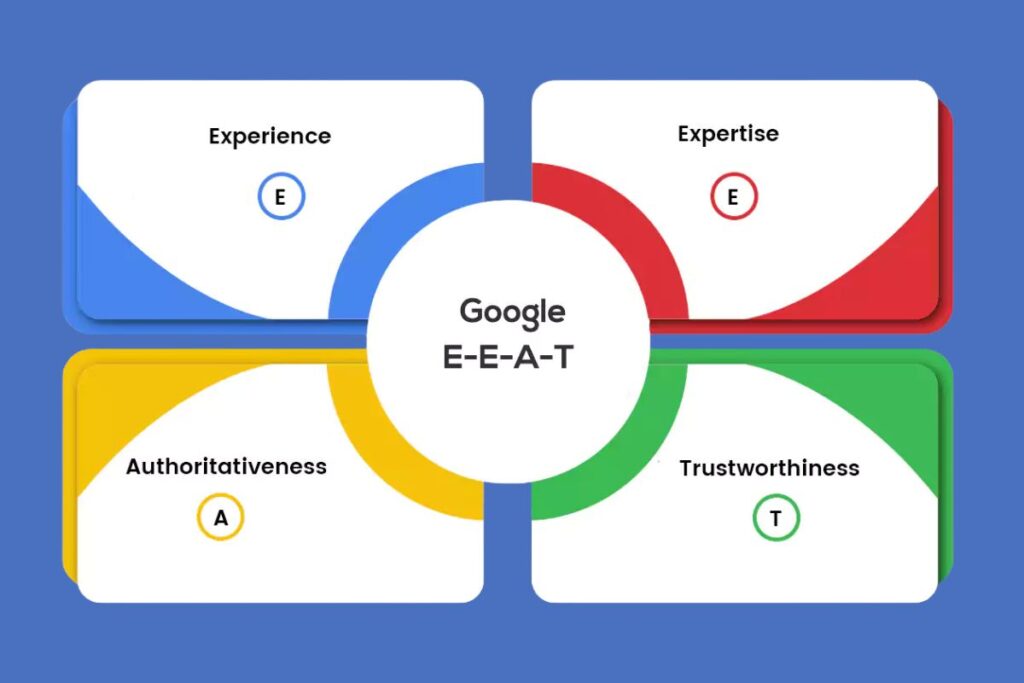
In the ever-evolving world of digital marketing and search engine optimization (SEO), the key to long-term visibility and sustainable growth lies in aligning your content with Google’s quality guidelines. One of the most critical concepts that has emerged in recent years is E-E-A-T — which stands for Experience, Expertise, Authoritativeness, and Trustworthiness. Understanding and implementing E-E-A-T SEO strategies is essential for businesses and content creators aiming to rank higher and establish long-term digital authority. What is E-E-A-T? E-E-A-T originates from Google’s Search Quality Evaluator Guidelines, which help human evaluators assess the quality of search results. Originally introduced as E-A-T (Expertise, Authoritativeness, and Trustworthiness), Google updated the concept by adding an additional “E” for Experience in late 2022. This addition reflects Google’s growing emphasis on content that demonstrates first-hand, real-world experience. Each component of E-E-A-T plays a specific role: Understanding how to build and showcase these elements is at the core of effective E-E-A-T SEO strategies. Why E-E-A-T Matters in 2025 Google’s algorithms are constantly evolving to deliver the most helpful and accurate content to users. In 2025, as AI-generated content becomes more prevalent, the need for E-E-A-T SEO strategies has intensified. Google wants to ensure that high-ranking content comes from credible sources, especially in industries like finance, health, law, and news—commonly referred to as YMYL (Your Money or Your Life) niches. When Google can determine that a page demonstrates high levels of experience, expertise, authority, and trust, it’s more likely to rank that page higher in search results. E-E-A-T is not a direct ranking factor but influences how Google evaluates the quality and relevance of your content. Building E-E-A-T into Your Content Strategy 1. Showcase Author Credentials To support E-E-A-T SEO strategies, ensure that every piece of content is clearly authored. Add detailed author bios with qualifications, certifications, professional experience, and social proof. Link to their profiles or other work to showcase authority and credibility. 2. Create In-Depth, Expert Content High-quality, well-researched content remains a pillar of effective SEO. Go beyond surface-level blog posts and dive deep into topics with comprehensive guides, whitepapers, and case studies. Use reliable sources and data to support claims. 3. Include First-Hand Experience Incorporating first-hand insights and unique perspectives significantly strengthens the Experience element. Whether it’s product reviews, service case studies, or personal stories, Google rewards content that reflects real-world experience. 4. Optimize On-Page SEO with Trust Elements Include trust signals such as HTTPS security, clear contact information, privacy policies, and terms of service. Display certifications, industry memberships, or awards. These reinforce your commitment to user safety and transparency. 5. Encourage Positive Reviews and Mentions Building authority and trust doesn’t stop on your website. Encourage satisfied customers to leave positive reviews on Google My Business, Yelp, and other platforms. Secure guest posts, interviews, or mentions from reputable sources in your industry to strengthen off-page SEO. 6. Leverage Structured Data Structured data (schema markup) helps Google understand the context of your content. Use schema types like Article, Author, Product, and Review to highlight essential information. This enhances visibility and supports E-E-A-T SEO strategies. 7. Regularly Update Content Outdated content can harm your credibility. Regularly audit your website to refresh and update older posts. Add new data, correct inaccuracies, and improve readability to ensure the content reflects the latest knowledge and developments. E-E-A-T in Different Industries Healthcare If you run a healthcare website, Google demands the highest standards of E-E-A-T SEO strategies. Content must be written or reviewed by certified professionals. Adding medical disclaimers and clearly linking to credible sources like PubMed or CDC is crucial. Finance Financial content must come from qualified professionals with clear disclosures and transparent practices. Ensure all calculators, tools, and advice follow regulatory guidelines and showcase expertise. E-commerce Product pages should include customer reviews, return policies, secure checkout, and brand trust elements. Add detailed product descriptions and highlight third-party endorsements or sustainability practices. Education For educational websites or course providers, list instructor credentials, affiliations, and accreditation. Include testimonials and data on student outcomes to build trust and demonstrate authority. Tools to Strengthen E-E-A-T Measuring the Impact of E-E-A-T SEO Strategies While E-E-A-T isn’t a direct ranking factor, you can measure its effectiveness through: If you’re seeing improvements in these areas after implementing E-E-A-T SEO strategies, you’re likely moving in the right direction. Also Read: Business SEO Strategies That Work: 10 Proven Tactics for Higher Google Rankings Speak Up! Mastering Voice Search SEO Before Your Competitors Do Let’s Talk Keywords: Crafting Conversational SEO That Ranks in 2025 Lights, Camera, Rank! How to Boost Your Video SEO in 2025 Future-Proofing Your SEO Strategy with E-E-A-T In 2025 and beyond, Google will continue refining its understanding of content quality. AI content will proliferate, making human expertise and real-world experience even more valuable. By grounding your content strategy in E-E-A-T SEO strategies, you align your site with what Google values most: helpful, credible, and user-focused information. Final Thoughts E-E-A-T is more than just a checklist – it’s a guiding philosophy for creating content that delivers real value to users. In a digital landscape flooded with generic and AI-generated posts, building expertise and trust is your most powerful differentiator. Brands and publishers who invest in E-E-A-T SEO strategies will not only earn higher rankings but also foster long-term loyalty, credibility, and growth. For more insights, follow The Business Tycoon
Pixels with Purpose: Image SEO Strategies That Get You Found Fast
In today’s digital-first world, visuals are no longer just design elements—they are discoverable assets that drive engagement, traffic, and conversions. The evolution of search engines and AI algorithms has elevated the importance of images, making Image SEO not just an enhancement but a necessity. Brands, marketers, and content creators now realize that optimizing images is key to winning online visibility. This article explores powerful, actionable Image SEO best practices that will ensure your visual content gets found fast. Why Image SEO Matters in 2025 Search engines are smarter than ever. With machine learning and visual recognition technologies improving at a rapid pace, search engines like Google can now “see” and understand images more accurately. This shift has intensified the value of image optimization. Image SEO best practices go beyond file names and alt text; they now involve structured data, lazy loading, accessibility, and even image compression without quality loss. Moreover, with the rise of visual search tools like Google Lens and Pinterest Lens, users can now initiate searches using images rather than text. E-commerce brands, fashion retailers, real estate platforms, and travel companies are seeing massive benefits from embracing visual SEO. Implementing Image SEO best practices is no longer optional—it’s a competitive advantage. The Anatomy of Image SEO Best Practices Let’s break down the core components of effective Image SEO and how you can implement them: 1. Descriptive Filenames Before uploading your image, rename the file using descriptive, keyword-rich filenames. Avoid generic names like IMG_1234.jpg—instead, use organic-matcha-green-tea-powder.jpg. This helps search engines understand the image content. 2. Alt Text Optimization Alternative text (alt text) is crucial for both SEO and accessibility. Use concise yet descriptive phrases to define the image. This not only helps visually impaired users but also gives search engines more context about your content. Example: <img src=”organic-matcha-green-tea-powder.jpg” alt=”Organic Matcha Green Tea Powder in Ceramic Bowl” /> Alt text is one of the foundational Image SEO best practices that also supports your ranking in image search results. 3. Image File Size and Compression Large images can slow down your page loading speed—an SEO killer. Use tools like TinyPNG, ImageOptim, or Squoosh to compress images without compromising quality. Lighter images improve UX and reduce bounce rates, directly influencing your SEO rankings. 4. Responsive Images Make sure your images look great on all devices. Use srcset attributes to provide different image sizes for different screen resolutions. Responsive design is a core component of modern Image SEO best practices.cc <img src=”tea.jpg” srcset=”tea-small.jpg 480w, tea-medium.jpg 800w, tea-large.jpg 1200w” sizes=”(max-width: 600px) 480px, (max-width: 900px) 800px, 1200px” alt=”Green tea with steam rising” /> 5. Lazy Loading Enable lazy loading for images to enhance performance. This approach loads images only when they’re about to enter the viewport, reducing initial page load time. In HTML5: <img src=”tea.jpg” loading=”lazy” alt=”Hot green tea in white cup” /> 6. Structured Data for Images Schema markup helps search engines understand your content contextually. Use ImageObject schema to enhance your image-rich content for visibility in search results. Example (JSON-LD): { “@context”: “https://schema.org”, “@type”: “ImageObject”, “contentUrl”: “https://www.example.com/photos/tea.jpg”, “description”: “Aerial view of green tea powder in ceramic bowl” } 7. Captions and Context Images surrounded by relevant text perform better in SEO. Use captions and body content to contextualize your visuals. This is one of the more overlooked Image SEO best practices but plays a crucial role. 8. CDN and Image Hosting Deliver your images via a Content Delivery Network (CDN) to improve load speeds for global users. Tools like Cloudflare, Fastly, and Akamai ensure your images are served from the closest server to the user. 9. Image Sitemap Include your images in XML sitemaps so search engines can index them better. This improves the discoverability of your media assets. <image:image> <image:loc>https://www.example.com/images/tea.jpg</image:loc> <image:caption>Organic green tea powder in bowl</image:caption> </image:image> 10. Avoid Decorative Overload Only use images that add value. Too many non-essential images can clutter your page and hurt load speed. Strategic use of visual content is a key tenet of modern Image SEO best practices. Also Read: Business SEO Strategies That Work: 10 Proven Tactics for Higher Google Rankings Speak Up! Mastering Voice Search SEO Before Your Competitors Do Let’s Talk Keywords: Crafting Conversational SEO That Ranks in 2025 Lights, Camera, Rank! How to Boost Your Video SEO in 2025 How Image SEO Best Practices Impact Different Industries E-Commerce Optimized product images improve conversion rates and organic traffic. Shoppers use image search when looking for specific products. Travel and Hospitality High-quality, optimized visuals of destinations, hotels, and experiences can boost bookings through search discovery. Food and Beverage Mouthwatering visuals can go viral and drive interest when properly optimized for SEO. Fashion and Lifestyle Style and aesthetics are visual-driven. Properly tagged and compressed images keep you top-of-mind and top-of-search. Tools to Implement Image SEO Best Practices 2025 Trends in Image SEO Final Thoughts Image SEO best practices are no longer a checklist; they are a dynamic and strategic necessity. As search engines evolve and visual search becomes second nature for users, your images must be optimized not just for performance but for discovery. Brands that embrace these best practices in 2025 will outpace competitors, delight users, and dominate search results. Incorporate these Image SEO best practices today to ensure your visuals aren’t just seen—but found fast, appreciated, and acted upon. For more insights, follow The Business Tycoon
Search by Sight: Mastering Visual SEO for E-Commerce and Beyond
In a world where images speak louder than words, the way consumers search is rapidly changing. With smartphones and AI-powered tools enabling users to search using images instead of keywords, visual search has evolved into a powerful trend reshaping the future of digital marketing. As this technology becomes more prevalent, businesses—especially in e-commerce—must prioritize visual search optimization to stay ahead of the competition. Understanding Visual Search Visual search allows users to search the web using images rather than text. Platforms like Google Lens, Pinterest Lens, and Bing Visual Search allow users to snap a photo of an item they’re interested in, and receive search results that match or resemble it. This technology relies on machine learning, computer vision, and deep neural networks to interpret images and retrieve relevant data. For e-commerce brands, this means that your product images need to be discoverable and searchable by machines. The better your visual search optimization, the higher your visibility in image-driven queries. Why Visual Search Matters in 2025 The numbers don’t lie. According to a recent study by Insider Intelligence, over 60% of millennials and Gen Zers prefer visual search over other methods. Retailers integrating visual search tools have seen a significant increase in conversion rates and average order values. As the trend continues, optimizing for visual search will no longer be optional—it will be essential. Visual content captures attention faster than text. In 2025, as consumers demand instant gratification and seamless user experiences, visual search optimization will be the key to delivering faster, more relevant results. Key Industries Leveraging Visual Search While fashion and home décor are currently leading the charge, many industries stand to benefit from visual search: Each of these sectors can enhance customer experience and sales by investing in visual search optimization. Steps to Master Visual Search Optimization To capitalize on the rising tide of visual search, companies must adopt a well-rounded SEO strategy that includes the following steps: 1. High-Quality, Relevant Images Start by ensuring all your product or content images are high-resolution and clear. Avoid cluttered or overly edited images that might confuse AI recognition systems. 2. Use Descriptive Filenames Before uploading, name your image files descriptively and include target keywords. For example, use “black-leather-handbag.jpg” instead of “IMG12345.jpg.” 3. Add Alt Text with Target Keywords Alt text helps visually impaired users, but it also plays a crucial role in visual search optimization. Write clear, concise descriptions using relevant keywords. 4. Implement Structured Data Using schema markup on your product pages helps search engines understand what’s in your images. Include information like price, availability, and brand details to improve visibility. 5. Optimize Image Load Speed Fast-loading images are critical for both user experience and SEO rankings. Use tools like WebP format and lazy loading to improve site speed. 6. Create an Image Sitemap An image sitemap tells search engines which images to crawl on your website. This ensures that none of your product or promotional images are overlooked. 7. Use AR and 3D Visualization Augmented Reality and 3D product visualization offer immersive shopping experiences and are becoming part of visual search technology. Businesses that invest early in these technologies will enjoy better visual search optimization. Visual Search Optimization on Major Platforms Different platforms handle visual search differently. Here’s how to enhance your visibility on the most popular ones: Google Lens Pinterest Lens Bing Visual Search Being platform-aware ensures that your visual search optimization efforts aren’t wasted. The Role of AI in Visual Search AI is the driving force behind visual search. As machine learning algorithms improve, the accuracy and speed of visual search results will increase. In 2025, AI will not just match images to results but anticipate user intent based on past searches, preferences, and behavior patterns. Businesses that leverage AI-enhanced tools for visual search optimization will outperform their competitors in both reach and revenue. Real-World Examples Challenges in Visual Search Optimization Despite its promise, visual search comes with challenges: Addressing these hurdles requires continuous education, investment in tech, and strategic content planning. Also Read: Business SEO Strategies That Work: 10 Proven Tactics for Higher Google Rankings Speak Up! Mastering Voice Search SEO Before Your Competitors Do Let’s Talk Keywords: Crafting Conversational SEO That Ranks in 2025 Lights, Camera, Rank! How to Boost Your Video SEO in 2025 Future Outlook By 2025, visual search is expected to become a mainstream search behavior. E-commerce platforms that ignore visual search optimization will struggle to attract and retain users. On the other hand, those who master it will benefit from increased visibility, higher engagement, and better conversion rates. What’s Next? Conclusion In the competitive world of digital commerce, visibility is everything. As search evolves from text to visuals, businesses must adapt their strategies accordingly. Mastering visual search optimization not only future-proofs your brand but also opens up a more engaging and seamless shopping experience for your customers. Whether you’re an e-commerce giant or an emerging brand, now is the time to get serious about the power of sight. For more insights, follow The Business Tycoon
Lights, Camera, Rank! How to Boost Your Video SEO in 2025

Video content is no longer optional—it’s essential. In 2025, video dominates the digital landscape, influencing everything from social media engagement to SERP rankings. But creating great videos isn’t enough. To ensure they’re discovered, watched, and shared, businesses must master the art of video SEO optimization. This comprehensive guide will walk you through the evolving world of video SEO, the strategies that work in 2025, and how to make sure your video content climbs to the top of search results. Why Video SEO Optimization Matters More Than Ever Consumers are hungry for video content. According to recent studies, videos are expected to make up over 85% of all consumer internet traffic by the end of 2025. Whether it’s product tutorials, brand storytelling, or short-form social clips, video content is how people prefer to consume information. However, this explosion of content means greater competition. Simply uploading a video to YouTube or embedding it on your site won’t cut it. Without proper video SEO optimization, even your best video content risks being buried. Search engines now prioritize video results—especially for mobile and voice searches. Google often includes video snippets at the top of the page, and platforms like YouTube function as major search engines in their own right. Optimizing for video SEO helps your content surface in more searches, boosts visibility, and drives more traffic. Key Components of Video SEO Optimization Platforms That Influence Video SEO in 2025 Advanced Video SEO Optimization Techniques Measuring Video SEO Success Track key performance indicators (KPIs) using tools like: Monitor: Common Pitfalls to Avoid Trends to Watch in 2025 Conclusion In 2025, video SEO optimization is no longer just an advantage-it’s a necessity. As more users rely on video for information, education, and entertainment, optimizing your video content ensures you’re not just part of the noise-you’re leading the conversation. By focusing on strategic keyword usage, compelling metadata, schema markup, and engaging content, businesses can ensure their videos rise to the top of search results and stay there. Whether you’re a solopreneur or a global enterprise, mastering video SEO optimization is key to scaling your digital footprint and capturing attention in a crowded content landscape. For more insights, follow The Business Tycoon
Optimizing for the Human Voice: Why Natural Language Is the Future of Search

Search behavior is evolving rapidly. As virtual assistants, smart speakers, and voice search become everyday tools, one trend stands out: people are speaking to their devices the same way they speak to other people. This has given rise to natural language search optimization, a strategy that aligns content with the conversational queries people actually use. Businesses that embrace this evolution can create more intuitive, accessible, and effective content that meets users where they are. This blog explores why natural language is the future of search and how your business can benefit from natural language search optimization. The Shift Toward Conversational Queries In the past, people typed keywords like “best Italian restaurant NYC” into search engines. Today, thanks to voice search and AI-driven assistants, users are more likely to ask, “What’s the best Italian restaurant in New York City open right now?” This subtle but significant change represents the rise of natural language queries—longer, more specific, and rooted in everyday speech. Search engines like Google have responded by updating their algorithms to better understand and interpret natural language. Technologies like BERT (Bidirectional Encoder Representations from Transformers) and MUM (Multitask Unified Model) allow Google to understand the context and intent behind queries, not just keywords. As a result, natural language search optimization has become essential for ranking well and capturing organic traffic. What Is Natural Language Search Optimization? Natural language search optimization is the process of tailoring digital content to match how people speak and ask questions in real life. It prioritizes long-tail keywords, question-based content, and contextual relevance. Unlike traditional SEO, which focuses heavily on exact-match keywords, this approach relies on understanding user intent and providing meaningful answers. For instance, rather than targeting the keyword “weather app download,” a naturally optimized page might answer the question, “What’s the best free weather app for Android in 2025?” The latter not only captures the user’s true intention but also aligns better with modern search engine algorithms. Why It Matters in 2025 Implementing Natural Language Search Optimization Examples of Natural Language Search Optimization in Action Benefits for Businesses Also Read: Business SEO Strategies That Work: 10 Proven Tactics for Higher Google Rankings Speak Up! Mastering Voice Search SEO Before Your Competitors Do Let’s Talk Keywords: Crafting Conversational SEO That Ranks in 2025 Challenges to Consider Conclusion The future of search is human—and natural language search optimization is your ticket to staying relevant. As AI, voice search, and smart devices become even more integrated into our daily lives, businesses that speak their audience’s language—literally—will come out on top. By focusing on long-tail keywords, question-based content, and semantic relevance, you can create a search strategy that feels intuitive and delivers results. It’s time to optimize not just for algorithms, but for people. Because when you align your content with how your audience actually speaks, you don’t just show up in search—you connect, engage, and grow. For more insights, follow The Business Tycoon
Let’s Talk Keywords: Crafting Conversational SEO That Ranks in 2025

In the fast-evolving digital landscape, traditional SEO tactics are no longer enough to capture the hearts—and voices—of modern searchers. As search engines become more sophisticated, user behavior is becoming more conversational, especially with the widespread adoption of voice assistants, chatbots, and natural language interfaces. The future of SEO lies in conversation. In this article, we’ll dive into the world of conversational SEO strategies and explain how businesses can adapt their keyword and content approach to stay relevant and competitive in 2025 and beyond. What is Conversational SEO? Conversational SEO refers to the practice of optimizing content to align with natural language queries that resemble everyday speech. Rather than focusing solely on short, keyword-heavy phrases, conversational SEO prioritizes longer, more contextual queries—often questions or complete sentences—that people use when talking to voice assistants or typing with intent. For example: With the integration of AI and machine learning in search algorithms, conversational SEO strategies help search engines better understand user intent, context, and semantics. Why Conversational SEO Strategies Matter in 2025 The Key Pillars of Conversational SEO Strategies 1. Understanding User Intent To craft effective conversational SEO strategies, businesses must go beyond keywords and understand why users are searching. Are they looking to learn, buy, compare, or solve a problem? Use tools like: Tailor your content to fulfill that intent in a clear and engaging way. 2. Use of Long-Tail and Question-Based Keywords Conversational SEO thrives on long-tail keywords—those niche, highly specific phrases that mirror how people speak. Start incorporating keywords that sound like spoken questions: These long-form queries not only align with voice searches but also convert better due to clearer intent. 3. Create FAQ Sections and Conversational Content Blocks A powerful conversational SEO strategy is to create FAQ sections that answer common questions your audience asks. Each question should be formatted with a clear heading and a concise, informative answer. Example: FAQs can be marked up with structured data for better visibility in featured snippets and voice results. 4. Write Like You Speak Avoid stiff, keyword-stuffed language. Use a friendly, approachable tone that mirrors how your audience talks. If your readers say, “How can I grow my Instagram following fast?” your content should include that phrase or answer naturally. Conversational SEO strategies require you to sound less like a machine and more like a helpful friend. 5. Structured Data & Schema Markup Search engines rely on structured data to better understand and display your content. Marking up your FAQs, how-to guides, product pages, and reviews with schema improves your chances of appearing in voice and featured results. Use Schema.org markup tools to add structured data to: 6. Leverage Chatbots and AI-Powered Content Interfaces Integrating conversational AI tools like chatbots can help capture search intent data in real time and improve UX. Use these insights to fine-tune your content with conversational SEO strategies that are rooted in actual user behavior. Optimizing Different Content Types with Conversational SEO Blog Posts Product Pages Landing Pages Tools for Building Strong Conversational SEO Strategies Future-Proofing Your SEO with Conversational Strategies The future of SEO is human-centered. As AI-driven search evolves, the ability to converse with search engines will become the norm. Here’s how to prepare: Common Mistakes to Avoid in Conversational SEO Case Study: Conversational SEO in Action Business: A fitness coach offering virtual programs. Old Strategy: Keywords like “virtual personal trainer,” “online workouts.” Conversational SEO Strategy: Results: Also Read: Business SEO Strategies That Work: 10 Proven Tactics for Higher Google Rankings Speak Up! Mastering Voice Search SEO Before Your Competitors Do Let’s Talk Keywords: Crafting Conversational SEO That Ranks in 2025 Conclusion: Talk Your Way to the Top As search engines become smarter and user behavior continues to evolve, conversational SEO strategies will define digital visibility. Businesses that adapt early and tailor their content to mirror real-life speech will be the ones dominating search results in 2025. By focusing on user intent, natural language, and smart structure, you’ll craft content that not only ranks—but resonates. Now’s the time to stop stuffing keywords and start speaking your audience’s language. Let’s talk keywords—and let them talk back. For more insights, follow The Business Tycoon
Speak Up! Mastering Voice Search SEO Before Your Competitors Do

In the age of smart assistants, voice-enabled devices, and hands-free commands, the way users interact with search engines has evolved dramatically. Traditional text-based queries are giving way to conversational commands. For businesses striving to stay ahead, voice search optimization is no longer optional—it’s a strategic necessity. This article will walk you through the critical steps to mastering voice search SEO in 2025 and how doing so can help you outrank your competitors in the ever-evolving digital landscape. What Is Voice Search Optimization? Voice search optimization refers to the process of enhancing your content, website, and overall digital presence to appear in voice search results. It involves tailoring your SEO strategy to align with how people speak, rather than how they type. Unlike traditional SEO, which focuses on short keywords or key phrases, voice search queries are typically longer, more natural, and often question-based. For example, someone might type “weather New York,” but ask their voice assistant, “What’s the weather like in New York City today?” Understanding these distinctions is key to a successful voice search optimization strategy. Why Voice Search Matters in 2025 With over 4.2 billion digital voice assistants in use globally—and that number expected to hit 8.4 billion by 2026—voice search is fundamentally reshaping how users access information. From smartphones and smart speakers to in-car assistants and wearables, voice-enabled technology is embedded in everyday life. Key reasons voice search optimization is critical: By investing in voice search optimization now, you prepare your business to meet customers where they already are. Key Elements of Voice Search Optimization 1. Conversational Keywords Optimize your content for long-tail and natural language keywords. Instead of targeting “best budget headphones,” you might aim for, “What are the best budget headphones under $100?” Use tools like Google’s “People Also Ask” and Answer the Public to discover common voice-style queries in your niche. 2. FAQ Pages Creating a Frequently Asked Questions (FAQ) page is a simple yet powerful way to align with voice search patterns. Structure your FAQs using actual questions users might ask and provide clear, concise answers. Example: 3. Optimize for Local SEO Voice search is heavily used for local inquiries. Ensure your business information—such as name, address, phone number, and hours—is accurate across all platforms, including Google Business Profile, Yelp, and Apple Maps. Include phrases like “near me,” city names, and regional landmarks in your content and meta descriptions. 4. Improve Page Speed and Mobile Experience Most voice searches occur on mobile devices. A slow-loading or unresponsive site will lead users to bounce quickly—and hurt your rankings. Google’s PageSpeed Insights tool can help identify performance bottlenecks. 5. Use Schema Markup Structured data helps search engines better understand your content. Implementing schema markup improves your chances of appearing in rich results and being picked for voice readouts. Mark up: Content Strategies for Voice Search Optimization To create voice-optimized content: Tools to Assist in Voice Search Optimization These tools provide valuable insights to fine-tune your voice search optimization efforts and stay ahead of trends. Also Read: Business SEO Strategies That Work: 10 Proven Tactics for Higher Google Rankings Speak Up! Mastering Voice Search SEO Before Your Competitors Do Let’s Talk Keywords: Crafting Conversational SEO That Ranks in 2025 Industries Benefiting Most from Voice Search While nearly all industries can benefit from voice search optimization, some see particularly high ROI: Future Trends in Voice Search Optimization Common Pitfalls to Avoid Avoiding these errors will ensure your voice search optimization efforts pay off. Conclusion: Your Voice, Your Advantage Voice search is not just a trend—it’s a fundamental shift in how users interact with information. Businesses that act now will gain a first-mover advantage, stronger brand visibility, and better customer engagement. Voice search optimization is about more than keywords. It’s about adapting to user behavior, enhancing digital experiences, and embracing the conversational future of search. By investing time and resources into this area now, you position your business to not only keep up—but lead. For more insights, follow The Business Tycoon
The Rise of Eco-Tech: Innovations That Save the Planet and Your Budget

In the modern age, where climate change headlines dominate global conversations, the intersection of sustainability and technology has become more crucial than ever. As both environmental concerns and financial constraints shape business and personal decisions alike, eco-friendly tech is emerging as a powerful solution. These innovations not only aim to protect the planet but also offer cost-effective alternatives that align with the growing demand for responsible living. From green gadgets in households to sustainable enterprise solutions, eco-tech is transforming how we work, live, and interact with our environment. This article explores the landscape of eco-friendly tech, how it benefits both the planet and your wallet, and the trends that will define its evolution in the coming years. What is Eco-Friendly Tech? Eco-friendly tech refers to any technology designed to minimize environmental impact while maintaining or improving functionality. This includes: Unlike conventional technologies that often prioritize performance at the expense of the environment, eco-friendly tech focuses on long-term sustainability without compromising quality or utility. The Importance of Eco-Friendly Tech in 2025 The urgency of climate change cannot be overstated: Amidst these challenges, eco-friendly tech is not just a trend—it’s a necessity. It’s empowering individuals, governments, and corporations to make meaningful changes that reduce environmental impact while improving operational efficiency. Key Categories of Eco-Friendly Tech Innovations 1. Green Consumer Electronics Smartphones, laptops, and home gadgets are becoming more energy-efficient and sustainable. Examples: These eco-friendly tech options not only reduce e-waste but also lead to lower electricity consumption. 2. Smart Home Technologies Eco-tech is revolutionizing the way we manage energy, water, and waste at home. Popular products include: These innovations can cut household utility bills by up to 30% annually while significantly reducing resource consumption. 3. Renewable Energy Tech The rise of solar panels, wind turbines, and energy storage systems is making clean energy accessible to homes and businesses. Examples: This sector of eco-friendly tech not only reduces reliance on fossil fuels but also allows consumers to save thousands over time. 4. Sustainable Transportation The automotive and public transit industries are embracing electric vehicles (EVs), shared mobility solutions, and alternative fuels. Key innovations: These advancements in eco-friendly tech reduce urban pollution and transportation costs for users. 5. Green Data Centers and IT Solutions Tech companies are reevaluating their digital infrastructure to minimize energy usage. Eco-friendly practices include: Amazon, Microsoft, and Google are investing heavily in green cloud computing, saving millions in operational costs and setting a new industry standard. Financial Benefits of Eco-Friendly Tech Eco-conscious choices often come with an upfront cost, but the long-term financial rewards are undeniable: 1. Reduced Utility Bills: Smart systems and energy-efficient appliances significantly cut down electricity, water, and heating expenses. 2. Tax Incentives and Subsidies: Governments worldwide are offering rebates, tax credits, and grants for adopting eco-friendly tech like solar panels and electric vehicles. 3. Lower Maintenance Costs: Sustainable technologies often have fewer moving parts and are designed for durability and modular upgrades. 4. Increased Property Value: Green buildings and homes equipped with sustainable technology are more attractive to buyers and tenants. 5. ROI on Renewable Energy: Businesses and homeowners who install solar panels often recoup their investment in under 7 years through savings and incentives. The Role of Businesses in Eco-Tech Adoption Companies have a significant part to play in accelerating the shift to sustainable technologies. By incorporating eco-friendly tech, businesses can: From eco-conscious supply chains to sustainable packaging and green logistics, companies embracing eco-tech are paving the way for a new standard in corporate responsibility. Eco-Tech in Developing Economies Eco-friendly tech isn’t just for wealthy nations. In fact, it’s often a game-changer in emerging markets: These innovations improve quality of life while fostering sustainable development and economic empowerment. Future Trends in Eco-Friendly Tech 1. Circular Tech Economy Manufacturers are moving towards designing products for reuse, repair, and recycling—minimizing waste throughout a product’s life cycle. 2. AI for Energy Efficiency AI-powered platforms will play a bigger role in monitoring and optimizing energy usage in real-time. 3. Biodegradable Electronics Research is underway into biodegradable chips and devices that decompose after use. 4. Blockchain for Green Certification Blockchain technology can be used to track the sustainability of products through transparent, tamper-proof ledgers. 5. Urban Eco-Infrastructure Cities are integrating eco-friendly tech into public spaces—like solar-powered benches, waste-sorting AI bins, and green rooftops. How to Start Your Eco-Tech Journey For Individuals: For Businesses: Conclusion As the planet faces unprecedented environmental challenges, the rise of eco-friendly tech offers a beacon of hope—and a practical pathway forward. From smart homes to green data centers, and from electric vehicles to renewable energy systems, the innovations of today are shaping a cleaner, more cost-effective tomorrow. Embracing eco-friendly tech is no longer a luxury or a trend—it’s a necessity. For businesses, it unlocks new efficiencies and meets evolving consumer demands. For individuals, it offers the dual rewards of a lighter footprint and a heavier wallet. The future belongs to those who innovate responsibly. So whether you’re coding an app, managing a facility, or simply replacing a household appliance, make the eco-conscious choice. Because saving the planet and saving money don’t have to be mutually exclusive. For more insights, follow The Business Tycoon