
When a credit report can hurt your chances of being hired
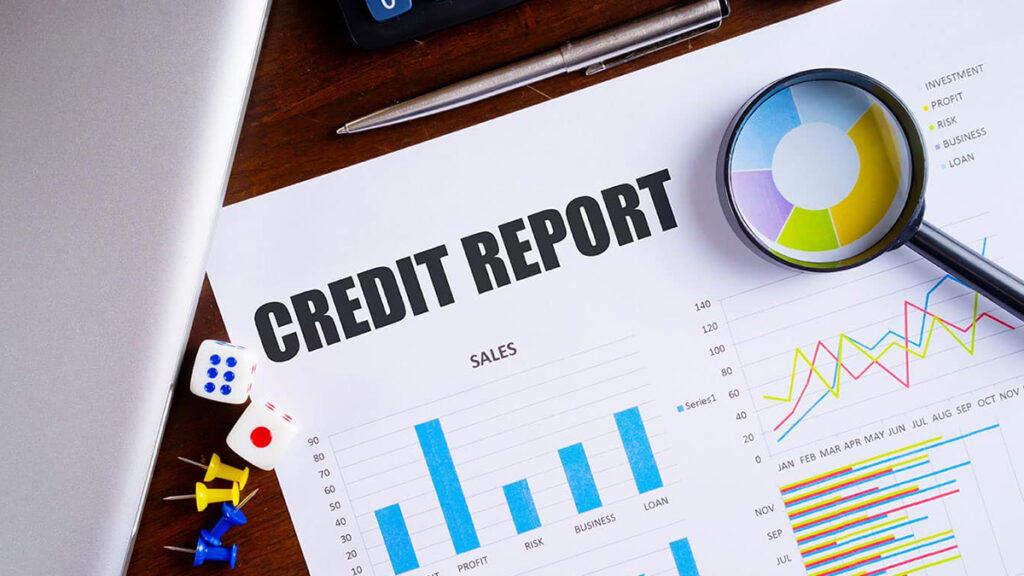
A background check can be the deciding factor in whether someone gets hired or not, and many people looking for jobs don’t realise this. Employers can use different areas of a person’s background when looking at applicants’ backgrounds, but today less than half of all employers are allowed to check a candidate’s credit report as part of a background check. Employers are no longer permitted to view an applicant’s credit report because it can lead to unfair judgements based on financial problems. New Laws Limiting Credit Checks Recently, New York has become the 11th state to pass a law that prohibits most employers from using credit reports when they make hiring or promotion decisions. The effective date of this new law is April 18, 2023. In addition to New York, other states that have laws prohibiting this practice include California, Colorado, Connecticut, Hawaii, Illinois, Maryland, Nevada, Oregon, Vermont and Washington. Additionally, many cities and counties have passed local laws that restrict this practice. What makes New York’s law unique is that it has a much broader application. Individuals that reside in New York but apply for jobs in other states will continue to be protected under this new law. Because of the increasing number of restrictions against using credit reports, many national employers are choosing to stop using them altogether, even in states that still allow this practice. When Credit Reports Are Still Used Except for the above, employers may be prohibited from using a person’s credit report in an employment decision when the person is applying for a job or if the applicant already has a job. However, employers can still review credit reports of those applying for specific jobs. These job categories generally consist of government, law enforcement, national security, and any position requiring the handling of a company’s money or any other sensitive information. In banks and financial institutions, credit reports can only be used when applying for certain regulated positions. The premise for the risk associated with individuals under financial duress is that they may be at a higher risk for committing fraud or theft against the company. Although this is not true in every instance, it continues to be the basis for employers allowing background checks, including credit reports, for specific positions. What Employers Look For Credit issues alone aren’t typically a dealbreaker for employers. Rather, the employer will assess how serious or recent the credit issue is to determine whether to proceed with the applicant. Examples of serious credit issues include long-term overdue bills, being in collection accounts, and debts written off as bad debt, especially for positions involving financial accountability. On the contrary, an employer should typically disregard both medical debt and student loans as reasons for not hiring an applicant, unless the debts or loans would affect the applicant’s ability to perform the job functions related to those debts or loans. Furthermore, employers have a responsibility to explain to applicants the reasons why credit history is an important consideration in relation to the position they are applying for and not to make unfair or discriminatory employment decisions based upon an applicant’s credit history. How Job Seekers Can Protect Themselves If an employer is going to run a background check or pull a credit report, they must ask you for written consent, which is generally when you have received a job offer. It’s wise to review your credit reports regularly on your own so that you can identify any errors. An honest explanation of your situation is usually the most helpful if there are legitimate issues on your report. The more clearly you describe the circumstances, the less likely it is that there will be a misunderstanding about your situation. You have the right, under the law, to obtain a copy of your report and dispute any errors prior to the final hiring decision being completed.
Starmer Tells Trump Tariffs Over Greenland Are Wrong as Tensions Rise With US Allies
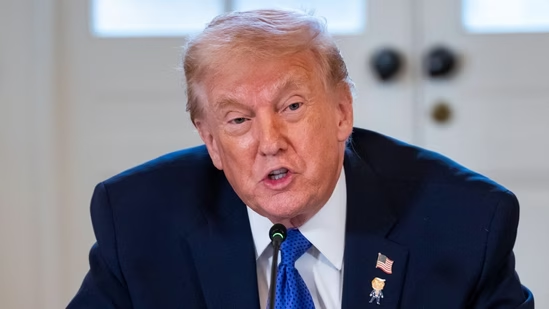
According to a report from Britain’s Prime Minister Sir Keir Starmer’s office, he delivered a message to US President Donald Trump telling him that imposing tariffs on countries friendly to the US because of the situation in Greenland “would be wrong”. The phone conversation occurred Sunday, making it the first time the two presidents had spoken since Trump announced he may pursue new trade penalties related to Greenland. Tariff Plan Raises Tensions President Trump recently announced that tariffs could be imposed by the United States on products produced in eight European countries (e.g., the United Kingdom) beginning February 1, 2020, potentially increasing to 25% by June 30, 2020, unless an arrangement can be made to facilitate the acquisition of Greenland by the United States. This proposal has unsettled Europe and residents of Greenland, which is an independent region belonging to Denmark. Sir Keir has continuously stated that the fate of Greenland should be determined by the people of Greenland, in conjunction with Denmark, rather than by foreign governments. NATO and Security Concerns According to a spokesperson for the UK Prime Minister’s office following their telephone conversation, Sir Keir Starmer expressed to Mr Trump on behalf of the NATO Friends and Allies Group that security in the Arctic Region is vital for all NATO Member Nations and that penalising NATO Allies through tariffs for cooperating in securing our common security is unacceptable. Before having his discussion with Mr Trump, Sir Keir had discussed the topic with other European leaders such as Danish Prime Minister Mette Frederiksen, European Commission President Ursula von der Leyen, and NATO Secretary-General Mark Rutte. It should be noted that Denmark has categorically stated that Greenland cannot be sold and that any form of military action against Greenland would jeopardise the security of the entire NATO alliance. Furthermore, Greenland’s leaders have made it abundantly clear that they wish to remain part of Denmark as opposed to being annexed by the United States. Europe Stands United The eight nations that have been threatened with tariffs issued a joint statement indicating that this action will hurt the relationship of the United States with Europe. These nations include Denmark, Finland, France, Germany, the Netherlands, Norway, Sweden and the United Kingdom. While all stated their strong support for Denmark and Greenland, they also expressed their continuing commitment to Arctic security. President Trump claimed that Denmark does not have the ability to protect Greenland from threats created by both Russia and China. Although there has been no decision against using military action to obtain Greenland, the Trump administration indicated that purchasing it is the preferred way of acquiring it. UK Political Reaction Sir Keir’s remarks constitute an exception, in terms of a public disagreement with a US president who has been a close partner of his in the past, and demonstrate his unease with the direction of American trade policy. All UK politicians, regardless of party affiliation, condemned the threat of tariffs as counterproductive, and a number warned that taking action against a NATO ally would be detrimental to the long-term strength of the alliance. Why Greenland Matters Greenland’s geographical location provides an opportunity for the United States to strategically observe activity in the Arctic. The U.S. also has established a military presence in Greenland and also has shown great interest in harvesting the natural resources of Greenland, which will be more readily accessible with the rapid climate change occurring throughout the world.
How to Start an Ecommerce Business in 2026: A Practical Blueprint for New Entrepreneurs

E-commerce remains one of the best opportunities for aspiring entrepreneurs looking to create brands. In 2026, thanks to advancements in the areas of digital payment solutions, supply chain logistics, artificial intelligence-based marketing, and no-code platforms, barriers to entering the e-commerce market are very low and allow for entrepreneurs to gain access to a global customer base with little investment up front. As e-commerce continues to be a flexible, data-driven operation that doesn’t require brick-and-mortar locations to function, it will also be a desirable option in light of growing competition. In 2025 e-commerce sales worldwide totalled more than $6.7 trillion, with projections suggesting that sales may reach nearly $8 trillion in 2027 as a result of growing sectors like mobile commerce, cross-border trade, and social commerce. With growth opportunities so clearly identified, this could be a time of real opportunity for entrepreneurs ready to approach e-commerce in a strategic manner as opposed to an impulsive one. Understanding What an Ecommerce Business Really Is E-commerce is an online business model where products/services are sold through a digital shopfront. Customers can browse through many different types of products, shop, add items to their virtual shopping cart, and pay securely using payment gateways. E-commerce businesses can be as diverse as one-person/one-type-of-product (niche) all the way to large multi-category brands and online marketplaces. Ecommerce business types include the dropshipping model, the print-on-demand model, private label and direct-to-consumer manufacturing. All models of eCommerce provide various degrees of control, margins and operational complexities for business owners. Choosing the Right Product and Business Model The most important step in starting and running an online commerce business is selecting the right products to sell. The type of product you select will have an impact on pricing, marketing expenses, and potential growth for your business. Successful business founders focus on developing products that have an identified need, an available customer base or target market, as well as a distinct value proposition for potential customers. Before making any significant investment, it is essential to validate demand for the product. Conducting research on the target market, analysing competitor products and prices, tracking customer feedback, and identifying trending areas within the market will help you determine if there is indeed a need for your product. Once you have validated the demand for your product, you will then need to decide how you are going to source your product. You may choose to work directly with the manufacturer, through a wholesaler, or use the services of a drop shipper who will ship directly to customers from their warehouse. Researching Competition and Building a Clear Business Plan Before launching, understanding the competitive landscape is essential. Studying competitor pricing, positioning, messaging, and customer experience reveals gaps and opportunities. This research feeds directly into a business plan that outlines brand vision, target audience, revenue model, and growth strategy. A business plan is not just for investors. It acts as a roadmap that helps founders prioritise tasks, allocate budgets, and measure progress. Even lean e-commerce startups benefit from clearly defining their value proposition and long-term goals. Branding, Store Setup, and SEO Fundamentals Branding transforms a store into a business customers remember. Choosing a strong business name, securing a domain, and designing a simple yet distinctive logo establishes credibility from day one. These brand assets should align with the target audience and product positioning. Building the online store is no longer a technical hurdle thanks to platforms like Shopify. However, design alone is not enough. Understanding search engine optimisation is critical to driving organic traffic. Optimised product pages, clear site structure, fast load times, and high-quality visuals all contribute to better search visibility and higher conversions. Shipping, Operations, and Marketing Strategy As launch approaches, logistics planning becomes a priority. Shipping strategy impacts customer satisfaction, costs, and scalability. Domestic and international shipping options, packaging, and delivery timelines must be aligned with customer expectations. Marketing goals should be defined early using measurable performance indicators. Traffic, conversion rates, customer acquisition costs, and repeat purchases provide insights into what is working and what needs optimisation. Viral growth stories often start with a clear understanding of these fundamentals rather than luck. Launching and Scaling with Data-Driven Marketing Launching an ecommerce business does not end at publishing the website. Marketing is the engine that drives growth. Successful stores focus on driving targeted traffic through a mix of content marketing, email campaigns, social media, paid advertising, and influencer partnerships. As sales data accumulates, analytics become a competitive advantage. Understanding customer behaviour enables better product decisions, improved conversion rates, and stronger customer retention. Brands that scale successfully use data not just to sell more but to build trust and long-term loyalty. Realistic Expectations and Long-Term Growth Ecommerce editions foresee success over a longer time frame, as you’ll become more familiar with your audience, experiment with new marketing strategies and gain market validation. The mistake many new ecommerce founders make is to try and achieve profit within the first year of operation, but this is usually unrealistic; it can take from 18 to 24 months of trial and error, reinvestment and refinement of your business model before a store becomes sustainable. When starting your ecommerce store, it’s important to note that the cost to launch will vary greatly depending on the structure of your store and the resources you need to invest in your new venture. Many new e-commerce stores will start with a very small initial investment, often under $100; however, many first-year expenses will also add up to thousands of dollars (products, advertising, software, operations), and most e-commerce entrepreneurs start with their own personal savings, family assistance or small loans to finance their ventures. Thus, there is no requirement to have significantly large amounts of capital to succeed in this business. Building a Business That Lasts Launching an e-commerce business in 2026 is both challenging and rewarding. It requires patience, experimentation, and a willingness to learn from data and customer feedback. Those who focus on fundamentals, adaptability, and long-term value creation are best positioned to
India and the European Union Near Landmark Trade Deal as US Talks Stall

India and the European Union are in the final stages of talks aimed at achieving an agreement to create a Free Trade Deal Agreement, which has been pending since before India gained independence. The conclusion of this Free Trade Agreement will be an important addition to the array of Free Trade Agreements that presently exist between various countries and regions of the world, including the Asia-Pacific region and North America. Trade Secretary Rajesh Agrawal confirmed that negotiation between India and the EU is nearing completion and should be completed as soon as possible. The Free Trade Agreement to be finalised will have the most significant impact upon India’s global position in terms of trade. In addition to indicating that the EU will become an even greater trading partner for India than it already is, Agrawal also indicated that this Free Trade Agreement will enhance India’s potential to diversify its export markets by providing additional opportunities to do so. Since its inception in 2004, bilateral trade between the EU and India has been estimated at €120 billion in 2023, which makes the EU India’s largest trading partner and represents the longest continued growth of bilateral trade between any two trading borders in Europe. High-Level Diplomacy Accelerates Negotiations There has been significant political activity occurring at senior levels within the European Union and India that has contributed to the momentum that is building regarding a trade agreement between the two regions. The President of the European Council (EC), Antonio Costa, along with the President of the European Commission (EC), Ursula von der Leyen, will be travelling to India from January 25th to January 27th, 2023, during which time they will be co-chairs for an India-EU Summit with India’s Prime Minister (PM), Narendra Modi. There are ongoing discussions among government officials working for the European Commission regarding the possibility of announcing a successful conclusion to the trade agreement at this international event. According to sources involved in the ongoing negotiations, the European Commission has also expressed cautious optimism for internal negotiations among the member states and anticipates a successful conclusion to the trade agreement. To expedite the negotiations between Europe and India, Prime Minister Modi and President von der Leyen agreed to accelerate the time frames for completion of the negotiations, with a target conclusion date of 2025. The urgency of reaching a successful trade agreement has further increased because of the imposition of tariff increases by U.S. President Donald Trump on a variety of products imported from several countries, including India. Cars, Steel, and Carbon Levies Remain Key Obstacles While strong steps have been made towards improving the relationship between the EU and India, several areas of concern remain unresolved. The automobile and steel industries are the two biggest areas that are causing negotiation problems between the parties involved. The European Union is urging India to significantly decrease the amount of tax needed to import European vehicles, as the tax for all forms of vehicles from Europe to India, in some cases, has exceeded 100%. However, India is adamant that it is hesitant to lower the import vehicle tax in lieu of the domestic manufacturing and job sector. Conversely, India is also expressing concern about the EU’s carbon emissions border adjustment mechanism and how this initiative may affect the export of Indian steel to Europe through the imposition of additional costs based on carbon emissions. Indian negotiators also emphasise that the above-mentioned proposal would limit the amount of steel imported into the EU due to the combination of tariff rates and the aforementioned safeguard measures. Agriculture Kept Out to Protect Farmers For the country of India, agriculture has been established as a definite, unmovable boundary. Agriculture officials confirmed that sensitive agricultural and dairy products have been excluded from any future negotiations. The Indian Government has continually stated that agriculture and dairy are two sectors that remain completely protected and will not be opened for trade agreements. The Indian Government will protect the lives of millions of poor subsistence farmers who rely on traditional farming for their survival. In contrast to the EU’s interest in tariff reductions for goods such as wine, spirits, and meats, as well as medical devices, India has targeted its negotiation objectives mainly on obtaining duty-free access for labour-intensive products, as well as expedited acceptance of regulatory approvals for India’s automotive and electronics sectors. Beyond Goods: Services, Investment, and Green Growth This proposed agreement builds upon merely trading goods; instead, both parties hope it creates opportunities for greater collaboration in a wide variety of service sectors (e.g., digital trade), investment, IP, and green technologies. Investing in Indian manufacturing, renewable energy, and infrastructure should provide a boost for European companies and help them to align with India’s future growth and sustainability objectives. The challenges remain regarding creating and enforcing similar regulatory structures and ensuring protections in sensitive sectors, such as labour, health, and the environment, in compliance with the Paris Climate Agreement. The EU has also continued to insist upon formalised commitments pertaining to labour standards, environmental protections, Paris Climate Agreement compliance, etc.; therefore, negotiations on these topics remain ongoing and continuing. A Strategic Signal Amid Global Trade Uncertainty The India–EU trade agreement would indicate that the global economy is moving further towards fragmentation, and this will provide a message about how important this agreement between India and the European Union (EU) is for Europe and how European nations will benefit from access to the vast Indian consumer marketplace of more than 1.4 billion people. The Agreement will also provide India access to the wealthiest economic bloc through enhanced opportunities for the importation of Indian goods and services. In the meantime, the failure of the U.S.-India trade talks to progress since last year’s breakdown should, at least partially, be compensated for by providing India with a stronger trade priority than what was previously established. The EU’s formalisation of this agreement between India and the EU also strengthens India’s capacity to become a more prominent actor in terms of integrating
How Managers Are Using AI to Make Smarter Decisions

In light of the recent developments concerning artificial intelligence, leaders must rely less on intuition or past experience than ever before. AI has fundamentally changed how organisations approach planning, thinking & executing their strategies as well as how leaders interact with their staff. Using real-time information, AI enables organisations to identify potential risks sooner, allowing organisations to make better-informed decisions about how to prevent future problems from occurring. As a result, rather than having to wait until an issue arises before addressing it, leaders and organisations can prepare in advance with greater certainty. AI provides leaders and organisations with a comprehensive overview of everything going on both within and outside of the organisation. In addition, AI assists in identifying patterns of customer behaviour, allowing the organisation to identify areas where there is room for improvement. AI allows leaders to dedicate their time & energy toward more value-added activities such as developing strategies and utilising creative talent. Building AI Understanding in Teams AI needs to be understood by many people in the organisation before AI will perform at its best. Leaders only need to ensure employees possess a basic awareness of AI, not a technical understanding. Employees will be much more comfortable using AI for their daily work if they know the types of things AI can do and cannot do. The combination of training sessions, hands-on experience with using AI tools, and having open conversations regarding AI will help diminish employees’ anxiety and uncertainty regarding using AI. In addition to increasing the number of teams using AI, there will also be an increase in the quality of AI used by teams. As teams utilise AI, they will also enhance AI through continued use. Data used to train AI will improve, AI’s results will become more accurate, and the insights gained through AI will become stronger over time. This creates continually learning systems that will help organisations to make better decisions. Knowing When to Use AI and When Not To AI has tremendous capabilities; it will not, however, be able to solve all leadership problems. Certain decisions require human judgement that cannot be replaced by artificial intelligence (AI); however, in addition to this, there will also likely be instances when an AI system can provide an advantage for decision-making. Leaders need to articulate what types of situations can be appropriately managed by using AI. For example, conducting repetitive, simple tasks frequently means that using an AI system can increase efficiency through time savings and reduction of human error rates. However, when making complex/high-risk/complex decisions, AI will augment rather than replace human reasoning. Ultimately, leaders must establish explicit rules/guidelines that outline the intended purposes of the technology in order to prevent the misuse, abuse, emotional dependence, or blind faith in technology. Encouraging Questions and Critical Thinking Curiosity is the foundation for good AI leadership. There should always be a culture where teams can safely ask questions about the outcomes of their AI programmes and challenge underlying assumptions. To blindly accept the outcomes of AI simply because they’re generated by the technology can create severe problems for us. When we allow people to ask questions, we build better, stronger and more balanced decisions. Companies that build an environment based on testing and learning are often more adaptable and able to act quickly and intelligently when faced with difficulties such as rapid shifts in the market. Leading With Openness and Trust Leaders create trust through transparency, and teams must understand how AI uses data and who makes decisions for it. When employees openly communicate about these matters, they will gain confidence about using AI as a tool and will feel empowered to raise questions if they see something that appears problematic. The Future of Leadership While AI is changing the way we lead in the future, there is no substitute for human accountability when leading. Leaders should learn about how to leverage AI and utilise it as effectively as possible, inducing open-mindedness and consulting everyone in the decision-making process with honesty and integrity to achieve real results using this technology. AI is an effective tool but is only as good as those who lead with it.
Trump’s Iran Tariff Warning Sparks Global Trade Fears Amid Growing Unrest in Iran
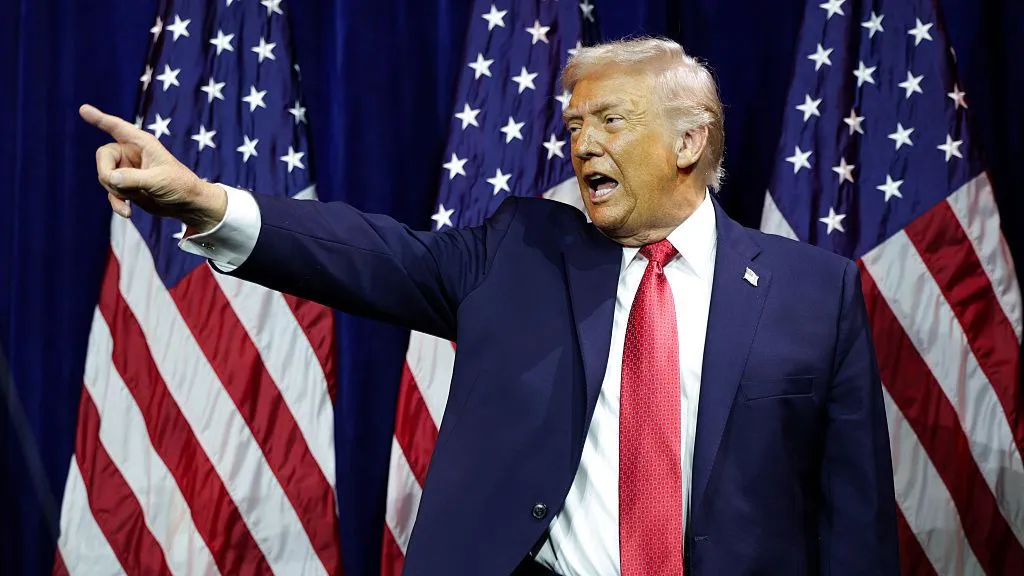
Donald Trump (former US president) has also warned other nations that if they conduct commerce with Iran, they are at risk for being charged an immediate 25% tariff from the United States. On his account, the former president posted this information on his social media (Truth Social). According to the post, the order will be ‘decisive’. There has been no mention of the timing or manner in which these tariffs will be enacted. White House Gives No Further Details Following President Trump’s comments regarding the renegotiation of international trade agreements, there has been no additional guidance provided by the White House with regard to the potential impact on certain countries or specific goods that may be subject to increased tariffs as a result of elevated trade relations between Iran and the US. This uncertainty creates concern within the business communities of numerous nations trading with Iran as well as the USA due to their respective ties to both economies, especially when discussing matters related to the energy and shipping industries. Iran’s Currency Crisis Deepens At the same time that Iran is experiencing a significant economic crisis due to the value of the national currency (the rial) dropping significantly over the last 12 months and recently reaching an all-time low in value against the US dollar, inflation is currently above 40%, and the cost of essential items is also increasing dramatically. As a result, for many households, the cost of living on a day-to-day basis has become impossible to manage. Protests Spread Across Iran The growing public anger over increased prices and high numbers of job losses caused protests throughout Iran. At the end of December 2022, many local shop owners in Tehran closed their shops and marched in protest because of yet another sharp decline in the value of the Iranian currency, the rial. Originally protests focused solely on economic issues, but claims of economic injustice and systemic abuse of political power have now evolved into larger demonstrations that challenge Iran’s Supreme Leader Ayatollah Ali Khamenei and his regime. These recent events represent some of the most serious challenges faced by the Iranian government in recent years. Deaths, Arrests, and Information Blackout Human rights organisations state that there has been a significant crackdown on protestors. The US non-profit group Human Rights Activist News Agency indicates that approximately 500 people who were protesting and 48 members of the security forces were killed; however, many other organisations indicate that the actual death count could be much higher. Thousands of individuals have been arrested as well. Since Thursday night, an internet blackout has made it difficult to verify facts. Many countries’ media, including BBC and Reuters, cannot get reliable news from within Iran. Although Donald Trump warned of future sanctions, he also stated that the Iranian government reached out to him about negotiating; however, increased international sanctions and significant corruption continue to have a negative impact on the Iranian economy.
Branding vs. Performance Marketing: What Drives Long-Term Growth?
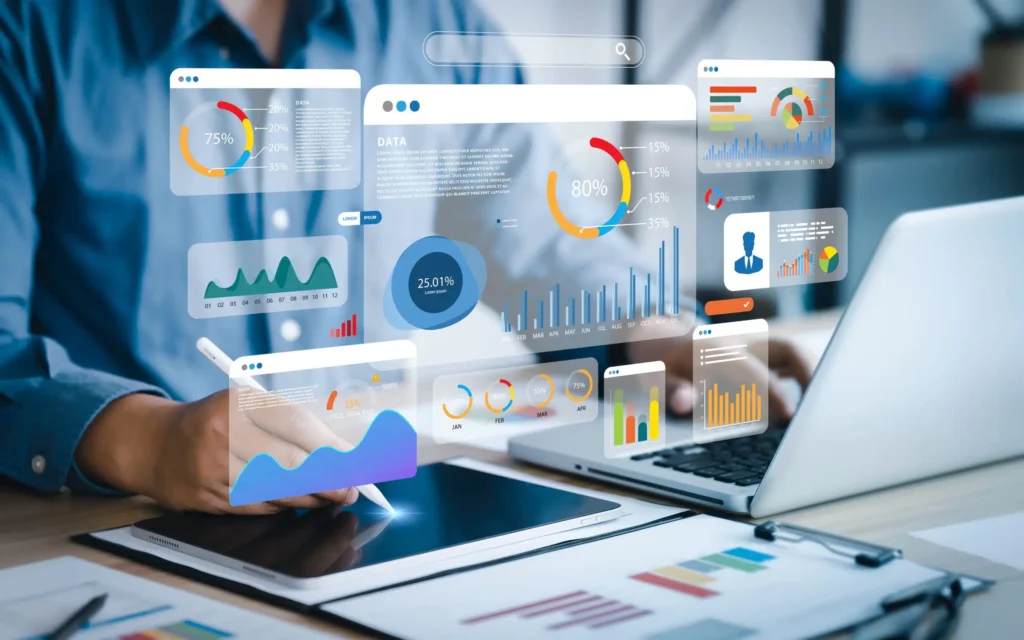
Businesses are often unsure whether to invest more of their marketing budget on branding or performance marketing in an increasingly competitive online marketplace. Both types of marketing help with business growth but have different deliverables and timescales. Therefore, the real issue to think about is not which type of marketing is better, but which type of marketing will help you achieve sustained long-term growth through a strategic approach. What Is Branding? The branding process creates how the consumer perceives, recalls, and attaches an emotional attachment to your establishment, but it isn’t solely about logos and colors. Branding involves brand purpose and values, tone of voice, storytelling, and overall customer experience. Companies with a great brand name because their customers have developed an emotional connection with the company as a result of their experiences; customers trust them to return to the company time after time. With the establishment of a good brand name, customers are inclined to purchase from the business more than once. The process of branding operates in the background, generally being much stronger than any advertising that a business may run. As a result, creating strong branding will eventually lead to lower advertising costs because customers will be searching directly for your products as a result of their positive experience with the brand or as a result of other individuals encouraging them to do so. What Is Performance Marketing? Marketing is all about maximizing your return on investment (ROI) through instant results or measured actions. Channels such as Google Ads, social media marketing, affiliate marketing, and paid marketplaces are part of performance marketing, where each initiative is optimized based on metrics like cost per acquisition (CPA), return on ad spend, and conversion rates. Performance marketing is heavily reliant on data and allows companies to expand rapidly. Performance marketing is particularly beneficial for any new product launching, lead generation campaigns, and any other revenue-generating initiatives that require immediate results. Key Differences Between Branding and Performance Marketing Branding is built for the long term, while performance marketing is designed for speed. Branding influences how customers feel about a business, whereas performance marketing focuses on what customers do immediately. Branding creates mental availability and loyalty, while performance marketing captures demand that already exists. Another major difference lies in sustainability. Performance marketing becomes more expensive as competition increases, while branding becomes more efficient over time by lowering acquisition costs and increasing repeat purchases. How Branding Fuels Long-Term Business Growth Branding is the backbone of sustainable growth. Businesses with strong brands enjoy higher customer retention, better pricing power, and stronger market credibility. Customers are more willing to trust, forgive mistakes, and stay loyal to brands they emotionally connect with. Over time, branding compounds. Each impression, story, and interaction adds value, creating a long-lasting asset that continues to generate returns even when ad budgets are reduced. This is why established brands can pause advertising temporarily without experiencing a sharp drop in demand. Why Performance Marketing Still Matters Performance marketing plays a crucial role in business growth, especially in competitive and fast-moving markets. It allows businesses to test offers, understand customer behavior, and generate predictable revenue. For startups and growing brands, performance marketing provides valuable insights that help refine messaging and positioning. However, over-reliance on performance marketing can create growth plateaus. As ad costs rise and audience fatigue sets in, businesses that lack strong branding often struggle to maintain profitability. The Strategic Balance Between Branding and Performance Marketing Long-term growth is achieved when branding and performance marketing work together. Branding creates demand, while performance marketing captures it. Branding builds trust that improves conversion rates, while performance marketing provides the data needed to sharpen brand communication. A balanced strategy ensures that short-term revenue goals are met without sacrificing long-term brand equity. Businesses that invest in both are more resilient, adaptable, and competitive in the long run. Final Verdict: What Truly Drives Long-Term Growth? While performance marketing delivers quick wins, branding is what sustains growth over time. Performance marketing brings customers in, but branding keeps them coming back. Businesses that prioritize only short-term metrics risk becoming dependent on rising ad spending, while those that build strong brands create lasting value. The smartest growth strategies don’t choose one over the other—they align both to build a profitable, scalable, and enduring business.
Trump Calls Himself ‘Acting President of Venezuela’ in Truth Social Post
When U.S. President Donald Trump posted an image on his social network, “Truth Social,” named “Acting President Of Venezuela.” The image was posted on January 11th, 2026, had a caption of “acting president of Venezuela,” with an image of Mr. Trump in his formal portrait, and stated that he had been the “Acting President of Venezuela, Incumbent January 2026.” In addition, it states that Mr. Trump was both the 45th and the 47th USA president, starting from January 20th, 2025. This post was made at a time when there are increasing tensions after a significant U.S. military operation took place in Venezuela this month. U.S. Military Operation and Capture of Nicolás Maduro On January 3, 2026, US troops seized Venezuelan President Nicolás Maduro in a sudden nocturnal mission. The incident occurred following a pre-planned sequence of joint armed actions against the South American nation in response to significant recent increases of economic and diplomatic exertion directed towards it for what appeared to be the mutually beneficial extraction of its vast oil reserves. In the wake of the successful operation, Mr. Trump disclosed that US operatives had been present in Venezuela prior to the operation and further RFC’ed the US with the task of temporarily overseeing governance in the capital, Caracas, until such time as a “safe, proper, and judicious” transition could be made. President Trump stated to reporters shortly after the incident that the United States would continue to manage Venezuela until a more stable government was selected. Trump’s Claim Over Venezuela’s Governance Mr. Trump stated during a press release that the military operation was “one of the most powerful, effective, and incredible displays” of U.S. confidence and capability. Further, he indicated that the current U.S. government intends to take advantage of the extensive Venezuelan oil reserves by producing large quantities of oil and exporting it to other nations during a transition to an interim president. In a social media post on Truth Social, Mr. Trump claimed to have been acting in the role of Venezuela’s interim president and received worldwide criticism for his announcement. Venezuela’s Constitutional Response In the aftermath of Mr. Maduro’s removal, the Venezuela Supreme Court’s Constitutional Chamber quickly acted, on January 3, by directing Vice President Delcy Rodríguez to take on the responsibilities of Acting President to maintain continuity of government and protect Venezuela’s territorial integrity. Even when taking on this new role, Ms. Rodríguez required the United States to release Mr. Maduro, arguing he is still the legitimate representative of Venezuela while also denouncing foreign intervention in the sovereignty of her country. Global Reaction and Uncertainty Ahead The events surrounding these issues have led to a broad range of reactions both politically and internationally, including many countries and organizations expressing their concerns about the legality of U.S. military actions and their implications for international law. While diplomatic relations are strained, the uncertainty about Venezuela’s political future continues due to the competing names for government authority and the increased demands from global organizations to address these issues.
26 Best AI Marketing Tools I’m Using to Get Ahead in 2026
AI is no longer optional in marketing. In 2026, it is the backbone of how fast-growing brands research, create, analyse, and scale. From content creation to automation and data insights, AI tools are helping marketing teams move faster with fewer resources. I’ve been testing AI marketing tools for over three years while working with startups, SaaS brands, and enterprise teams. This list is not copied, sponsored, or driven by affiliate hype. These are tools I actually use or see teams use effectively. Let’s break them down by use case. AI Automation & Workflows 1. Gumloop One of the best AI automation tools available today. It lets you connect LLMs like GPT, Claude, or Gemini with tools like Notion, Slack, Sheets, and CRMs without code. Perfect for research, lead monitoring, reporting, and internal workflows. 2. Zapier A classic automation platform now enhanced with AI actions. Great for simple task automation between apps. SEO & Content Optimisation 3. Surfer SEO Helps optimise content for Google rankings by analysing keywords, structure, length, and readability in real time. 4. ContentShake AI An AI-powered SEO writing tool that focuses on ranking-focused blog creation for small teams. 5. Brandwell Designed for long-form SEO blogs. Produces surprisingly human-like content but still needs editing. AI Writing & Editing 6. Jasper AI Strong for marketing copy like ads, emails, and landing pages. Best used for first drafts. 7. Writer.com Built for teams. Maintains brand voice, tone, and terminology across large organisations. 8. Grammarly Improves clarity, grammar, and tone. Useful even when working with AI-generated content. 9. Hemingway App Simplifies writing by reducing complexity and improving readability. 10. Undetectable AI Used to rewrite AI-generated content to sound more natural. 11. Originality AI Detects AI-written content and plagiarism. Helpful for quality control. Productivity & Knowledge Management 12. Notion AI Turns your Notion workspace into an intelligent assistant for writing, summarising, and answering questions. Video, Image & Audio Creation 13. Crayo Ideal for short-form videos like Reels, Shorts, and TikTok. Automates scripting and visuals. 14. Lexica Art High-quality AI image generation, great for blog thumbnails and brand visuals. 15. PhotoRoom Removes image backgrounds quickly for e-commerce and ads. 16. LALAL.AI Cleans background noise from audio recordings without harming voice quality. Ads, Sales & Growth 17. Albert.ai Uses AI to manage and optimise paid ad campaigns automatically. 18. Headline Creates AI-powered landing page copy focused on conversions. 19. Reply.io AI Helps write and optimise sales email responses at scale. Chatbots & Conversations 20. Chatfuel Builds AI chatbots for websites and messaging apps. 21. Userbot.ai Manages customer conversations and support automation. Data, Monitoring & Research 22. FullStory Uses AI to analyse user behaviour and digital experience issues. 23. Browse AI Scrapes websites without coding for market and competitor research. 24. Algolia AI-powered search and recommendation engine for websites and apps. 25. Brand24 Tracks brand mentions, sentiment, and online conversations. 26. Influencity AI-driven influencer discovery and campaign management platform. Final Thoughts AI marketing tools are no longer about replacing humans. They help marketers move faster, think smarter, and focus on strategy instead of repetitive work. Most teams will use multiple tools, not just one. The key is choosing tools that fit your workflow, not chasing trends.
Doing Business Became Tougher in 2025, Says World Economic Forum Survey

Companies globally conducted a new survey by the World Economic Forum (WEF). The survey indicated that due to a significant slowdown in global cooperation, the global economy will be much more difficult for companies to navigate as they move forward into 2025 than it was in 2024. Examples of this global cooperation decline include reduced trade, technology development, and climate change, along with creating safer places for people to live and work. The survey results were published prior to the WEF’s annual meeting this January 2023 in Davos, Switzerland, as part of the Global Cooperation Barometer 2026 report. World Economic Forum Survey Shows Rising Business Pressure A total of 799 business executives participated in the online survey across 81 countries. Of these 799 respondents, approximately 43% believed that in 2025 it would be harder to conduct business than it was in 2024. Seven per cent indicated they thought that things would be better, while the balance of respondents either felt things were going to remain unchanged or were uncertain about their response and did not wish to share their views. Most executives cited increasing obstacles to global trade and the movement of talent and investments across borders as contributing to the increased complexity and cost associated with their businesses; almost 40% of executives reported that the added complexities and costs resulting from these challenges were significant. Trade Tensions and Tariffs Added Uncertainty The WEF report also highlighted that U.S. tariff announcements in 2025 raised serious concerns about the future of global trade. Former U.S. President Donald Trump announced new tariffs in April 2025, putting pressure on global supply chains. Although several tariffs were later reduced through trade deals, the uncertainty caused businesses to rethink their strategies. Interestingly, six out of ten executives did not list trade as a major issue. This suggests that many companies have adjusted their plans to handle changing trade conditions. Cooperation on Security and Climate Slows The survey showed that global cooperation on peace and security weakened further in 2025. About 42% of executives believed cooperation declined, while only 13% saw improvement. Climate and natural resource collaboration also faced challenges, with 29% saying it became harder. Despite this, there was some positive news. Investment in renewable energy rose nearly 10% in the first half of 2025, and solar and wind capacity increased sharply, showing progress in clean energy efforts. Experts More Concerned Than Executives A separate WEF poll conducted in September among Global Future Council members showed deeper concern. About 85% of experts believed global cooperation had declined, a much higher number than among business leaders.