
Potential Contenders to Replace Justin Trudeau as Canada’s Prime Minister
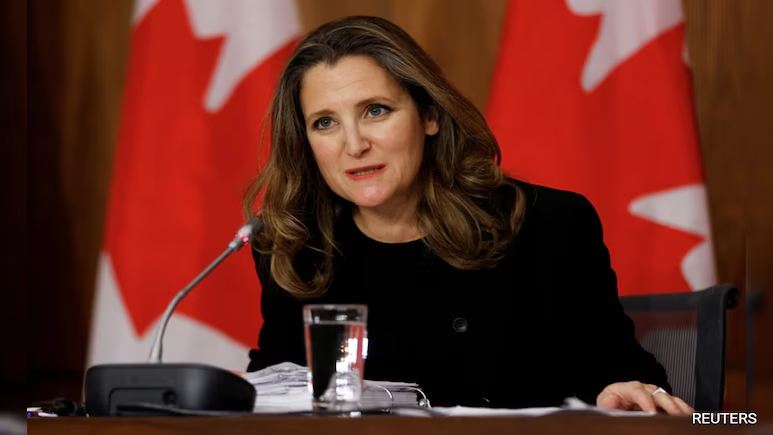
Following Justin Trudeau’s announcement of his resignation as Prime Minister of Canada and leader of the Liberal Party, the race to find his successor has begun. The party has yet to release specifics on the leadership contest, which could span several months. Finance Minister Dominic LeBlanc, a prominent figure in Trudeau’s cabinet, has already confirmed he will not be running. This leaves the field open for several notable contenders vying to replace Justin Trudeau as the nation’s leader. Former Finance Minister Chrystia Freeland Chrystia Freeland, 56, was one of Trudeau’s closest allies during his nine-year tenure but resigned last month following a dispute over fiscal policies. Freeland, known for her leadership during the renegotiation of the Canada-United States-Mexico Agreement, is a prominent contender to replace Justin Trudeau. Her extensive experience as finance and foreign minister makes her a strong candidate. Before entering politics in 2013, Freeland had a distinguished career as a journalist with major publications, including Reuters. She has also authored two books and is regarded as one of the most high-profile members of Trudeau’s government. Former Bank of Canada Governor Mark Carney Mark Carney, 59, has long been considered a potential candidate to replace Justin Trudeau. While not part of Trudeau’s government, Carney brings significant financial expertise, having served as governor of both the Bank of Canada and the Bank of England. Carney’s leadership during the 2008 global financial crisis and his advocacy for climate finance as the United Nations Special Envoy for Climate Action enhance his credentials. He has stated he will decide in the coming days whether to enter the race. Foreign Minister Mélanie Joly At 45, Mélanie Joly is among the most prominent female leaders in the Liberal Party following Freeland’s resignation. Joly’s tenure as foreign minister, including her strong stance on Ukraine and her role in launching Canada’s Indo-Pacific strategy, bolsters her bid to replace Justin Trudeau. Joly initially rose to prominence in 2013 as a mayoral candidate in Montreal. Although she faced setbacks early in her political career, her recent accomplishments have positioned her as a serious contender. Innovation Minister François-Philippe Champagne François-Philippe Champagne, 54, is another strong candidate to replace Justin Trudeau. Known for his charisma and business acumen, Champagne has held multiple ministerial roles, including foreign affairs and trade. As the current innovation minister, he has focused on attracting foreign investment in Canada’s electric vehicle and battery sectors, although challenges persist in this area globally. Transport Minister Anita Anand Anita Anand, 57, has been a standout performer in Trudeau’s cabinet. She rose to prominence during the COVID-19 pandemic, leading Canada’s procurement efforts for vaccines and protective equipment. Now serving as transport minister and head of the Treasury Board, Anand’s expertise and leadership could position her as a top contender to replace Justin Trudeau. She has also been at the forefront of addressing systemic issues within the Canadian military during her tenure as defense minister. Other Possible Contenders In addition to these leading candidates, other names have emerged in Canadian media as potential successors. These include Natural Resources Minister Jonathan Wilkinson, House Leader Karina Gould, and former British Columbia Premier Christy Clark. Leadership Contest Ahead As the Liberal Party embarks on the process to replace Justin Trudeau, the nation awaits the emergence of a new leader who will shape the party’s direction and address pressing issues such as economic challenges, climate change, and international relations. The contest to replace Justin Trudeau is expected to be highly competitive, with each contender bringing unique strengths to the table. While Trudeau’s departure marks the end of an era, it also sets the stage for a transformative chapter in Canadian politics. For more insights, follow The Business Tycoon
Cloud Adoption Strategies for Small Businesses

Cloud computing has revolutionized the way small businesses operate, offering access to powerful tools, improved scalability, and cost efficiencies that were once available only to large enterprises. As the digital landscape evolves, adopting cloud technology is no longer optional—it’s essential for staying competitive. This article outlines practical cloud adoption strategies for small businesses, ensuring a smooth transition to the cloud while maximizing its benefits. Why Cloud Adoption Matters for Small Businesses Steps for Successful Cloud Adoption 1. Define Business Objectives Before moving to the cloud, it’s crucial to identify what you aim to achieve. Are you looking to reduce costs, improve data accessibility, or enhance your software capabilities? Defining these objectives will help in choosing the right cloud solution. 2. Evaluate Current IT Infrastructure Conduct a thorough assessment of your existing IT setup. Identify applications and systems that can be moved to the cloud and those that may need to remain on-premises. 3. Choose the Right Cloud Model Small businesses can choose from: 4. Select a Trusted Cloud Provider Look for providers with a strong track record, excellent customer support, and services tailored to small businesses. Popular options include: 5. Develop a Migration Plan Create a detailed roadmap for migrating data and applications. Prioritize non-critical systems first to minimize disruptions. Backup data to avoid loss during the migration process. 6. Invest in Employee Training Provide training sessions to familiarize employees with cloud-based tools. Encourage a culture of continuous learning to adapt to evolving technologies. 7. Implement Robust Security Measures While cloud providers offer strong security, small businesses must also: Best Practices for Maximizing Cloud Benefits Start Small and Scale Gradually Begin with one or two critical applications and expand as your team becomes comfortable with the new environment. This phased approach reduces risks and ensures smoother integration. Optimize Costs Regularly review cloud expenses and adjust resource allocation to prevent over-provisioning. Many providers offer cost-management tools to help track usage. Leverage Cloud Automation Use automation to streamline repetitive tasks, such as data backups and system updates, freeing up time for strategic activities. Monitor Performance Continuously monitor system performance and uptime to ensure the cloud is meeting your business needs. Cloud providers often offer analytics dashboards for real-time tracking. Stay Compliant Ensure your cloud adoption complies with industry regulations like GDPR or HIPAA, depending on your business’s domain. Challenges in Cloud Adoption and How to Overcome Them 1. Initial Costs While the cloud reduces long-term expenses, initial migration and training costs can be high. Solution: Start with essential systems and leverage free trials. 2. Data Privacy Concerns Storing sensitive data in the cloud can raise security concerns. Solution: Choose providers with end-to-end encryption and data residency options. 3. Lack of Expertise Small businesses may lack in-house expertise for cloud management. Solution: Partner with managed service providers (MSPs) to bridge the skills gap. 4. Downtime During Migration Service disruptions during migration can affect operations. Solution: Plan migrations during off-peak hours and test systems extensively before going live. The Future of Cloud Computing for Small Businesses The future of cloud computing is bright, with emerging technologies like artificial intelligence (AI), machine learning (ML), and the Internet of Things (IoT) becoming more accessible through cloud platforms. Small businesses that adopt these innovations early will gain a competitive edge, streamlining processes and enhancing customer experiences. Conclusion Adopting cloud technology is a transformative step for small businesses. By following a structured approach, from defining objectives to implementing best practices, businesses can leverage the cloud to reduce costs, improve scalability, and enhance security. While challenges exist, the long-term benefits far outweigh the risks, making cloud adoption a worthwhile investment. Take the first step today and explore cloud solutions tailored to your business needs—your future success starts in the cloud. For more insights, follow The Business Tycoon
Justin Trudeau Resigns as Prime Minister of Canada Amid Party Dissent

In a surprising turn of events, Justin Trudeau Resigns as Prime Minister of Canada and leader of the Liberal Party. The decision marks the end of a nine-year tenure that has been increasingly marred by dissent within his party and declining public support. Addressing the nation from Rideau Cottage, Trudeau confirmed his plans to step down once a successor is chosen through a competitive process. “I have informed my party and the Governor that I intend to resign as leader of the party and prime minister of Canada,” Trudeau stated. “This will take effect once a robust nationwide process selects my replacement.” A Paralysed Parliament Justin Trudeau’s resignation follows months of turmoil within the Liberal Party. He admitted in his speech that the current parliament is “paralysed” under his leadership. In a move to facilitate a smoother transition, Trudeau announced the prorogation of Parliament until March 24, allowing the Liberal Party to elect a new leader who will guide the party into the upcoming elections. “I remain committed to the party’s values and ideals,” Trudeau said, adding, “A new leader will continue to carry those forward.” The Road to Resignation The phrase “Justin Trudeau resigns” has been echoing across political circles and media outlets in recent weeks. Trudeau’s leadership faced growing criticism, with opinion polls showing a significant surge in support for the opposition Conservative Party. The tipping point came with the resignation of Chrystia Freeland, the Deputy Prime Minister and Finance Minister, who left over policy disagreements, including Trudeau’s economic strategies. Freeland’s departure triggered a wave of discontent among senior party members, many of whom publicly called for Trudeau to step down. Over 20 Liberal MPs reportedly signed a petition urging him to resign, further solidifying the demand for change. Potential Successors As Justin Trudeau resigns, speculation is rife about his potential replacements. Front-runners include: Trudeau’s Legacy and Regrets Reflecting on his tenure, Trudeau expressed regret about not reforming Canada’s electoral system. He argued that the current setup fuels polarisation and limits voters’ ability to express nuanced preferences. While Trudeau highlighted his efforts in combating climate change and promoting diversity, he did not shy away from criticising the opposition. He questioned the vision of Pierre Poilievre, leader of the Conservative Party, calling it “misguided” and lacking ambition. Economic and Geopolitical Struggles Trudeau’s resignation comes amid economic challenges, including high inflation, stagnant GDP growth, and trade disputes. The Canadian dollar, which had been declining, showed signs of recovery following the announcement that Justin Trudeau resigns as leader. Geopolitically, Trudeau’s administration faced criticism for its handling of relations with India. His allegations of Indian involvement in the killing of Khalistani terrorist Hardeep Singh Nijjar led to a diplomatic fallout, further straining ties between the two nations. A Leadership in Transition While Justin Trudeau resigns, he will remain as caretaker Prime Minister until the Liberal Party elects a new leader. The process could take weeks or months, leaving the political landscape uncertain as Canada prepares for elections later this year. Trudeau’s departure signals a pivotal moment for Canadian politics. His leadership, once seen as a beacon of progressive values, has been overshadowed by internal dissent and public dissatisfaction. As the nation awaits his successor, the future of the Liberal Party—and Canada—hangs in the balance. For more insights, follow The Business Tycoon
From Prevention to Treatment: A Comprehensive Approach to Health Management

The path to a healthier life starts with prevention and extends through effective treatment. This holistic approach emphasizes the importance of avoiding illnesses and ensuring timely and efficient treatment when health issues arise. By integrating prevention to treatment methods, individuals and healthcare providers can work together to improve outcomes and enhance quality of life. This article explores the crucial role of prevention, highlights effective diagnostic techniques, and delves into modern treatment methods that bridge the gap between avoiding illness and recovering from it. Understanding Prevention: The First Line of Defense What is Prevention? Prevention in healthcare refers to strategies and actions aimed at avoiding the onset of diseases. These measures, whether individual or collective, significantly reduce healthcare costs and improve public health. Types of Prevention Key Strategies for Effective Prevention From Detection to Diagnosis Prevention to treatment intersect at detection, making accurate and timely diagnosis a cornerstone of effective healthcare. The Importance of Early Detection Early diagnosis improves treatment efficacy, reduces complications, and often leads to better patient outcomes. For instance, cancers detected at an early stage often have higher survival rates compared to late-stage detection. Modern Diagnostic Tools Technological advancements have revolutionized diagnostic practices: Artificial Intelligence in Diagnostics AI-powered tools analyze vast datasets to detect patterns, enabling quicker and more accurate diagnoses. For instance, AI algorithms can analyze medical images for early signs of diseases like diabetic retinopathy or breast cancer. Treatment: Bridging the Gap Once a diagnosis is established, effective treatment becomes the priority. The evolution of medical sciences has introduced innovative therapies and approaches that cater to a diverse range of health challenges. Conventional Treatment Methods Advancements in Treatment Integrating Prevention to Treatment: A Holistic Model The future of healthcare lies in integrating prevention to treatment seamlessly. This model ensures that preventive measures reduce the incidence of diseases, while advanced treatments manage conditions effectively when they arise. Collaborative Healthcare The Role of Policy and Advocacy Governments and organizations must implement policies that promote preventive care while ensuring access to quality treatments. Subsidized vaccination programs and funding for healthcare innovations are examples of effective strategies. Conclusion The journey “From Prevention to Treatment” underscores the importance of a balanced approach to health management. Preventive measures provide the foundation for reducing disease burden, while advanced diagnostic and treatment methods ensure comprehensive care. By adopting this integrated approach, individuals can lead healthier lives, and societies can experience reduced healthcare costs and improved quality of life. The road to wellness is a collaborative effort, requiring active participation from individuals, healthcare providers, and policymakers alike. For more insights, follow The Business Tycoon
US Army Veteran Behind New Orleans Attack “100% Inspired By ISIS”: FBI

A tragic New Orleans attack during New Year’s celebrations has been attributed to Shamsud-Din Jabbar, a 42-year-old US Army veteran reportedly inspired by ISIS. The attack killed 14 individuals and injured over 30 in the French Quarter district before ending in a confrontation with law enforcement. Jabbar was fatally shot after wounding two police officers in an exchange of gunfire. Details of the New Orleans Attack The suspect rented a Ford F-150 pickup truck, which he used to plow into a crowd of revelers, and planted two homemade bombs in drink coolers nearby. The bombs were deemed viable but were successfully neutralized by authorities. Jabbar carried an ISIS flag on his vehicle and had uploaded videos online pledging allegiance to the terrorist organization. In one of these videos, Jabbar revealed he initially intended to target his family and friends but decided against it, believing such an act would not adequately highlight the “war between the believers and the disbelievers.” Investigations and Radicalization Preliminary findings suggest Jabbar acted alone, with no accomplices involved in the planning or execution of the New Orleans attack. FBI Deputy Assistant Director Christopher Raia stated, “He was 100% inspired by ISIS.” The focus of ongoing investigations is now on understanding Jabbar’s path to radicalization. Jabbar’s military background includes service as a human resources and IT specialist in the US Army from 2007 to 2015, with deployment to Afghanistan from 2009 to 2010. He also served in the Army Reserve until 2020. Connection to Las Vegas Incident Just hours after the New Orleans attack, a Tesla Cybertruck exploded outside a Las Vegas hotel owned by US President-elect Donald Trump, resulting in one fatality and seven injuries. While both incidents involved rented vehicles sourced from the same car-sharing app, Turo, authorities have found no definitive link between the two events. Reactions and Fallout New Orleans Police Superintendent Anne Kirkpatrick assured the public of safety ahead of major upcoming events, including the Sugar Bowl and the NFL Super Bowl, despite the New Orleans attack. Meanwhile, President-elect Donald Trump seized the opportunity to renew his anti-immigrant rhetoric on social media, even though the perpetrator was a US-born citizen. Trump criticized law enforcement agencies and demanded CIA involvement, linking the attack to broader issues of national security. Conclusion The New Orleans attack underscores the persistent threat of lone-wolf terrorism and the challenges of identifying and preventing radicalization. As investigators dig deeper into Jabbar’s motives and online activities, the incident serves as a sobering reminder of the evolving nature of domestic threats. For more insights, follow The Business Tycoon
The Future of Cryptocurrency: Balancing Innovation and Regulation

Cryptocurrency has evolved from a niche concept into a global phenomenon reshaping financial systems. With innovation driving its rapid growth, regulatory frameworks are playing catch-up to address risks such as fraud, market volatility, and money laundering. Balancing these elements is critical to the future of cryptocurrency. This article explores emerging trends, the need for effective regulation, and the path forward for this revolutionary technology. The Rise of Cryptocurrency Cryptocurrency began with Bitcoin’s introduction in 2009 as a decentralized, peer-to-peer digital currency. Over the past decade, the market has expanded to include thousands of cryptocurrencies like Ethereum, Binance Coin, and Solana, each serving unique purposes beyond currency, such as smart contracts and decentralized finance (DeFi). Key Factors Behind the Growth Challenges to Growth While innovation fuels growth, the sector faces significant hurdles: The Role of Regulation As cryptocurrencies gain mainstream attention, governments worldwide are grappling with how to regulate the sector without stifling innovation. Why Regulation is Essential Examples of Regulatory Approaches Innovations Shaping the Future Cryptocurrencies are evolving to address limitations and expand their use cases. Decentralized Finance (DeFi) DeFi platforms enable users to borrow, lend, and trade assets without intermediaries. This model challenges traditional banking systems and promotes financial inclusivity. Non-Fungible Tokens (NFTs) NFTs have revolutionized digital ownership, allowing artists and creators to monetize their work in unprecedented ways. Layer-2 Scaling Solutions Technologies like the Lightning Network and Polygon aim to improve blockchain scalability, reducing transaction fees and increasing speed. Central Bank Digital Currencies (CBDCs) Governments worldwide are exploring CBDCs to combine the benefits of cryptocurrencies with state oversight. Striking a Balance To ensure the long-term viability of cryptocurrencies, stakeholders must balance innovation and regulation. Encouraging Innovation Ensuring Regulation Opportunities and Challenges Ahead Opportunities Challenges Conclusion The future of cryptocurrency hinges on achieving harmony between innovation and regulation. As blockchain technology continues to disrupt traditional systems, thoughtful policies must be implemented to protect users and stabilize markets without stifling growth. By fostering collaboration between innovators and regulators, cryptocurrency can fulfill its potential to transform global economies. For more insights, follow The Business Tycoon
Smart Homes and Beyond: Exploring the Impact of IoT on Modern Living

The Internet of Things (IoT) has become a cornerstone of modern living, fundamentally reshaping how we interact with our homes and surroundings. From automated lighting systems to voice-activated assistants, smart homes symbolize a leap in convenience, efficiency, and connectivity. But IoT’s influence extends beyond smart homes, driving innovations in healthcare, urban development, and energy management. This article explores the transformative impact of IoT on modern living, its applications, and the possibilities it holds for the future. The Rise of Smart Homes What Are Smart Homes? Smart homes integrate IoT technology to create an interconnected environment where devices communicate seamlessly. These homes utilize smart appliances, sensors, and software to offer convenience and efficiency. Key Features of Smart Homes Benefits of Smart Homes IoT’s Impact Beyond Homes Healthcare Innovations IoT-enabled devices such as wearables monitor vital signs, track fitness goals, and send real-time data to healthcare providers. Devices like Fitbit and Apple Watch empower individuals to take proactive health measures. Smart Cities IoT drives urban development with applications like: Industrial IoT (IIoT) In industries, IoT improves operational efficiency through predictive maintenance and real-time monitoring, minimizing downtime and increasing productivity. Challenges in IoT Adoption Data Privacy Concerns With increased connectivity comes the risk of data breaches. Securing personal information is critical as IoT devices collect sensitive data. Interoperability Issues Devices from different manufacturers may lack compatibility, leading to fragmented systems. High Initial Costs While IoT technology offers long-term savings, the upfront investment can be a barrier for many consumers. The Future of IoT in Modern Living AI-Driven Smart Systems Artificial Intelligence (AI) will enhance IoT capabilities, enabling smarter decision-making and predictive analytics. Imagine homes that anticipate your needs before you voice them. IoT and 5G The rollout of 5G networks will amplify IoT’s potential by offering faster and more reliable connectivity, enabling real-time data sharing. Sustainable IoT Solutions IoT can contribute significantly to sustainability goals, such as reducing carbon footprints through energy-efficient devices and systems. Conclusion The Internet of Things is revolutionizing modern living, with smart homes as just the beginning of its potential. From enhancing daily convenience to reshaping urban landscapes, IoT’s impact is profound and far-reaching. As technology evolves, IoT promises to make modern living more connected, efficient, and sustainable. Embracing this technology today sets the foundation for a smarter, more innovative future. For more insights, follow The Business Tycoon