
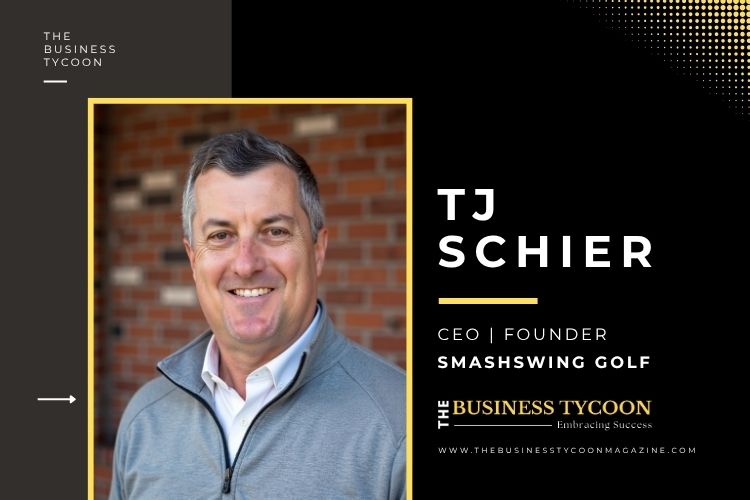
Beyond the Fairway: How TJ Schier Is Reimagining Golf for the Next Generation
Inside the bold vision behind SmashSwing Golf and the movement to transform indoor golf from intimidating sport to immersive entertainment.
For decades, golf has held a distinctive place in sports culture, celebrated as a game of tradition, discipline, and social connection. Yet, despite its enduring appeal, the sport has often carried barriers that discourage broader participation. Intimidating environments, lengthy time commitments, and the perception that golf is reserved for experienced players have left many potential enthusiasts watching from the sidelines rather than stepping onto the course. While golf has experienced renewed momentum in recent years, particularly through entertainment-driven concepts, one critical challenge has remained unresolved: how do you make golf more inclusive, more engaging, and more accessible to a wider audience?
For TJ Schier, entrepreneur and founder of SmashSwing Golf, the answer was never going to come through incremental improvements alone. It required reinvention. As CEO and Founder, Schier is leading a company determined to reshape the indoor golf experience through multiplayer technology, immersive gameplay, and customer engagement strategies that extend far beyond traditional simulator models. Yet what makes SmashSwing’s journey particularly compelling is that the company is not simply positioning itself as another golf technology provider competing in a crowded market. Instead, according to Schier, its mission runs much deeper: helping golf venues create experiences people genuinely want to return to.
“Indoor golf had become very serious and very vanilla,” Schier explains. “People today are looking for social experiences, shorter play formats, and reasons to gather with friends. We saw an opportunity to create something entirely different.” That vision ultimately became SmashSwing, a first-of-its-kind, multiplayer, multi-ball tracking indoor golf simulator designed to transform golf from an individual activity into a shared entertainment experience. By blending sport with social interaction and immersive gaming, SmashSwing is redefining what indoor golf can look and feel like for a new generation of players.
Building What Didn’t Exist
Every startup faces obstacles, but for SmashSwing, the earliest challenge was both remarkably simple and incredibly complex: the product they envisioned simply did not exist. Traditional golf simulators had long been built around a single-player format, where golfers step into a bay one at a time, take their swings, and wait patiently between shots. While effective for practice and skill development, these systems lacked the social energy and interactive engagement increasingly sought by today’s entertainment-driven consumers. Recognizing a significant gap in the market, TJ Schier saw an opportunity to rethink the entire indoor golf experience.
Rather than creating another simulator designed exclusively for serious golfers, SmashSwing envisioned something fundamentally different, an immersive, multiplayer environment where several people could hit golf balls simultaneously at the same cinematic screen while participating in fast-paced, interactive games. It was an ambitious concept that sought to combine sport, technology, and social entertainment into a single experience. However, turning that vision into reality required building technological capabilities that had never been developed before.
“The biggest challenge we faced early on was building a product that didn’t exist,” Schier explains. “We had to create the ability to track multiple people hitting golf balls at the same time into the same screen.” Achieving that breakthrough demanded patience, experimentation, and a willingness to challenge assumptions within an industry deeply rooted in tradition. Yet, overcoming technical hurdles was only part of the journey.
In the early stages, SmashSwing also encountered skepticism from segments of the traditional golf community, where entertainment-focused concepts were sometimes viewed as distractions from the sport’s authenticity and heritage. Questions emerged around whether multiplayer gaming and interactive experiences might dilute golf rather than enhance it. But over time, perceptions began to shift. As more players experienced SmashSwing firsthand, critics increasingly recognized what Schier had believed from the beginning: entertainment and accessibility could act as gateways to deeper participation in golf rather than substitutes for it.
Today, SmashSwing positions itself not as a competitor to traditional golf, but as a “top-of-the-funnel” solution, an experience designed to introduce more people to the sport in ways that feel engaging, approachable, and unintimidating. As Schier explains, “We’re helping bring more people into the game.” In doing so, SmashSwing is not replacing golf’s traditions; it is expanding the audience willing to embrace them.
More Marketing Than Technology
Interestingly, despite operating in a highly innovative and technology-driven space, TJ Schier is quick to challenge how people define SmashSwing. “SmashSwing is not really a tech company,” he says. “We’re a marketing company.” At first glance, the statement may seem unexpected for a business developing patent-pending golf entertainment technology, but Schier’s perspective reveals a deeper understanding of customer behavior, retention, and long-term business success. For him, technology is not the end goal, it is simply the tool used to create experiences that keep people coming back.
The indoor golf industry has witnessed tremendous growth in recent years, yet many venues continue to face a common challenge: maintaining repeat customer engagement. While novelty can attract first-time visitors, long-term success depends on creating compelling reasons for customers to return again and again. This is precisely where SmashSwing differentiates itself from traditional simulator experiences. Rather than offering static entertainment, the company continuously introduces seasonal content, new games, and licensed intellectual property (IP) experiences, ensuring players always have something fresh to explore. By evolving the experience regularly, SmashSwing enables its clients to continuously reconnect with their customer base through new attractions and experiences.
Schier often describes the company’s value proposition through the lens of customer engagement. “We solve the return-rate issue,” he explains, a challenge that many entertainment-focused businesses struggle to overcome. For venue operators, this solution carries significant value. In today’s highly competitive entertainment environment, businesses cannot rely solely on strong first impressions; repeat visits are what drive profitability, build communities, and sustain long-term growth. SmashSwing’s evolving content model empowers clients to consistently market fresh experiences, creating renewed excitement and stronger customer loyalty through novelty and social interaction.
Ultimately, this philosophy reflects Schier’s broader belief that innovation should never exist for innovation’s sake alone. In his view, even the most advanced technology only matters when it creates meaningful outcomes for customers and measurable value for businesses. At SmashSwing, technology is not merely about sophistication, it is about making experiences more memorable, more engaging, and ultimately more impactful.
The Power of Staying Lean
In the fast-moving startup landscape, many companies fall into the common trap of prioritizing rapid scale over sustainable growth, investing heavily in internal infrastructure long before establishing proven market traction. TJ Schier chose a different path for SmashSwing, one grounded in discipline, agility, and strategic efficiency. From the beginning, the company embraced a lean Software-as-a-Service (SaaS) model, intentionally designed around partnerships rather than excessive operational overhead. Instead of building an expensive in-house development ecosystem, SmashSwing collaborated with external game development partners while leveraging reseller networks to commercialize its offerings and expand market reach.
For Schier, this model was never accidental; it was a calculated decision aimed at preserving both flexibility and financial responsibility. As he explains, “This allows us to stay nimble, responsive, and fiscally responsible.” In a startup environment where high burn rates and unsustainable spending often dominate headlines, SmashSwing’s operational philosophy reflects a deliberate focus on long-term sustainability, adaptability, and stakeholder accountability. By minimizing unnecessary overhead, the company remains better positioned to navigate uncertainty while continuing to innovate without compromising financial discipline.
Equally important, maintaining a lean structure has given SmashSwing something that many growing businesses struggle to preserve: speed. As customer expectations evolve and market dynamics shift, the company can quickly adapt, integrate feedback, and refine its experiences without being hindered by layers of bureaucracy or slow-moving internal systems. This ability to pivot efficiently has become one of SmashSwing’s defining competitive advantages, allowing the company to remain highly responsive in an industry shaped by changing consumer behaviors and rapidly advancing entertainment technologies.
Turning Golf Into Entertainment
Traditional golf has long been admired for its discipline and tradition, but it also comes with challenges that can discourage participation. A typical round can stretch across four to five hours, skill gaps often feel intimidating, and beginners frequently find themselves uncomfortable in environments where every swing feels closely observed. For many, the hesitation around golf is not rooted in a lack of interest, but rather in the fear of embarrassment. As TJ Schier explains, “Golf can be intimidating. People feel like everyone is watching them.” Recognizing this barrier, SmashSwing set out to fundamentally rethink the experience, transforming golf from an individual performance into a more social, engaging, and welcoming activity.
By introducing multiplayer interaction and entertainment-driven gameplay, SmashSwing shifts attention away from personal performance and redirects it toward collective fun. Rather than standing silently while one person takes a turn, multiple players can participate simultaneously, creating an atmosphere that feels more dynamic and inclusive. Spectators are no longer focused on each swing or missed shot; instead, they are immersed in cinematic gameplay unfolding across large interactive screens. The result is an experience centered less on judgment and more on participation, making golf feel significantly less intimidating for newcomers.
SmashSwing has also redesigned gameplay itself to lower traditional barriers to entry. Its short-form, fast-paced games, typically lasting just two to four minutes, allow participants to engage by hitting golf balls at interactive targets in ways that feel more like entertainment than formal sport. The platform’s intelligent learning technology further enhances accessibility by dynamically adjusting difficulty levels when one player significantly outperforms others, helping maintain a balanced and enjoyable experience for everyone involved. This creates an environment where seasoned golfers and complete beginners can play side by side, removing the pressure often associated with traditional formats.
Schier often describes SmashSwing’s approach through a relatable analogy: “Think of it as a hot fudge sundae.” While the platform still offers familiar simulator functions such as practice sessions, long-drive competitions, and closest-to-the-pin contests, it layers these traditional elements with entirely new, immersive experiences. Ultimately, this combination of familiarity and innovation may define SmashSwing’s strongest appeal. Rather than replacing golf, the company is expanding what golf can become, more social, more approachable, and more engaging for an entirely new generation of players.
Leadership in an Era of Change
As industries continue evolving under the influence of automation, hybrid work environments, and shifting workforce expectations, leadership itself has undergone a profound transformation. For TJ Schier, modern leadership is grounded in practicality, adaptability, and lessons shaped by decades of experience. He believes that concerns about younger generations or changing workplace dynamics are far from new. Reflecting with humor, Schier notes, “Forty years ago, the older generation was saying my generation was entitled.” In his view, while circumstances may evolve, the fundamental challenge for leaders remains the same: the ability to adapt.
Today’s business leaders are tasked with guiding increasingly diverse, multigenerational, and often remote teams, all while delivering measurable results in fast-changing environments. According to Schier, leaders who remain attached to outdated methods risk falling behind. As he puts it, “Those who cling to the past and the ‘way it was’ will struggle. Those who are flexible and constantly adapt will thrive.” This philosophy extends directly into the culture he is building at SmashSwing, where innovation is fueled by openness rather than control. Schier strongly believes that micro-management stifles creativity, often driving away talented individuals whose ideas could help shape the future of a company.
Instead, SmashSwing embraces a culture centered on experimentation, collaboration, and shared ownership, encouraging contributions from every level of the organization. “We foster ideas from everyone,” Schier explains, emphasizing that meaningful innovation requires leaders to be open, not only to new perspectives but also to criticism. Whether feedback concerns a product, a process, or leadership itself, Schier views constructive critique as fuel for continuous improvement rather than resistance. For him, the strongest organizations are never static; they evolve constantly, driven by curiosity, humility, and a willingness to grow alongside the people they serve.
Making Golf Accessible to Everyone
One of SmashSwing Golf’s most meaningful ambitions extends far beyond entertainment, it lies in accessibility and inclusion. While golf has traditionally carried perceptions of exclusivity and intimidation, TJ Schier firmly believes the sport should be accessible to everyone, regardless of physical ability or experience level. Driven by that belief, SmashSwing has partnered with leading adaptive golf organizations and club manufacturers to develop specialized equipment and adaptive kits that enable individuals with disabilities and varying physical capabilities to participate meaningfully in the game. The company also collaborates with rehabilitation hospitals, special-needs organizations, and community partners to help bring golf experiences into spaces that have historically been underserved by traditional golf environments.
At its core, the mission is both simple and powerful: everyone deserves the opportunity to swing a golf club. For Schier, inclusion is not a corporate initiative designed to check a box, it is both a social and business imperative. By reducing intimidation and designing experiences that are more welcoming, interactive, and accessible, SmashSwing is helping introduce golf to populations often overlooked by conventional formats. In Schier’s view, the future of golf cannot remain limited by the traditions of its past; instead, it must evolve into something broader, more inclusive, and reflective of the diverse communities it hopes to inspire.
Curiosity as a Competitive Advantage
If there is one principle that defines TJ Schier’s entrepreneurial philosophy, it is curiosity. To Schier, curiosity is more than a personality trait, it is a leadership superpower, rooted in asking questions rather than assuming answers. At the heart of SmashSwing’s evolution lies a simple but powerful mindset: “Why not?” Why not make golf multiplayer? Why not create shorter, more engaging experiences? Why not make the sport feel more welcoming and less intimidating? And perhaps most importantly, why not completely rethink what indoor golf could become? This willingness to challenge convention and question long-standing industry norms has enabled SmashSwing to carve out a category few competitors currently occupy. While traditional simulator providers continue competing for space in an increasingly crowded market, SmashSwing is focused on creating a lane entirely of its own.
The company’s patent-pending technology provides a unique competitive advantage, allowing SmashSwing to innovate in a space where few others are operating. Yet, Schier believes sustainable innovation cannot happen behind closed doors. Instead, it emerges through constant engagement and meaningful dialogue with customers. Potential users regularly test the company’s products, share feedback during demonstrations and conferences, and openly discuss their pain points and expectations. That continuous feedback loop has become central to SmashSwing’s growth strategy. For Schier, innovation is not an isolated process driven solely by internal ideas, it is shaped by listening, adapting, and evolving alongside customer needs. By remaining closely connected to its audience and maintaining the flexibility to refine its offerings, SmashSwing continues expanding its relevance far beyond its original vision, making golf more engaging, inclusive, and accessible to broader audiences than ever imagined.
The Road Ahead
Like many startups, SmashSwing Golf still considers itself firmly in growth mode, navigating the early stages of its commercial journey with a measured and strategic approach. Rather than rushing expansion, the company is carefully refining its technology, validating market opportunities, and continuously evolving its offering to meet changing customer expectations. Yet, despite being in its formative phase, momentum is steadily building. As indoor entertainment increasingly converges with immersive technology, social gaming, and shorter-form recreational experiences, SmashSwing finds itself uniquely positioned at the intersection of sport and entertainment. More importantly, the company is solving a challenge that extends far beyond golf itself: how to create meaningful, repeatable experiences in an era of shrinking attention spans and constantly shifting consumer preferences.
For TJ Schier, success is not defined solely by installations, market expansion, or revenue growth. Instead, it is measured by something far more impactful, participation and accessibility. It is reflected in families sharing memorable experiences together, in beginners feeling welcomed rather than intimidated, and in communities discovering golf through an environment that feels inclusive and engaging. It is also about helping businesses build sustainable customer relationships through experiences that encourage repeat visits and deeper engagement. While the road ahead is still unfolding, one thing is becoming increasingly evident: TJ Schier is not simply building another golf product, he is challenging the industry to think bigger. Through SmashSwing, he is reimagining what golf can be: more social, more accessible, and perhaps more enjoyable than the sport has ever dared to imagine.