
The Fall of Commercial Real Estate in US Cities: Empty Offices, Rising Debt and a Market Reset

The commercial real estate market in the United States is going through one of its biggest shifts in decades. Office towers that once symbolised economic power now sit half empty. Downtown areas that thrived on daily office crowds are struggling to recover. From New York to San Francisco, the fall of commercial real estate is reshaping cities, businesses and even the banking sector. What was once considered one of the safest investments in America is now facing uncertainty, falling values and rising defaults. Empty Offices Are the New Normal The biggest reason behind the decline is simple: fewer people are returning to offices. Remote and hybrid work models became popular during the pandemic, and many companies never fully went back. Employees now expect flexibility, and businesses are saving money by reducing office space. As a result, vacancy rates in major cities have hit record highs. In cities like San Francisco, office vacancy rates have crossed 30%. Even traditionally strong markets like New York and Chicago are seeing rising empty spaces. Buildings that once had long waiting lists for tenants are now offering heavy discounts just to stay occupied. Falling Property Values As demand drops, property values are falling sharply. Office buildings bought at peak prices are now worth far less than what owners paid just a few years ago. Some landlords are facing a harsh reality: their properties are worth less than their loans. This is creating a dangerous situation where building owners may choose to walk away rather than refinance expensive debt. Experts warn that commercial property values in some urban centres could fall 30–50% from pre-pandemic levels. Interest Rates Made Things Worse Another major factor accelerating the crisis is rising interest rates. For years, cheap borrowing allowed investors to buy large office buildings with heavy loans. But as the Federal Reserve increased rates to fight inflation, refinancing became much more expensive. Buildings that were profitable at low interest rates are now struggling to generate enough income to cover higher loan costs. Many property owners are now facing loan maturity deadlines they cannot afford to meet. This has led to growing fears of defaults across the commercial real estate sector. Banks Are Feeling the Pressure The downturn is not just a problem for landlords — it’s also becoming a banking issue. Regional banks in the US hold a large portion of commercial real estate loans. If property owners fail to repay loans, banks could face significant losses. This has already triggered concern among regulators and investors. Some analysts believe commercial real estate could become the next major stress point for the financial system, especially if defaults rise quickly. While it may not lead to a 2008-style crash, the risk is enough to make markets nervous. Downtown Economies Are Suffering The impact goes beyond property values. Entire city economies are feeling the shock. Downtown areas relied heavily on office workers. Restaurants, cafés, retail stores and public transport systems all depended on daily foot traffic. With fewer commuters, many small businesses are struggling to survive. Cities are also facing declining tax revenues. Commercial property taxes are a major income source for local governments. Falling valuations could lead to budget cuts, reduced services or higher taxes elsewhere. This creates a ripple effect that touches everything from public safety to infrastructure spending. A Shift Toward Conversions Despite the challenges, some experts see opportunity in the crisis. Many cities are now exploring converting empty office buildings into residential housing. With housing shortages in urban areas, turning offices into apartments could solve two problems at once. However, conversions are not easy. Office buildings are not always designed for residential use, and renovation costs can be high. Still, some developers are already moving in this direction, especially in cities with strong housing demand. If successful, this trend could reshape urban landscapes over the next decade. Not All Commercial Real Estate Is Failing It’s important to note that not every segment is collapsing. While offices are struggling, other sectors like industrial warehouses, data centres and logistics hubs are booming. The rise of e-commerce and cloud computing has created strong demand for these properties. Retail is also showing mixed signals. High-end shopping areas are recovering, while older malls continue to decline. This suggests that the commercial real estate market is not dying — it is evolving. What Happens Next? The future of US commercial real estate will depend on several factors: interest rates, return-to-office trends and economic growth. If companies continue embracing remote work, demand for large office spaces may never fully recover. On the other hand, if borrowing costs fall and cities reinvent downtown areas, the sector could stabilise. Most experts agree on one thing: the golden era of massive office towers dominating city centres may be over. A new chapter is beginning — one where flexibility, mixed-use spaces and adaptive reuse will define the future of urban real estate.
7 Things to Never Ask ChatGPT

ChatGPT is an incredibly powerful tool that can help users in countless ways—from writing emails, generating ideas, explaining concepts, and even providing inspiration for projects. However, it is important to use ChatGPT responsibly and know its limitations. Certain types of requests are inappropriate, unsafe, or could even be harmful if attempted. Understanding what not to ask can keep you safe and ensure a positive experience while interacting with AI. 1. Personal and Private Information One of the most important rules when using ChatGPT is never to share or request personal or confidential information. This includes sensitive details such as passwords, bank account numbers, home addresses, phone numbers, and social security numbers. ChatGPT is not a secure environment for storing private information. Sharing such data may put your personal safety, finances, and privacy at risk. Always use trusted and legitimate platforms when sharing private information and keep personal data secure. Remember, even if ChatGPT seems “friendly” or helpful, it cannot guarantee privacy or confidentiality. 2. Medical and Legal Decisions While ChatGPT can provide general information about health and law, it is not a substitute for a doctor or lawyer. Avoid asking ChatGPT to diagnose illnesses, suggest treatments, or give definitive answers about legal matters. These are areas where professional expertise is crucial. Making decisions about your health or legal rights based on AI responses can lead to mistakes or dangerous outcomes. Always consult authorized professionals when it comes to medical or legal advice. ChatGPT can be a helpful tool for research or clarification, but it should never replace expert consultation. 3. Hateful or Harmful Content Never ask ChatGPT to generate content that promotes hate speech, discrimination, or violence. Requests to cause emotional or physical harm to others are not only unethical but also dangerous. Technology should be used for positive and constructive purposes—to educate, entertain, or inspire. Asking AI to produce harmful content can perpetuate negativity and have real-world consequences. Always focus on using ChatGPT for tasks that enhance learning, creativity, and growth. 4. Illegal Activities ChatGPT should never be used to seek guidance on illegal actions. This includes hacking, stealing, cheating, fraud, or any activity that violates the law. Using AI to plan or execute illegal actions is not only inappropriate but could also expose you to serious legal consequences. Instead, use ChatGPT for educational and personal development purposes. Learning coding, solving problems, or exploring safe experiments with technology is a positive alternative to asking AI for instructions on breaking the law. 5. Requests for False Information Another category to avoid is asking ChatGPT to provide false information or fake news. This includes made-up reviews, fake stories about real individuals, or fabricated reports. Spreading false information can damage reputations, decrease trust, and contribute to misinformation in the wider community. AI should be used to support learning, research, and accurate communication, not to create content that misleads or harms others. Always double-check facts from credible sources, especially if the information will be shared publicly. 6. Sensitive Personal Opinions About Others Do not ask ChatGPT to judge or make assumptions about other individuals. Questions that target someone’s personal behavior, character, or private life may be harmful or invasive. Even if the intention seems harmless, spreading opinions or speculations about real people can lead to conflict or damage reputations. It’s important to respect privacy and use ChatGPT to focus on constructive, informative, or creative tasks rather than personal scrutiny. 7. Requests That Exploit the AI Finally, avoid asking ChatGPT to bypass its ethical safeguards or limitations. This includes attempting to manipulate it to generate unsafe content or harmful instructions. OpenAI and other AI developers implement these safeguards to ensure responsible use and protect users from dangerous outputs. Circumventing these protections is not safe, nor is it the intended use of AI. Final Thoughts ChatGPT is an amazing tool, but it is not all-powerful. Using AI responsibly means understanding what questions are inappropriate, unsafe, or unethical. Never share personal information, rely on AI for medical or legal decisions, request harmful or illegal content, or spread false information. By using ChatGPT responsibly, you can unlock its potential for learning, creativity, and productivity while protecting yourself and others from risk. Remember: AI works best when it’s used for positive, educational, and ethical purposes.
The Future of Entrepreneurship in an AI-Driven World

The world of business changes rapidly. AI (artificial intelligence) is being integrated into our everyday lives. AI technology allows businesses to do things more effectively and efficiently. Entrepreneurs have new opportunities because of the changes created by AI technology. By using a technology like AI, entrepreneurs can create new businesses and be able to succeed using AI in their day-to-day activities, rather than solely traditional ways. Smarter Startups In earlier days it required huge organisations and large expenditure to set up a business; now with AI software a single individual can create logos, construct websites, run accounts and respond to customers using only AI. So entrepreneurs in small towns or youth entrepreneurs now have access to the same type of tools as multinationals, allowing more people to set up businesses using less capital. Better Decisions with Data AI helps entrepreneurs get a better understanding of their clients. AI analyses their buying behaviour, actions on the internet, and their feedback. With the information gathered, entrepreneurs are able to develop the type of products that people want. Also, they are able to determine future needs and prepare for the future. Instead of guessing and making decisions randomly, they now have the capabilities to base their decisions on actual data, thus making better and more informed decisions. New Business Ideas Artificial intelligence can be a tool, but it can also provide entrepreneurs with the opportunity to create new businesses. Chatbots, mobile apps, online educational services and smart appliances are examples of today’s startups that are based on artificial intelligence or developing AI services. In the future, artificial intelligence will also offer entrepreneurs the opportunity to develop new services in agriculture, healthcare, education and retail and thus increase their ability to grow by learning how to use artificial intelligence. Human Skills Still Matter Human abilities are still required in an AI world. While machines can perform many tasks, they will never replace the creativity found in human beings, empathy shown through leadership, or the trust created within your brand. People need to build relationships every day through positive communication and valued service. Business owners who use artificial intelligence to assist them will succeed more than others by leveraging their knowledge of working with this type of technology. Conclusion The future of entrepreneurial endeavours will be filled with optimism and change, as technology makes it easier, faster, and more accessible to conduct business. All the same, success still relies on the concepts and visions that humans create.
Organic Marketing vs Paid Ads: What Works in 2026?

Marketing has changed significantly since the last decade of marketing history. By 2026, businesses now have multiple options for communicating with their audiences, including organic and paid media/newsprint publication; however, organic marketing and paid advertising have received significant usage as marketing principles by many businesses, so there are many other factors that will influence both types of advertising and the ultimate effectiveness of their respective marketing tactics. Many entrepreneurs often question whether organic media advertisements produce superior results to paid advertising and which marketing efforts make the best use of available resources (capital) to maximise returns (i.e., net profits). What Is Organic Marketing? Organic marketing refers to the promotion of your business without requiring money for advertising. Examples of organic marketing include creating social media, writing blog articles, creating videos, podcasting, sending out email newsletters, and ranking on major search engines through search engine optimisation techniques. This strategy typically requires some level of dedication/commitment, as it may take some time or patience; additionally, it involves creating quality-based content and posting on a consistent basis. Gradually over time, there will be a growing appreciation for your product/service amongst consumers because when people become familiar with your products/services, they develop relationships (trust) with you, hence resulting in becoming a loyal follower of your brand/container. By 2026, people will want more than just “things” (i.e., tangible items); instead, they will want to get true/real benefits from the brands/messages they interact with; therefore, marketers should utilise strategies that focus on establishing value via providing educational/valuable/enjoyable content through organic marketing strategies that will help establish long-term relationships with consumers. Even though some may not see any substantial results easily (i.e., spending money or time), all categories of marketers can experience continual, prolonged (long-term) success via utilising these techniques to/or on behalf of their businesses. What Are Paid Ads? Paid advertisements consist of you paying sites (such as search engines, webpages, or social media) to promote your business. The primary benefit is that they allow instant exposure to your new products or promotions. If you launch a new product or service, paid advertisements can generate fast traffic and leads. In 2026, the advertisement platforms will allow advertisers to target better than ever before. Businesses will be able to specify age, location, interests, and even purchasing behaviour in order to advertise directly to their target audience. When you stop paying for advertisement placement, however, your traffic will generally cease at the same time. What Works Better in 2026? Paid advertising can quickly increase your business’s visibility, while organic marketing takes longer to build brand authority and value. Both methods work well in different contexts but usually are combined to create a successful marketing campaign. Conclusion By 2026, the best advertising strategy will likely include a mix of paid and organic marketing – use paid advertising for quick results and organic marketing for long-term success. The combination of both forms of advertising will provide continued growth of the business and develop a stronger relationship with the customer.
Trump-Linked Truth Social Seeks SEC Approval for Two Crypto ETFs
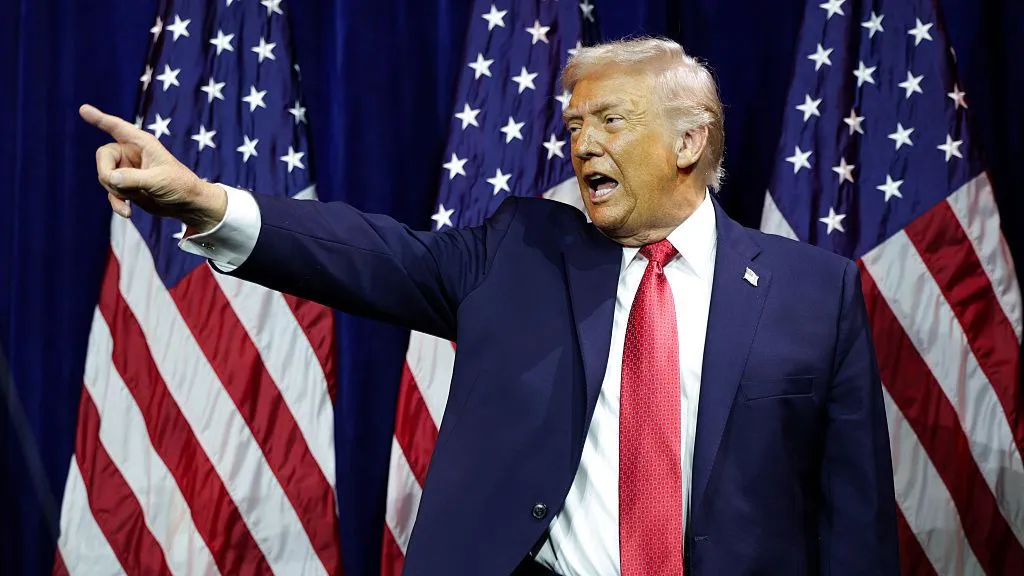
Truth Social, the platform owned by Trump Media & Technology Group and closely associated with Donald Trump, is expanding its footprint in digital assets. The company has filed registration documents with the U.S. Securities and Exchange Commission (SEC) seeking approval to launch two new cryptocurrency exchange-traded funds (ETFs). The move signals a deeper push into the rapidly evolving crypto investment market. What Are the Proposed ETFs? The filings were submitted by Yorkville America Equities, the asset manager behind Truth Social–branded ETFs. The two proposed funds include: 1. Truth Social Bitcoin and Ether ETF This fund would provide investors exposure to the two largest cryptocurrencies by market capitalization — The ETF would track price movements of both digital assets, offering traditional investors a regulated way to gain crypto exposure without directly holding tokens. 2. Truth Social Cronos Yield Maximizer ETF The second proposal is more specialized. It would invest in and stake: Unlike typical spot ETFs, this product would aim to generate yield by earning staking rewards — income generated by helping secure proof-of-stake blockchain networks. Partnership With Crypto.com If approved, both ETFs would launch in partnership with Crypto.com. Under the proposal: Distribution would take place through Foris Capital US LLC, a broker-dealer affiliated with Crypto.com. Why the Cronos ETF Stands Out The Cronos Yield Maximizer ETF is notable because it incorporates staking — a feature not commonly included in U.S.-based crypto ETFs. Most currently available products are passive spot ETFs focused only on price exposure. A staking-enabled ETF could potentially offer: However, staking components may face additional regulatory scrutiny from the SEC. Political and Regulatory Context Truth Social first signaled crypto ambitions in 2025 with a spot Bitcoin ETF filing, followed by a “Blue Chip Digital Asset ETF” proposal targeting major altcoins. Neither product has launched yet. The filings come amid ongoing debate in Washington over crypto regulation, including discussions surrounding digital asset market structure legislation. Because of former President Trump’s ownership ties to the parent company, critics argue there could be political complications tied to regulatory approvals. Supporters, however, view the move as part of a broader push to mainstream crypto investment products in the U.S. What Happens Next? Both ETFs remain subject to SEC approval. The review process can take months and may involve amendments, public comments, or additional disclosures. If approved, these funds could mark one of the most politically branded entries into the U.S. crypto ETF market to date — blending media, politics, and digital finance in a single investment product.
Nike Brings Back ACG with Team USA at the Winter Olympics
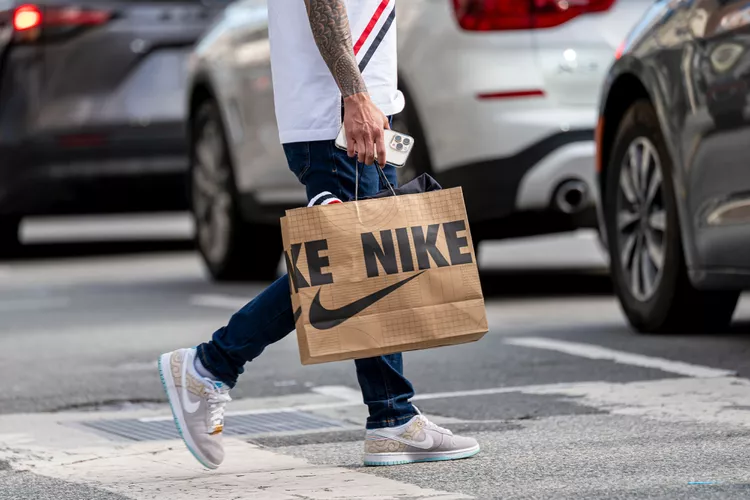
Nike has chosen the 2026 Winter Olympics as the perfect stage to relaunch its 37-year-old outdoor brand, ACG (All Conditions Gear). Team USA athletes are wearing the gear on the Olympic slopes, sparking global attention for a brand that many casual consumers may not have heard of before. The revival comes as Nike aims to strengthen its sports performance offerings and tap into a growing outdoor lifestyle and fashion segment. Google Trends shows that searches for “Nike ACG” have surged during the Olympics, signaling heightened public interest. ACG’s History and Niche Appeal ACG originally launched in 1989 as a performance-focused collection for trail running, hiking, and outdoor activities. Unlike Nike’s mainstream lines such as Air Jordan, ACG remained a niche product, generating modest revenue. However, the rise of outdoor-inspired fashion trends, such as gorpcore, has created the perfect moment for a revival. The timing of this relaunch aligns with both a fashion resurgence and the practical performance focus that Nike has been emphasizing under CEO Elliott Hill’s leadership. Olympic Exposure Drives Online Buzz Nike unveiled the Team USA ACG collection on January 28, 2026, and the brand has been trending online ever since. According to data analytics firm PeakMetrics, conversations on X (formerly Twitter) mentioning ACG and the Olympics spiked 273% between January 30 and February 6, ahead of the games’ opening ceremony in Milan. The Olympics have amplified the visibility of ACG. Social media engagement is climbing, with athletes wearing the brand while competing and posting updates. Google searches for “Nike ACG” have also hit record highs during the first weeks of the Winter Games. ACG Expands Beyond Team USA Nike’s Olympic strategy is not limited to American athletes. Italian tennis star Jannik Sinner was featured in an ACG campaign, wearing a custom outfit that garnered nearly 200,000 likes on Instagram. The ACG Instagram account has grown to over 48,000 followers since its launch on February 2, showing that social media engagement is a key part of the relaunch strategy. The collection features a full lineup of outerwear, base layers, and shoes designed for trail racing and hiking. These products have been visible on Team USA athletes throughout the Olympic competitions, blending functionality with a streetwear-friendly aesthetic. Nike’s Strategic Pivot Under CEO Elliott Hill This approach mirrors other recent high-profile campaigns. For instance, women athletes were featured in Nike’s return to the Super Bowl advertising stage in 2025, marking the company’s first Super Bowl ad in 27 years. Nike has also restructured its stores and internal operations to emphasize performance gear, including outdoor and trail-focused products. The ACG relaunch reflects CEO Elliott Hill’s vision for Nike, which focuses on performance-oriented sportswear rather than lifestyle fashion alone. Hill, who took the helm in October 2024, has emphasized performance gear as the core of the brand’s mission. Future Plans for ACG Nike’s efforts extend beyond marketing. The company plans to open its first standalone ACG store in Beijing in February 2026, a move signaling its commitment to building ACG into a global outdoor performance brand. Scott LeClair, vice president and general manager of ACG, stated in a January press release, “ACG has the foundation to shape the future of outdoor performance while pushing into spaces that feel fresh and unexpected. It is going to be a fun ride.” This relaunch positions ACG at the intersection of performance and fashion, appealing to both outdoor enthusiasts and the growing community of gorpcore fashion followers. By leveraging the Olympics, Nike is ensuring the brand gains maximum visibility and credibility in the competitive outdoor market. Conclusion Nike’s relaunch of ACG at the 2026 Winter Olympics demonstrates a strategic push to combine performance, fashion, and athlete endorsement. With Olympic exposure, social media engagement, and plans for a dedicated retail presence, ACG is poised to capture a new generation of outdoor enthusiasts and streetwear fans alike. As Nike continues to emphasize performance under CEO Elliott Hill, the Winter Olympics may prove to be the perfect launchpad for ACG’s second act.
10 High-Paying Jobs You Can Land Without a College Degree in 2026
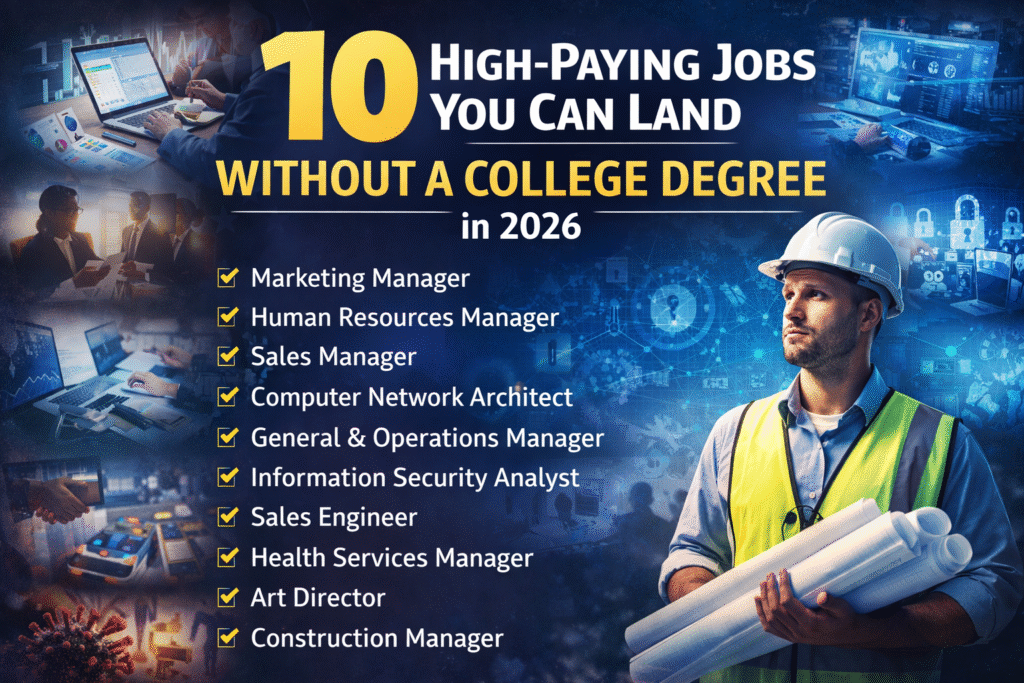
College tuition continues to rise, wages struggle to keep up with inflation, and many Americans are questioning whether a four-year degree is worth the cost. But there is good news. High-paying careers are still within reach — even without a traditional college diploma. A new report from job platform Resume Genius highlights “new-collar jobs,” roles that value skills, certifications, and real-world experience over formal education. While the U.S. Department of Labor often lists bachelor’s degrees as typical requirements, many professionals enter these careers through training programs, online courses, and hands-on work. Here are 10 six-figure jobs that can be achieved through alternative paths. Marketing Manager With a median salary of $161,030, marketing managers lead campaigns that promote products and services. Experience in social media marketing or search engine optimization can help professionals move into this role without a degree. Human Resources Manager HR managers earn around $140,030 annually and oversee hiring, employee support, and workplace culture. Certifications like the Associate Professional in Human Resources (aPHR) can replace traditional education requirements. Sales Manager Median pay stands at $138,060. Strong sales performance, product knowledge, and leadership skills often matter more than academic credentials. Computer Network Architect These tech professionals design and build networks such as LANs and WANs. With salaries around $130,390 — and top earners near $198,000 — certifications and IT experience can open the door. General and Operations Manager Earning about $129,330, operations managers keep businesses running smoothly. Many rise through the ranks after years of team leadership or project management experience. Information Security Analyst Cybersecurity continues to boom. With a median salary of $124,910 and strong job growth, professionals can enter through certifications like CompTIA Security+ or Google’s cybersecurity programs. Sales Engineer Sales engineers combine technical knowledge with sales skills. Median pay reaches $121,520, and experience with complex products can outweigh formal education. Health Services Manager Healthcare administrators manage the business side of hospitals and clinics. Salaries average $117,960, and certifications in healthcare systems can help candidates qualify. Art Director Creative professionals who build strong portfolios can earn over $111,000 managing visual content for media, advertising, or film projects. Talent and experience often speak louder than degrees. Construction Manager Construction managers oversee large building projects and earn about $106,980. Many start as crew leads or foremen and move up through years of field experience. The Bottom Line A college degree is no longer the only path to financial success. Today’s job market rewards skills, certifications, and practical experience just as much — and sometimes more. For motivated workers willing to learn and adapt, six-figure careers are closer than ever.
10 Fastest-Growing Cities in the US for Small Businesses in 2026

Small business growth in the United States is accelerating—but insurance protection is not keeping up. According to new data released by USA Business Insurance Services, Inc., some of the fastest-growing cities for entrepreneurs are also the places where businesses are most exposed to serious financial risk. While new companies are launching at record speed, many owners are operating with inadequate insurance coverage, leaving them vulnerable to lawsuits, cyberattacks, weather-related losses, and forced shutdowns. This growing gap between business expansion and risk protection could put millions of small businesses in danger. How the Rankings Were Created The 2026 rankings were developed using a combination of trusted public and industry data sources, including: Insurance gap insights were supported by anonymized internal coverage reviews, accepted insurance benchmarks, and publicly available loss data across industries. The result highlights not only where businesses are growing fastest—but also where they are most underinsured. The 10 Fastest-Growing Cities for Small Businesses (2026) Here are the top U.S. cities experiencing the strongest small business growth: These metro areas have seen hundreds of thousands of new business applications since 2024, driven by population inflows, expanding job markets, and favorable economic conditions. However, rapid growth often comes with hidden risks. The Hidden Insurance Gap in High-Growth Cities USA Business Insurance’s analysis shows that many new businesses in booming cities are dangerously underprotected. Key findings include: For many business owners, skipping insurance feels like saving money—but one major claim can erase years of hard work overnight. Why This Is a Serious Problem for Small Businesses Today’s economic environment is unforgiving. Inflation remains high, litigation costs are rising, and weather-related losses are becoming more frequent. In dense, fast-growing cities, these risks increase even further due to higher foot traffic, tighter deadlines, and operational pressure. As Sam Meenasian, VP of USA Business Insurance Services, explains: “Growth feels like momentum, until one uninsured event wipes a business out.” A single uncovered lawsuit, cyber breach, or forced shutdown can permanently close a business—no matter how fast it was growing. When Should Business Owners Revisit Their Insurance? Certain milestones should always trigger an insurance review: If you haven’t reviewed your insurance coverage in the last few months, chances are your business has already outgrown it. About USA Business Insurance USA Business Insurance Services, Inc. provides customized insurance solutions to small and mid-sized businesses across all 50 U.S. states. By working with leading U.S. carriers, the company helps business owners identify risks, close coverage gaps, and protect their businesses for long-term success.
RIP Education Department? Not So Fast — Congress Blocks Trump’s Plan and Funds It With $80 Billion
For more than a year, former President Donald Trump has pushed to shrink or completely dismantle the U.S. Department of Education. His administration reduced staff, cut programs, and tried shifting responsibilities to other agencies. Many Republicans publicly supported the plan. But in a surprising twist, Congress has done the opposite. Instead of slashing funds, lawmakers passed a bipartisan spending bill that fully funds the Education Department for fiscal year 2026. Trump signed the bill into law on February 3, setting aside roughly $80 billion for the agency. The decision shows that even many Republicans are reluctant to eliminate programs that millions of students, parents, and schools rely on. Programs Stay Protected Despite months of uncertainty, most major education programs survived intact. Funding remains in place for special education services, afterschool programs, college aid, and support for low-income schools. Even programs that the administration had slowed down or ignored were restored to near-normal levels. Lawmakers made the bill more detailed to ensure the money goes exactly where Congress intends. This move limits the administration’s ability to redirect or freeze funds. Education advocates say this was a quiet but clear message from Congress. While politicians may talk about shrinking the federal role in education, few are willing to risk cutting popular services that directly affect families back home. Why Shutting the Agency Down Isn’t Easy Eliminating the Education Department sounds simple in political speeches, but in reality it is legally and logistically complicated. The agency manages billions of dollars and oversees programs that protect students with disabilities, fund school counselors, and help families pay for college. States and school districts depend on these resources. Closing the department would require a separate act of Congress and support from Democrats. That level of agreement simply does not exist. After decades of similar attempts by conservatives, the department remains deeply embedded in the system. Layoffs and Restructuring Still Continue While funding is secure for now, the department has already changed significantly. Education Secretary Linda McMahon has cut staff and moved employees to other federal agencies, including Labor, Health, and State. Democrats tried to block these transfers but failed to fully reverse them. However, they secured a compromise that forces the administration to brief Congress every two weeks about any restructuring plans. Lawmakers hope these regular updates will create accountability and prevent misuse of funds. Political Limits for Trump’s Plan The outcome reveals a bigger political reality. Republicans may support Trump publicly, but many hesitate to vote against programs that help their own constituents. Senators and representatives face pressure at home from parents, teachers, and students who depend on federal education funding. Cutting those benefits could carry serious electoral risks. As a result, Congress appears stuck in the middle — not fully backing Trump’s plan to dismantle the department, but also not openly opposing him. What Happens Next The Education Department is smaller and under pressure, but far from dead. With billions in funding protected and oversight increasing, the agency will continue operating for now. Trump’s goal to dismantle it faces legal barriers, political resistance, and practical challenges that make a full shutdown unlikely anytime soon. The question now is whether future battles will weaken the department further — or if Congress will keep stepping in to protect it.
US Seizes Maduro, Claims Oil Control — But Who Really Runs Venezuela Now?VenezuelaUS Seizes Maduro, Claims Oil Control — But Who Really Runs Venezuela Now?

Venezuela’s political landscape changed overnight after a bold US military operation led to the capture of President Nicolás Maduro and First Lady Cilia Flores. The raid, ordered by former US President Donald Trump, stunned Latin America and triggered global debate. Within hours, Maduro was removed from power and taken to the United States to face serious criminal charges, including alleged drug trafficking and weapons offences. Both have denied all accusations. Trump declared that the US would oversee Venezuela until a stable political transition could be arranged, adding that Washington would control the country’s oil sales. Who Is Running Venezuela Now Despite Trump’s strong claims, the day-to-day control of Venezuela remains in local hands. Delcy Rodríguez, Maduro’s former vice-president and close ally, was sworn in as interim president by the National Assembly. Under the constitution, she can temporarily lead the country while decisions about elections are made. Rodríguez has used strong language against the US action, calling it illegal, but at the same time she has worked carefully with Washington to avoid further conflict. Her government has released some political prisoners, reopened talks with US officials, and started economic reforms. While opposition leaders hoped this moment would bring immediate change, Rodríguez still has the backing of Maduro’s ruling party and the military, which keeps her position secure for now. Trump’s Big Oil Strategy The real focus of Trump’s plan appears to be oil. Venezuela holds the largest proven oil reserves in the world, yet years of mismanagement, corruption and sanctions have reduced production sharply. Trump says American companies can rebuild the sector with huge investments and restore output to previous levels. His administration wants the US to supervise oil exports and place revenues into monitored accounts, claiming the money will benefit Venezuelan citizens and help stabilize the country. Trump argues that increased Venezuelan production would also lower global fuel prices and strengthen US energy security. However, legal experts question whether the US has the right to control another nation’s resources. Many countries, including Russia, China and several Latin American governments, have criticized the move as interference. What Happens Next Venezuela now stands at a crossroads. Rodríguez holds political control at home, while Trump pushes economic control from abroad. Elections, international pressure, and oil negotiations will decide whether the country regains full independence or remains under heavy US influence. Will this intervention bring stability — or create another long conflict over power and oil?