
Dollar Slips as Treasury Concerns Weigh on U.S. Currency

The U.S. dollar slipped on Friday, trading near a three-month low against the euro as investors remained concerned about the U.S. Treasury’s plans to expand its purchases of longer-dated government debt. Treasury Secretary Scott Bessent indicated that the government could increase its Treasury buybacks further, following the department’s recent announcement that it would at least double purchases of longer-term debt. The strategy is aimed at easing pressure on bond yields, but investors remain skeptical about its effectiveness. Long-term U.S. Treasury yields have risen sharply this week, with the 30-year yield reaching its highest level since 2007. Analysts have pointed to concerns over the U.S. fiscal outlook, increased government debt issuance, geopolitical tensions and uncertainty surrounding Federal Reserve policy. The rise in Treasury yields has also created additional pressure on the dollar. While the Treasury seeks to contain borrowing costs, markets are increasingly concerned that fiscal pressures could instead be reflected in a weaker U.S. currency. The dollar index remained close to recent lows, while the euro strengthened toward its highest level since May. Sterling also continued to gain against the dollar, reflecting broader weakness in the greenback. Yen Strengthens on Inflation Data The Japanese yen gained against the dollar after data showed that Japan’s core consumer inflation accelerated in July. The stronger inflation figures have reinforced expectations that the Bank of Japan could raise interest rates, providing support to the yen. Markets are now closely watching upcoming central-bank signals, particularly the Federal Reserve’s Jackson Hole symposium, where investors will look for further clues about the direction of U.S. monetary policy. Market Outlook The dollar’s near-term direction will likely depend on a combination of U.S. Treasury yields, Federal Reserve policy expectations, fiscal concerns and global interest-rate differentials. For forex traders, continued weakness in the dollar could keep major currency pairs such as EUR/USD, GBP/USD and USD/JPY in focus, while shifts in U.S. yields could remain a key driver of currency-market volatility.
National Weather Service confirms tornado struck Atlantic Beach on Long Island

Tornado Strikes Long Island’s Atlantic Beach, Causing Extensive Damage The National Weather Service (NWS) confirmed Friday that a tornado touched down in Atlantic Beach, Long Island, on Thursday evening, after moving ashore from the ocean. According to the NWS, radar data, video footage of the waterspout coming ashore, and reports of damage near the Sun and Surf Beach Club confirmed the tornado’s touchdown. The tornado caused extensive damage to local beach clubs, including the Sun and Surf Beach Club. Officials said approximately 50 cabanas were damaged or destroyed. One person suffered a minor head injury but did not require medical treatment. Nassau County officials said there were no serious injuries, and the county’s state of emergency, declared following Thursday’s severe storms and flooding, was lifted Friday morning. The NWS also reported another circulation farther east that may have produced a waterspout near Atlantic Beach and the Five Towns area, although no damage had been linked to that event. The tornado was the first confirmed tornado in Nassau County since 2021. Officials said the storm developed quickly, moving from the ocean onto land, while emergency crews responded to flooding and storm-related incidents across the area. The affected beach clubs, including Sun and Surf and Silver Point, are expected to remain temporarily closed while officials assess the damage. Images: Tornado/waterspout and storm damage in Atlantic Beach, New York.
Why Iran Attacked US Data Centres in the Gulf

In a dramatic escalation of regional tensions, Iranian strikes targeted data centres operated by Amazon Web Services in the United Arab Emirates and Bahrain. The attacks mark a significant shift in modern conflict: technology infrastructure is no longer collateral damage. It is now a primary objective. The strikes came days after a joint US-Israeli operation reportedly eliminated senior Iranian leadership, including Supreme Leader Ali Khamenei. With conventional military targets already hit, Iran’s response appears aimed at economic, technological and strategic pressure points. What Happened to AWS Facilities? According to company statements, Iranian drone strikes hit an AWS cloud unit in the UAE, while a blast near another facility in Bahrain caused structural damage and power disruptions. Although Amazon described the damage as limited, parts of the affected infrastructure were temporarily shut down. Customers were advised to back up data as recovery efforts continued. The market reaction was swift. Amazon shares fell roughly 2.7 per cent in premarket trading following reports of the strikes, underscoring investor sensitivity to geopolitical risk in critical infrastructure. Data Centres as Strategic Targets The attacks reflect a broader reality: data is central to modern power. If oil refineries were prime targets in 20th-century wars, data centres are their 21st-century equivalent. These facilities require billions in capital investment and support everything from banking transactions to government communications. The Gulf region, particularly the UAE and Bahrain, has positioned itself as a rising hub for artificial intelligence and cloud computing infrastructure. Major technology companies have poured resources into the region, encouraged by political stability and large-scale investment commitments. Disrupting these assets sends a powerful signal — both economically and symbolically. Striking high-value digital infrastructure can undermine investor confidence and challenge the perception of regional security without necessarily escalating to full-scale ground conflict. AI and Military Operations Another possible motive relates to artificial intelligence in warfare. Reports indicate that US military planners relied on advanced AI tools, including systems developed by Anthropic such as Claude, for intelligence analysis, target identification and battlefield simulations during recent operations. Modern militaries depend heavily on cloud computing to process vast amounts of data. Intelligence gathering, satellite imagery analysis, communications and operational modelling all rely on secure data infrastructure. By targeting AWS facilities in the Gulf, Iran may have sought to disrupt or complicate regional information flows that support US and allied military activities. Even temporary outages can slow logistics, data processing and coordination. In this context, attacking data centres could be viewed as an attempt to counter the technological advantages demonstrated in earlier strikes. Economic Ripple Effects The third potential motive lies in the interconnected nature of cloud services. A single data centre does not serve one client. It supports thousands of businesses simultaneously. From financial institutions to logistics firms, many rely on cloud infrastructure for daily operations. Damaging such facilities can create cascading effects. Even limited outages can disrupt transactions, communications and data access across multiple sectors. In a globalised digital economy, hitting one facility can ripple outward across borders. The immediate dip in Amazon’s stock price highlights how sensitive markets are to disruptions in core digital infrastructure. The Gulf’s Stability Questioned The Gulf region has recently been marketed as the next global AI and technology hub. High-profile visits and multi-trillion-dollar investment pledges reinforced that narrative. However, the strikes raise questions about the resilience of that positioning. If data centres can become frontline targets, the perceived safety of hosting critical infrastructure in geopolitically sensitive areas may be reassessed. While AWS has emphasised redundancy and recovery protocols, the symbolic impact of the attacks could prove as significant as the physical damage. A New Phase of Warfare The targeting of data centres illustrates how warfare is evolving. Beyond military bases and energy facilities, digital infrastructure now sits firmly within the strategic calculus. Three motives appear plausible: economic disruption, interference with AI-supported military operations, and the ability to affect multiple organisations with a single strike. As conflicts increasingly intertwine with technology, the battlefield extends beyond land, sea and air — into server rooms and cloud networks. The Gulf strikes suggest that in modern war, data itself has become a target.
Humongous Numbers of People Are Uninstalling ChatGPT as Anti-OpenAI Sentiment Surges

A sharp backlash is unfolding against OpenAI after CEO Sam Altman announced a new agreement with the US Department of Defence. Fresh app intelligence data suggests the outrage is translating into action, with large numbers of users uninstalling ChatGPT and turning to rival platforms. According to figures reported by TechCrunch and attributed to market intelligence firm Sensor Tower, uninstalls of the ChatGPT mobile app surged by 295 per cent on Saturday compared with the previous day. That spike far exceeds the chatbot’s typical day-over-day uninstall rate of roughly nine per cent over the past month. The data marks one of the most dramatic short-term reversals in user sentiment since ChatGPT’s launch. Fallout From the Pentagon Deal The controversy began after OpenAI confirmed a deal to provide artificial intelligence tools to the US Department of Defence. Critics argue that the agreement could allow advanced AI systems to be used in military planning or operations, intensifying ethical concerns that have followed the industry’s rapid growth. In online forums and social media threads, some users accused OpenAI of compromising its earlier public positioning around AI safety. One widely shared post on Reddit called on subscribers to cancel paid plans and share proof of their cancellations. Others posted guides explaining how to export ChatGPT conversation histories and migrate to competing services. Altman attempted to address the backlash during a live question-and-answer session on X, but critics continued pressing the company over the scope of its military involvement. Claude Gains as Users Jump Ship. Much of the departing traffic appears to be heading toward Anthropic and its chatbot, Claude. Anthropic has publicly stated that it would not allow its AI systems to be used in autonomous weapons or for mass domestic surveillance. While questions remain about how AI tools may ultimately be deployed in defence contexts, the company’s stance appears to have resonated with users. Sensor Tower data cited by TechCrunch shows that Claude installs rose 37 per cent day-over-day on Friday and an additional 51 per cent on Saturday. Over the weekend, Claude climbed to the top position in the US App Store, overtaking ChatGPT, which slipped into second place. For the first time, US downloads of Claude reportedly surpassed those of ChatGPT. Growth Slows for ChatGPT The controversy has not only affected uninstalls. It has also dampened new user growth. Download growth for ChatGPT dropped 14 per cent day-over-day on Saturday, followed by a further five per cent decline the next day. Just one day before the backlash intensified, growth had been running at a positive 13 per cent. Such swings highlight how quickly public perception can shift in the highly competitive AI market. While ChatGPT remains one of the most widely used AI applications globally, its dominant position is no longer unchallenged. A Test for the Broader AI Industry The episode underscores a deeper tension shaping the artificial intelligence race: the balance between commercial expansion, government partnerships, and public trust. AI companies increasingly rely on enterprise and government contracts to fund large-scale model development. At the same time, consumer adoption depends heavily on perceptions of safety, transparency, and ethical use. Whether the backlash proves temporary or signals a longer-term shift remains uncertain. App rankings can fluctuate rapidly, and uninstall spikes do not always translate into permanent losses. However, the scale of the reaction suggests that defence partnerships carry reputational risks in an industry built on public goodwill. For now, the numbers tell a clear story. A 295 per cent surge in uninstalls is more than routine churn. It reflects a moment of reckoning for OpenAI — and a reminder that in the AI era, public opinion can move just as quickly as the technology itself.
Bitcoin Price Jumps 8%; Breakout Hopes Reignite Across Crypto Markets

Bitcoin has staged a strong comeback, climbing 8% and reclaiming the psychologically crucial $70,000 level. The move has reignited bullish sentiment across crypto markets, with traders closely watching whether the rally can extend toward new short-term highs. After consolidating above key support zones earlier this week, BTC gathered momentum and broke through multiple resistance levels in quick succession. A rally above $70,000 signals strength. Bitcoin formed a solid base above the $67,500 region before pushing past the $68,800 resistance zone. The breakout accelerated as bulls drove the price decisively above $70,000, triggering renewed buying interest. The rally peaked near $74,062, where selling pressure emerged. A modest pullback followed, with BTC slipping below $73,000 and retracing toward the 23.6% Fibonacci level of the upward move from the $66,164 swing low to the $74,062 high. Despite the correction, Bitcoin continues to trade comfortably above $70,000 and remains above its 100-hourly simple moving average — a key short-term bullish indicator. Adding to the positive structure, a bullish trend line is forming on the hourly chart with support near $68,000, reinforcing the broader uptrend. Key Resistance Levels to Watch If Bitcoin stabilises above the $70,000 threshold, the next immediate resistance sits near $72,800. This level is critical in determining whether bulls can regain full control. The first major resistance lies around $73,500. A sustained close above this zone could open the door for another test of $74,000. Should momentum accelerate, upside targets extend to $75,000. Beyond that, technical projections suggest potential barriers near $76,800 and $77,200. A clean break above these levels would significantly strengthen the bullish narrative and raise expectations of a broader breakout phase. However, traders remain cautious, as price action near prior highs often attracts profit-taking. Is a Downside Correction Possible? Failure to clear the $72,800 resistance could trigger another pullback. Immediate support lies near $72,200, followed by the stronger $72,000 zone. The next major support sits around $70,000, which also aligns with the 50% Fibonacci retracement of the recent upward move. Holding this level is crucial for maintaining bullish momentum. If selling pressure intensifies, BTC could revisit $68,800 support in the near term. The primary structural support remains at $68,000. A break below this trend line support would weaken the short-term outlook and potentially delay further upside attempts. Technical Indicators Overview Major Support Levels: Major Resistance Levels: Market Sentiment Turns Optimistic The 8% surge has revived breakout expectations across crypto markets, especially as Bitcoin defends higher support levels. While consolidation remains possible in the near term, the broader technical structure suggests that bulls still have room to push higher — provided key resistance levels are cleared. For now, the $70,000 level stands as the line in the sand. As long as Bitcoin holds above it, the path of least resistance may remain to the upside.
Over $700 Million in 24 Hours: How Much Could the Iran War Cost America?

As US and Israeli strikes on Iran intensify under Operation Epic Fury, the financial cost of the conflict is mounting at a rapid pace. While the human toll continues to rise across the region, policymakers and analysts are now grappling with another critical question: how much will this war ultimately cost the United States? Early figures suggest that even in its opening hours, the campaign has come with a staggering price tag. The First 24 Hours: A $700 Million Start According to estimates cited by Turkey’s Anadolu news agency, the United States may have spent approximately $779 million in the first 24 hours of Operation Epic Fury alone. This figure includes air operations, missile launches, logistics, and the deployment of high-end military hardware across the Middle East. Prior to the first strike, the Pentagon had already invested heavily in repositioning aircraft, deploying naval vessels, and reinforcing regional bases. Al Jazeera reported that this pre-strike military build-up cost an additional $630 million. The rapid mobilisation reflects the scale of the operation. Fighter aircraft deployed under US Central Command included F-18s, F-16s, F-22s, and F-35s. Based on projected flight hours, maintenance requirements, and munition usage outlined in recent Department of Defence budget documents, early air sorties are estimated to have cost roughly $271 million. Beyond fighter jets, the US has deployed specialised aircraft such as the EA-18G Growler for electronic warfare, A-10C Thunderbolt attack aircraft, MQ-9 Reaper drones, and other unmanned systems. Each platform carries its own operating and maintenance costs, adding to the growing total. The Daily Cost of Naval Power Even without ground troops deployed at scale, maintaining a significant naval presence in the region is expensive. The Center for New American Security estimates that operating a carrier strike group, such as the USS Gerald R. Ford, costs approximately $6.5 million per day. If multiple carrier groups remain in the region for several weeks, operational costs could quickly reach hundreds of millions of dollars. These figures cover fuel, personnel, maintenance, and aircraft operations aboard the carrier and its escort ships. Missile defence interceptors, drone surveillance missions, and intelligence-gathering operations further increase daily expenditures. If President Donald Trump’s suggested timeline of four to five weeks holds, the cumulative operational costs could multiply rapidly. Lessons From Past Conflicts History suggests that initial combat expenses often represent only a fraction of a war’s eventual price tag. The war in Afghanistan, which lasted nearly 20 years, cost trillions. According to reporting by the Associated Press, Congress allocated just over $1 trillion to the Department of Defence specifically for Afghan operations. However, when broader costs were included — such as Pentagon base budget increases, State Department reconstruction funding, interest on borrowed funds, and long-term veterans’ care — the total exceeded $2.3 trillion. Veterans’ medical and disability costs alone reached approximately $465 billion through fiscal year 2022. Harvard scholar Linda Bilmes has projected that future care obligations for Iraq and Afghanistan veterans could add another $2 trillion by 2050. More recently, Brown University’s Costs of War project estimated that since the October 7, 2023 Hamas attack on Israel, the US has spent $21.7 billion in military aid to Israel. Additional regional military operations have cost between $9.65 billion and $12.07 billion. Combined, those expenditures exceed $31 billion — and counting. These examples illustrate how quickly war-related spending can expand beyond initial battlefield operations. Energy Markets and Indirect Economic Impact Beyond direct Pentagon spending, there are broader economic risks. The conflict has already unsettled oil markets. Any threat to the Strait of Hormuz — a key maritime route through which a significant share of global oil passes — could send crude prices higher. Rising energy costs would likely fuel inflation in the United States and impact global economic growth. Such indirect consequences do not appear in military budgets but can impose substantial costs on households and businesses through higher fuel prices and supply chain disruptions. An Uncertain Timeline President Donald Trump has described Operation Epic Fury as decisive but open-ended. Speaking at the White House, he said the campaign was initially projected to last “four to five weeks” but added that the US has the capability to continue for longer if necessary. Defence Secretary Pete Hegseth has insisted the conflict will not become “endless”, while acknowledging that further American casualties are possible. On the ground, the violence continues. Iranian authorities report hundreds of fatalities across multiple cities, while Israel and Lebanon have also recorded casualties. Missile exchanges and air operations remain ongoing, underscoring the volatility of the situation. The Bottom Line In just one day, Operation Epic Fury has reportedly cost the United States more than $700 million. With naval forces deployed, advanced aircraft flying daily missions, and regional tensions rising, the financial burden is likely to grow with each passing week. Whether the conflict concludes within the projected timeline or stretches further will determine whether this becomes a short, high-intensity campaign or another prolonged and expensive chapter in America’s military history.
What US Bases Did Iran Target And Were Any Americans Killed
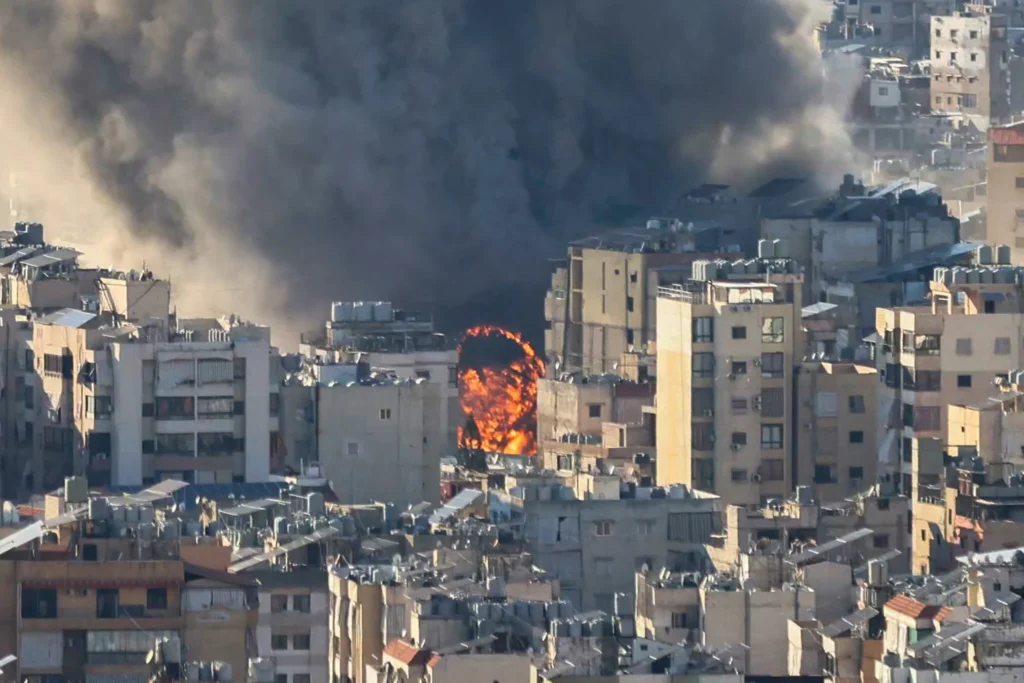
Iran launched a sweeping wave of missile and drone attacks across the Middle East on 28 February, striking locations where US forces are stationed. The barrage came hours after US Israeli strikes on Iranian targets. The immediate question in Washington was stark. Were any American servicemembers killed? According to the US military, the answer is no. No American Casualties Reported United States Central Command said it successfully defended against hundreds of incoming missiles and drones. In a statement, it confirmed there were no US casualties and no combat related injuries. Officials added that damage to installations was minimal and did not disrupt operations. Between 30,000 and 40,000 US troops are deployed across the region on any given day. The scale of the assault therefore raised serious concern about the potential human toll. Bahrain Fifth Fleet Targeted One of the most visible strikes hit near the headquarters of the United States Navy Fifth Fleet in Bahrain. Video verified by multiple outlets showed a missile landing close to the naval facility, sending smoke into the air. Bahraini authorities confirmed an attack on the area. The base plays a central role in US maritime operations in the Gulf. Al Udeid And Gulf Bases Under Fire Missiles were also fired at Al Udeid Air Base in Qatar, the forward headquarters of Central Command. Qatari officials said air defences intercepted the incoming projectiles. In Kuwait, Ali Al Salem Air Base came under attack. Three members of Kuwait’s armed forces sustained minor injuries from falling debris, though no US personnel were reported harmed. Explosions were heard near Al Dhafra Air Base in the United Arab Emirates. Erbil in Iraq, home to a US air facility, was also struck. Jordan reported intercepting missiles targeting areas near Muwaffaq al Salti Air Base. A Region On Edge The attacks extended across Kuwait, Saudi Arabia, Bahrain, Jordan, Qatar and the United Arab Emirates. Social media footage showed missiles streaking across night skies and air defence systems activating over urban centres. The Pentagon described the strikes as retaliation for US Israeli operations that targeted Iranian military infrastructure, including Revolutionary Guard command sites and missile launch facilities. Heavy Casualties Reported In Iran While US forces reported no fatalities, Iranian state media said more than 200 people were killed and over 700 injured in strikes inside Iran. Among the dead were dozens reportedly at a girls’ school in the south of the country. The contrast is stark. US bases endured a coordinated assault but avoided loss of American life. Inside Iran, the human cost appears far higher. For now, the region remains on alert. Military installations are fortified. Air defences are active. Diplomacy is strained. The question is no longer only who was targeted. It is whether this exchange marks a contained episode or the opening chapter of a wider confrontation.
Oil Set to Surge as Iran Strikes Rattle Global Markets
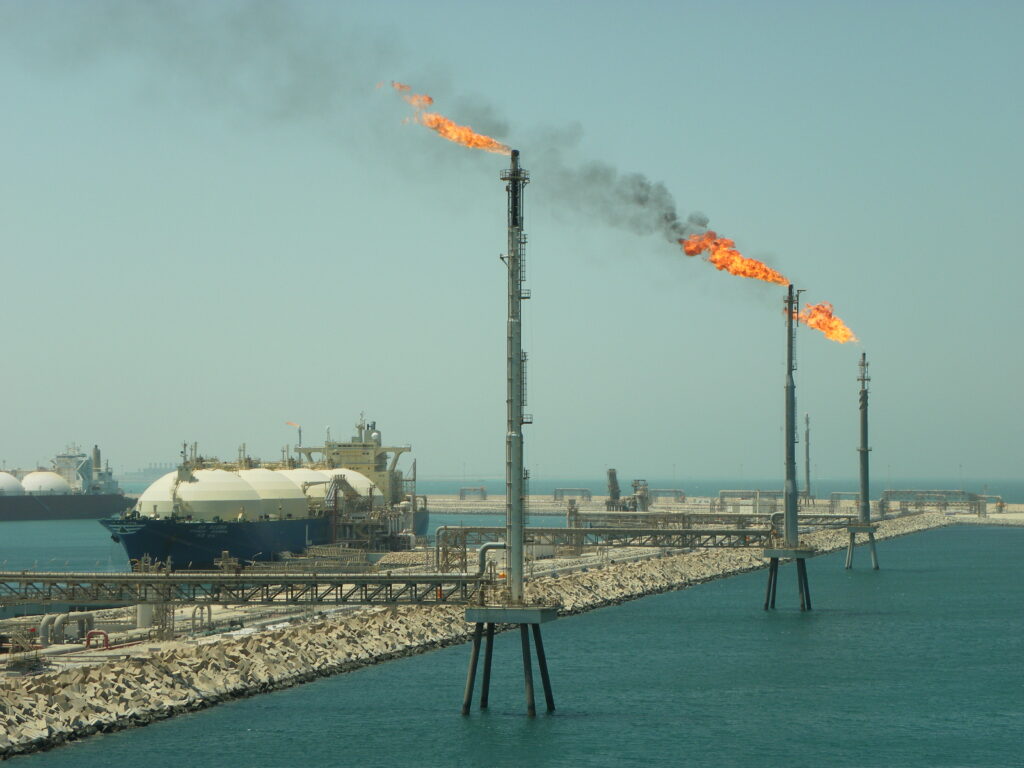
A sharp rise in oil prices looks increasingly likely as conflict involving Iran sends shockwaves through global energy markets. Traders are bracing for volatility after military escalation and the effective closure of the Strait of Hormuz, a vital artery for global oil supply. Early trading signals suggest a significant jump when markets reopen, with investors preparing for ripple effects across fuel costs, inflation and global equities. Strait of Hormuz at the Centre of the Storm At the heart of the crisis lies the Strait of Hormuz, through which roughly 20 per cent of global oil flows. Reports indicate Iranian forces warned vessels against transit, effectively halting traffic through the narrow waterway. Around 500 billion dollars worth of energy trade passes through the strait each year. Tankers carrying crude, liquefied natural gas and refined products have reportedly anchored offshore, waiting for clarity amid rising insurance costs and security fears. Even partial disruption threatens to choke supply chains, with knock on effects for fertilisers, chemicals and food prices. Oil Prices Poised for a Sharp Climb Weekend market data from broker IG suggests US crude could surge by as much as 11 per cent. That would push prices above 74 dollars a barrel, the highest level since mid 2025. Analysts at Barclays believe prices could climb towards 80 dollars if supply disruption deepens. Meanwhile, strategists at Royal Bank of Canada warn that 100 dollar oil is no longer unthinkable under prolonged escalation. A surge in crude typically feeds directly into pump prices. In the UK, the AA has already flagged rising petrol costs, warning that geopolitical tensions may push fuel bills higher for households. Stock Markets Face a Jolt Equity markets are expected to react swiftly. London’s FTSE 100 is projected to open lower after hitting record highs last week. Investors are rotating into traditional safe havens such as gold and government bonds. Across the Gulf, market reactions have been immediate. Several regional exchanges fell sharply, while some countries halted trading entirely amid what officials described as exceptional circumstances. Shipping disruptions are compounding investor anxiety. Ports across the region have suspended operations, while insurers are rapidly repricing maritime risk in the conflict zone. OPEC+ Attempts to Calm Markets In a bid to stabilise prices, OPEC+ agreed to raise output by more than expected in April. The increase of 206,000 barrels per day aims to offset supply fears. Yet the effectiveness of the move remains uncertain. Much of the group’s spare capacity sits with major Gulf producers such as Saudi Arabia and the United Arab Emirates. Both rely heavily on Gulf shipping routes now under strain. Even if production rises, transporting additional barrels may prove difficult until maritime security improves. Shipping and Insurance Risks Rise Attacks on vessels in the region have already been reported, pushing war insurance premiums sharply higher. The UN’s maritime safety body has urged ships to avoid affected waters, underlining the seriousness of the threat. Higher insurance costs and rerouted cargoes could disrupt global trade beyond energy markets, affecting manufacturing and commodity supply chains. A Broader Economic Threat The implications extend far beyond oil. Higher energy costs tend to drive inflation and squeeze consumer spending. Central banks may face renewed pressure as they balance growth concerns with persistent price risks. For motorists, businesses and governments alike, the coming weeks may prove decisive. If the strait remains constrained, the world could face a fresh energy shock at a time when many economies are already fragile. Markets will now watch one variable above all others. Whether the Strait of Hormuz reopens swiftly or remains a geopolitical choke point may determine the next phase of the global economic story.