
Competing as a Small Business in a Big-Player World

Neither small nor mid-sized companies were the focus when modern business was created. Instead, large corporations have large budgets for marketing and operations, hire the most talented professionals in their respective fields and have access to the best resources available. As a result, large corporations can easily experiment, make costly mistakes, learn from them and move on quickly. By contrast, many small businesses do not have this capability. However, small businesses do not struggle because they do not have enough talent or ambition. Instead, they struggle because of their limited access to resources. In many cases, small business owners have limited, if not no, access to information, systems and consultants that larger companies take advantage of. As a result, over time, this disparity between small and large firms will close, and therefore, small firms will be able to compete with the larger ones more effectively. The Real Gap Is Access, Not Skill Many small business owners possess as much capability as do the leaders of large companies. However, the main difference between the two is that most small business owners lack an ecosystem of support that allows them to make good business decisions. An ecosystem that supports small business owners includes: – Trustworthy consultants, – Proven systems and processes, – Networks with peers in which real-life experiences are shared. As a result, small business owners end up spending their time managing their day-to-day operations while simultaneously planning for their future success. The reality is that this leads to stress, slow growth and a lack of ability to take advantage of business opportunities. What small business owners truly need is access to the systems and knowledge that are already in place and have been proven to be successful. Utilising Technology In Small Incremental Steps Small businesses can take advantage of technology without having to spend large amounts of money. The best thing that a small business can do in order to use technology is to begin with small steps and progressively add on to their use of technology. Many common technologies are able to provide automation for small daily operations such as sending invoices, responding to customer enquiries, preparing simple reports, etc. AI-based technologies are available to help save time and improve service. The most important thing to consider in selecting the right software for use in any business is the fit of the technology into the existing systems because small incremental improvements can create a noticeable cumulative benefit over time. Establishing Systems To Support Company Growth Many successful businesses are unable to continue growing beyond their current level of operation because all decisions must be made by the owner. The establishment of clear systems will resolve this issue. Using written processes and simple project management systems and establishing a set of standards for operation creates an impact on business operation. When you have clear systems, it is easy to delegate responsibilities and tasks; therefore, a business can continue to grow and develop without the additional stress placed on the owner. Strong systems allow a business to turn chaos into order. Small businesses tend to only think in terms of current issues and challenges, while the most successful businesses allocate time to think ahead. A small company would benefit from spending just one hour per month developing a strategy to help identify current and future trends, create a plan for better decision-making, and minimise costly mistakes. By being proactive rather than reactive, planning ahead allows small companies to build their resilience and confidence in the midst of uncertain markets. The Benefits of Peer Learning No business leader can achieve success alone; all large corporations have boards of directors and use consultants in some way, whereas most small business owners are forced to work in relative isolation from one another. By connecting with other small business owners, they can share information about how to best address issues and provide each other with honest, unbiased feedback and accountability. Peer groups allow small business owners to be more efficient and effective in growing their business faster than if they operated alone. For more expert insights, practical business strategies, and leadership stories, visit👉 https://thebusinesstycoonmagazine.com/
Iran Protests Spread Amid Economic Crisis

As a result of rising prices, high inflation, and the depreciating Iranian currency (the rial), there have been widespread protests across Iran. The latest reports show there have been at least six fatalities, and these include both protestors and police officers. It is the first instance of fatalities in connection to these protests, which could mean a more severe response by the Iranian regime in future protests. Although protests have subsided in Tehran, protests throughout Iran have gained momentum in smaller towns and rural regions. The Lur people make up a majority of the population in many of these regions, and they have been particularly impacted by the shared economic crisis faced by all segments of Iranian society. Violence Reported in Several Cities Reports of violence have surrounded many of the protests that have continued into today. The most significant level of unrest has been reported in Azna, located in Lorestan province. A video circulating on social media showed evidence (fire) in the streets, and the sounds of gunfire can be heard in the same videos along with crowds chanting slogans directed at officials. The semi-official news agency, ILNA, has reported three deaths during the protests that took place in Azna; however, reports from the state-run media provide limited information. In Lordegan, another town experiencing violent protests, videos circulating on social media show people congregating in the street while the sound of gunfire is audible in the background. Reports from various human rights organisations have reported that two persons have died during clashes with security officers. Photos taken in Lordegan show police officers wearing body armour. Death of a Paramilitary Individual In Kouhdasht, a protest caused the assassination of a 21-year-old member of Iran’s Basij paramilitary group. State-run media sources contend that from the riotous crowds came the murder; even multiple law enforcement officials, as well as Basij members, sustained injuries during the protest. Local authorities indicated that about 20 individuals had been arrested during the demonstrations and declared, “Order in the area has been restored.” Authorities claimed that the major instigators behind the protests were economic conditions, while also noting that many of the people protesting were influenced by events outside of Iran. Competitive Pressure on the Economy Economic pressure continues to create a tremendous amount of uncertainty in developing countries like Iran. Since the way that the economy is structured, the base currency of Iran (or riyal) has lost a tremendous amount of value. Currently, the exchange rate of $1 is about 1.4 million riyals. In addition, as a result of inflation and rising unemployment, many working-and-poor individuals in Iran have difficulty meeting daily needs. President Masoud Pezeshkian confirmed that economic issues are, in fact, the principal motivation for the protests. He indicated that the Iranian government must address citizens’ concerns but that the Iranian government has limited resources available to remedy the situation due to the effects of sanctions and a lack of available funding. Iran has entered a period of growing uncertainty. While protests are not taking place across all of Iran as they were in 2022, these demonstrations in Kouhdasht mark the largest protests to occur in Iran since that time. Consequently, as economic pressures continue to increase in Iran and citizens have not seen any decrease in tensions in the past year, the general level of anxiety among citizens is increasing considerably with respect to their future. For in-depth analysis and the latest updates on global political and economic developments, visit👉 https://thebusinesstycoonmagazine.com/
LinkedIn Marketing in 2026: New Tactics and Tools You Should Know

As of 2026, while LinkedIn was historically a social networking website targeting professionals, the platform has evolved into much more than this; today, many companies use LinkedIn as an essential tool for Marketing, generating leads and establishing trust in their brands through LinkedIn’s vast audience (over 1B users), which tend to be found on LinkedIn, has high purchasing power. Thus, LinkedIn is an increasingly important channel for businesses looking to reach B2B and B2C customers. What’s New in LinkedIn Marketing in 2026 One of the biggest changes on LinkedIn is the strong push toward video content. Video views have increased by 36 percent year over year, and short-form videos are growing faster than any other post type. LinkedIn now offers a full-screen video experience on mobile, a personalized video feed, and easy video editing through CapCut integration. LinkedIn has also introduced BrandLink, an upgraded video advertising program. This allows brands to run in-stream video ads before trusted publisher content and well-known creators. Early results show higher video completion rates, better engagement, and improved lead generation compared to traditional video ads. Smarter Ads and AI-Powered Tools Campaign Manager has received major upgrades in 2026. Marketers can now forecast reach and impressions before launching campaigns, duplicate high-performing ads, use dynamic UTMs, and access AI-powered performance insights. These tools help businesses spend their ad budgets more efficiently and measure results more accurately. LinkedIn is also using AI to improve content quality. New moderation systems review posts before they appear in feeds. Content that feels generic, copied, or low effort is pushed down, while original ideas, real expertise, and personal insights are rewarded with better reach. How to Build a Strong LinkedIn Marketing Strategy A successful LinkedIn strategy starts with clear goals. For many businesses, LinkedIn works best for B2B lead generation, brand authority, and relationship building. Understanding your audience through LinkedIn analytics and audience insights helps you create content that truly resonates. Optimizing your Company Page and leadership profiles is essential. Complete pages get more views, and active executive profiles help build trust. Your content should focus on sharing value, industry insights, lessons learned, and real stories rather than constant promotion. Best Practices That Work in 2026 LinkedIn’s algorithm now favors meaningful conversations over likes and shares. Posts that ask questions, encourage thoughtful comments, and share honest perspectives perform better. Short, human-sounding posts and early weekday publishing still deliver strong results. Most importantly, people want to connect with people. Highlighting employees, founders, and team members makes your brand more relatable. In 2026, successful LinkedIn marketing is built on authenticity, consistency, and real engagement.
FTAI Turns Old Aircraft Engines into Power for AI Data Centres
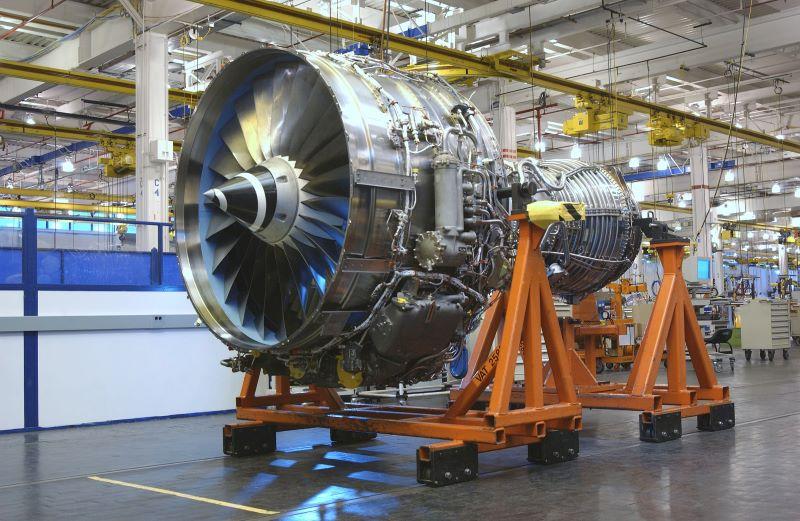
FTAI Aviation has started a new venture entitled FTAI Power, which will repurpose retired jet engines as electric generators in artificial intelligence service centres. The establishment of this new business venture underscores a considerable global growth in demand for energy to support ongoing expansion of artificial intelligence infrastructure. From Jet Engines to Electricity Generators The CFM56 aircraft engine has been chosen for repurposing by the company because it is one of the most widely used jet engines in the world and powers many of today’s most popular airplanes, including the Boeing 737 and Airbus A320. Since many older aircraft will be retired in coming years, numerous CFM56 engines will become available for repurposing after they are removed from the aircraft, even though they still have years remaining for continued service. The company will transform each of these engines into an aeroderivative gas turbine that can be used to provide electricity to larger Data Centers. Each engine will be converted to provide approximately 25 megawatts of power; this amount of energy is sufficient for powering AI servers that require high levels of energy consumption. Faster Power for a Growing AI Market Data-centre developers are facing one of their greatest challenges with slow grid connections in these regions. In many areas, it can take years for a company to receive the approvals and develop the networks for new power supplies. FTAI is providing a solution that provides a quicker means to address this issue. Due to the compact design and modular nature of FTAI’s aircraft-derived turbine technology, companies will be able to use these turbines in less time than using current industrial turbines. FTAI expects to produce its first turbines in 2026 and is anticipating that its scale will be greater than 100 units per year, which would create an annual potential of over 2.5 gigawatts of capacity. Strong Supply and Vertical Integration FTAI’s strategy is based upon both scale and ownership. Globally, there have been over 22,000 CFM56 engines produced and currently, FTAI has either an ownership stake or access rights to over 1,000 engines, which gives it an advantage in terms of supply chain and in terms of purchasing power. FTAI also operates more than one million square feet of maintenance facilities across the globe and has established several long-term supply contracts for parts with various manufacturers. Engines that are of no use for flight because they did not qualify due to fuel efficiency or emissions regulations can still be used as reliable stationary power sources; thus, they are being adapted to operate under more stable conditions. A Proven Trend with Investment Momentum FTAI is not the only firm in the aerospace-to-energy conversion arena. There are also several other firms such as ProEnergy who are currently converting retired Boeing 747 engines into power generation units that output approximately 48 megawatts. ProEnergy has purportedly sold more than one gigawatt of output to numerous data centre clients. With the increasing number of companies converting aircraft engines into electric generating sources, there is an obvious trend indicating that the aerospace and energy industries will converge over time. As a result of the rapid growth of artificial intelligence, aircraft engines no longer serve as merely aviation assets; instead, they will serve as reliable, long-term, sustainable energy sources for one of the world’s most fertile business sectors.