
Beth Galetti: The Amazon HR Leader Behind the Latest Global Layoffs

Who Is Beth Galetti? As senior vice president of people experience and technology at Amazon, Beth Galetti leads all aspects of human resources, as well as overseeing employee satisfaction and technology used by employees. This includes management of human resource systems, employee benefits plans, employee development, and internal technology platforms that facilitate the use of technology by a large number of employees around the world. Amazon’s Layoff Announcement According to Galetti, Amazon is going to eliminate approximately 16,000 jobs globally through corporate downsizing. This is the second round of corporate layoffs within a short period of time. The layoff rounds are part of Amazon’s effort to streamline its operations, which includes reducing unnecessary management layers. As outlined by Galetti, this change will allow Amazon to have more employee ownership, quicker decision-making and fewer internal bureaucracies. What the Layoffs Mean for Employees Galetti indicated through her communication to workers that impacted U.S. employees will be given 90 days to search for new positions within Amazon. Employees unable to secure a new position will receive severance payment and other forms of assistance. It states that the policies and procedures being implemented will help ensure fairness and allow for the company’s reorganisation to be more effective. Galetti’s Career Journey Beth Galetti was hired by Amazon in 2013 as a vice president of human resources. Before coming to Amazon, she worked at FedEx for approximately ten years in various senior director and senior manager positions related to technology and operations. Since joining Amazon, Beth has taken on more and more responsibilities and eventually attained the top HR leadership position in the company. Her Role Beyond Amazon Overseeing the HR systems and technology systems that support 1 million employees worldwide at Amazon is Galetti. She is responsible for many initiatives, including the employee development programme and the return-to-office policy. Galetti graduated from Lehigh University with a degree in engineering and received her MBA from Colorado Technical University. Galetti also serves on the Board of PATH, a global health nonprofit, and lives in Seattle with family members.
Big Tech vs Regulators: The Growing Battle Over Control
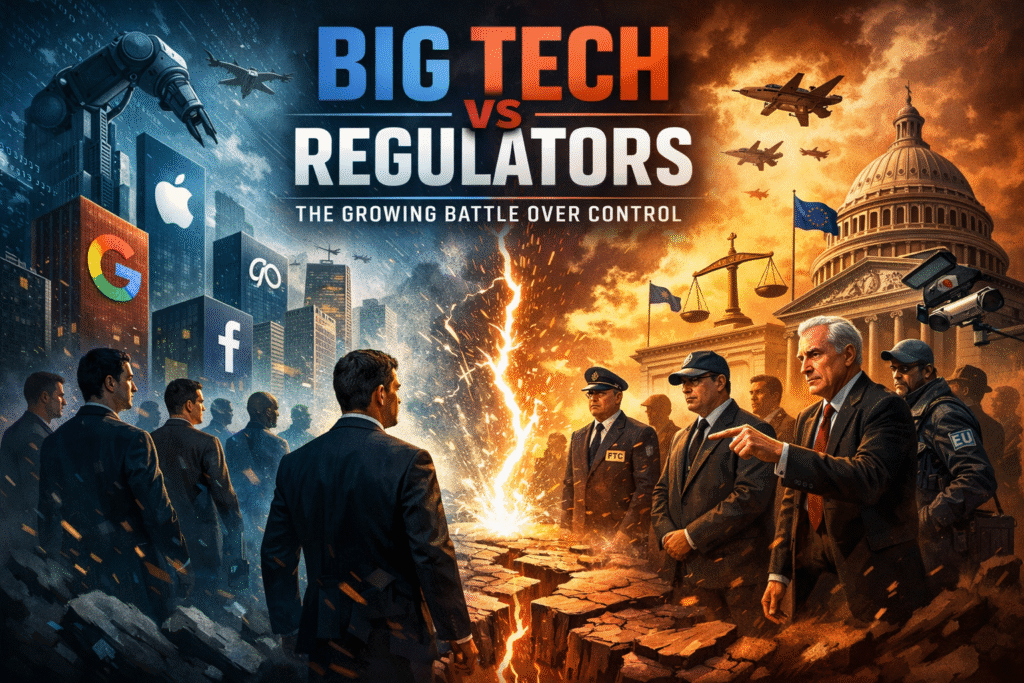
Large tech corporations are some of the most powerful entities in the world today. They include Google, Amazon, Meta, Apple, and Microsoft; they have changed how we shop, communicate, do our jobs, and think. As a result of their increasing power and influence, there is now a struggle between governments and regulators around the world regarding how much control large tech companies should have over the digital world. Why Governments Are Stepping In According to regulators, major technology firms currently dominate numerous sectors of the economy; therefore, they are preventing local start-ups from being able to thrive within their respective functionalities. In addition, government regulators want to ensure that consumers are being protected when it comes to their personal information and private information; thus, data privacy issues, online safety matters, false advertising and discriminatory business practices have become major focal points of regulatory initiatives, and therefore, new regulations are needed to not only protect consumers but also keep the market competitive. Big Tech’s Side of the Argument Large technology companies argue that if new regulation is implemented, innovation would be hindered. The technology giant asserts that many users choose their product based on price, availability, and ease of use but would not continue to do so if there was government control placed on those products because it may cause their digital service to be affected, in turn making those companies (and the United States) less globally competitive. In addition, many of the leaders of various technology companies believe that the current law is not reflective of the rapid evolution of the digital world. Key Areas of Conflict Conflicts are occurring primarily in two areas – data privacy and competition among companies via acquisitions. Governments are accusing tech companies of blocking their competition by acquiring their companies and utilising unfair behaviours. Furthermore, there is an increasing concern over the management of content. In this case, authorities are requesting tech companies take measures to monitor, regulate and control improper use of the internet as it relates to fake news and harmful content, whereas tech companies are concerned about having to circumvent past practices in their management of content and about how much responsibility will be placed upon them for free speech. Global Impact of New Rules Countries are taking unique paths; while Europe has placed restrictions on technology firms by instituting stringent rules, they have also launched several lawsuits against technology companies to enhance the level of behavioural scrutiny that applies to large technology firms. In India, for example, regulators are exploring various legal avenues related to data storage, domestic compliance, and fair competition in order for these standards to encourage the global modifications in how the industry conducts its day-to-day business. What This Means for the Future The battle of large technology firms versus government regulators is not over. With the advancement of technology, the emergence of new challenges continues. The outcome may ultimately determine the future of the internet, business creation and user rights. Finding the balance between freedom and control from each side will probably be the biggest challenge for both sides.
Breakthrough Medical Research That You May See in the Next Decade

There has never been a time when medical science has advanced faster than today. Revolutionary new treatments, improved diagnostic tools, and significant technological advances are just some of the exciting changes that will transform the way we approach prevention, diagnosis, and treatment over the next 10 years. Below are several of the exciting breakthroughs to expect in the future. 1. Gene Editing and CRISPR Advances The use of gene editing technology such as CRISPR-Cas9 has generated considerable media attention due to the promise it holds to change the way we treat DNA and thereby change the course of genetic disease. In the coming 10 years, scientists will continue to advance these technologies and develop methods to help eliminate diseases such as cystic fibrosis and sickle cell anemia, and perhaps some types of cancer, through greater accuracy and lessening the undesirable side effects of current treatment options. If successful, gene editing may soon offer patients with previously unmanageable illnesses a standard means for treating their conditions. 2. Personalized Medicine Data from patient care, which includes genetics, environments, and lifestyles, is used in personalized or precision medicine to customize the treatment a patient receives. The continued advancement of genomic science and the application of data analytics to these fields will allow for increased accessibility to personalized therapies within the next several years. The above example illustrates that the potential exists for the development of targeted therapies for a variety of conditions, including cancer, cardiovascular diseases (e.g., heart disease), and diabetes, which could allow for more specific and efficacious therapy selection without the usual trials and errors associated with traditional prescribing methods. 3. Artificial Intelligence in Diagnostics AI is changing how physicians identify and diagnose illness via machine learning algorithms through analyzing medical images, laboratory tests, and patient information quicker and often with greater precision than individuals. In the next ten years, AI may play an important role in improving the early identification of Alzheimer’s disease, lung cancer, and heart disease. With this increased accuracy in diagnosis, there is a high probability that millions of lives will be saved through early intervention. 4. Regenerative Medicine and Stem Cells Repairing or replacing damaged tissues & organs is the objective behind regenerative medicine. Stem cell-based therapy, bioengineered organs, and 3D-printed tissue all represent cutting-edge developments within this field of study. With the likely availability of heart regeneration, spinal cord injury repair, and rent tissue production scheduled for the next ten years, a new horizon appears to be approaching for many people who have experienced illness due to lack of proper care or have no access to a suitable replacement organ. 5. Advances in Immunotherapy The application of immunotherapy in the treatment of cancer has revolutionized the way in which cancer is treated and has created new ways to treat additional conditions such as autoimmune diseases, infections, and neurological disorders. In the next decade, as researchers continue to find more precise and targeted immunotherapy options, the treatments that they develop will likely be less toxic and more effective than current methods. 6. Longevity and Anti-Aging Research Science is increasingly focused on extending healthy lifespan. Research into senescence, cellular repair, and metabolic pathways may soon lead to therapies that slow aging and reduce age-related diseases. The next decade could bring medications or treatments that help people live longer, healthier lives while maintaining quality of life. 7. Telemedicine and Digital Health Innovations The COVID-19 pandemic accelerated the adoption of telemedicine, wearable devices, and remote monitoring tools. In the next ten years, these technologies will become more integrated and sophisticated, allowing doctors to monitor patient health in real time, predict illnesses, and provide care from anywhere. This shift will improve access to healthcare, particularly in remote or underserved regions. 8. Microbiome-Based Therapies Researchers are discovering that the human microbiome—the collection of microbes living in our bodies—plays a critical role in health. Future treatments may involve modifying gut bacteria to prevent or treat conditions like obesity, diabetes, autoimmune disorders, and even mental health issues. Microbiome-based therapies could revolutionize how we understand and maintain health. Conclusion The next decade promises a remarkable transformation in medicine. From gene editing and AI-powered diagnostics to regenerative therapies and anti-aging research, these breakthroughs could redefine healthcare as we know it. While challenges remain, including regulatory hurdles and ethical considerations, the future of medicine looks brighter than ever, offering hope to millions around the world.
US Signals Willingness to Talk with Iran

The United States has stated it is “open for business” if Iran wants to reach out, a US official said on Monday. This comes amid efforts by the US to pressure Tehran over its handling of nationwide protests. The official added that Iran “knows the terms” for talks with Washington. Trump Warns Iran The president of the United States, Donald Trump, has stated several times that he will not tolerate Iran hurting its citizens. He has also warned Iran that if it pursues nuclear weapons, the United States will take action. On Thursday, he stated that an armada was on its way to the region but hopes to avoid military action. He has been told that killings in Iran are decreasing and was also informed that there are no plans to execute prisoners currently. US Military Buildup in the Middle East Officials from two separate US agencies have verified via an article from the news agency Reuters that US military carriers and vessels have reached the Middle East. This new addition will allow President Obama to make new decisions when providing safety for American personnel or preparing to possibly attack and take action against the Iranian government. The United States has increased their presence throughout the Middle East in times when there are rising tensions in the region, in most cases, as a way to defend themselves. The United States has conducted substantial military build-ups in prior years prior to conducting airstrikes on Iranian nuclear development facilities (June 2019). Iran Responds Strongly Iran has indicated that it would treat any US assault as “a full-scale war.” On Friday, an Iranian diplomatic representative reiterated this statement as tensions exist between both nations. Context on Protests Previously Trump had warned the Iranian government about their actions, specifically targeting those participating in peaceful demonstrations. Now that the unrest has all but ceased, the United States continues to keep a watchful eye on what is happening and stands ready to assist, should further action be warranted. Diplomatic and Strategic Options US officials have indicated that Tehran is aware of the terms for any potential negotiations, implying that diplomatic channels remain open. The US approach appears to balance pressure with readiness to negotiate while keeping military options available as a precaution.
Rupee Falls to 92 Against US Dollar: What It Means for Your Daily Expenses and the Indian Economy

The value of India’s currency has reached its lowest value ever recorded (92 rupees for every dollar), and as of January 23rd has seen some strengthening back to 91.88 rupees. This continued decline has begun to impact families, businesses, and students as the prices of many everyday items have increased. This ongoing depreciation of the rupee is attributed to many factors, including foreign investors selling their holdings in Indian markets; weak domestic stock market performance due to global economic concerns; and the resulting capital flight towards the stronger US dollar. The rupee depreciation has been approximately 2% thus far in January and nearly 5% over the last year, demonstrating that there is continuing downward pressure on the currency. Imports Become More Expensive The weakening of the Indian Rupee means that it will cost Indians more rupees to buy the same amount of crude oil that is priced in US dollars, which raises the cost of importing crude oil and is a concern for India as 85% of India’s crude oil consumption comes from imports. When crude oil prices rise, so do gasoline, diesel, and transportation costs, and as a result, prices of food and other daily items increase. In addition to crude oil, India also imports electronics, coal, chemicals, machinery, fertilizer, gold, and edible oils. Thus, the rising price of crude oil will lead to increasing prices for products such as mobile phones, home appliances, cars, and electronic devices. Foreign Education and Travel Hit Hard International students will not only be burdened by rising costs I.E Tuition, Living & Accommodation but with everything paid on an annual basis they now have to exchange more funds from Indian Rupee to purchase USD, which ultimately will lead to higher overall expenditures. Furthermore, flights and travel have also increased as more conversions of INR -> USD are needed to pay for airfare, lodging, and other travelling costs. A Small Relief for Some Not everyone loses from a weaker rupee. Non-resident Indians (NRIs) benefit because money sent home converts into more rupees. This boosts remittances and supports many families. Exporters See Mixed Impact Exporters generally gain when the rupee weakens, as their goods become cheaper and more competitive globally. They also earn more rupees for every dollar received. However, sectors that rely heavily on imported raw materials — such as electronics, gems, and jewellery — may see profits reduced due to higher costs. Industries with lower import dependence, like textiles, may benefit more. The Road Ahead India’s imports recently rose to $63.55 billion, widening the trade deficit. Experts suggest that policymakers must carefully balance growth and inflation, while improving trade and currency strategies to protect the economy from further shocks. For now, the falling rupee means one thing for most Indians: higher costs at home and abroad.
How to Create a Unique Selling Proposition (USP) That Makes Your Business Stand Out

Customers are surrounded by endless choices. Every company claims to offer the best quality, the lowest prices, and excellent service. Because of this, it becomes difficult for buyers to decide which brand they should trust. If your business sounds the same as everyone else, customers may simply move on without noticing you. This is where a Unique Selling Proposition, commonly known as a USP, becomes essential. A clear and strong USP helps your business stand out, communicate value quickly, and give customers a strong reason to choose you over competitors. Understanding the Meaning of a USP The USP provides clarity on your business because this is a short, easy-to-read and understand phrase that defines how your business is different from other businesses and shows why your product or service is superior to the competition. This statement emphasises the unique benefits of your product or service and is based on everything that you can provide that no one else can. Rather than listing general “guarantee” promises, a USP focuses on specific benefits that are important to your customers. The USP will answer 3 primary questions: What do I have to offer? Who can benefit from my products and services? And how are my products and services the best option for my customers? When you know the answers to these questions, you will have a strong and memorable brand message. Why Every Business Needs a USP Lacking a unique selling proposition (USP), many companies will have trouble getting attention. Many companies invest time and resources in advertising but don’t convert visitors into customers because their message is unclear. A clearly articulated USP establishes customer confidence, as it gives customers exactly what they can expect from the business as it relates to their needs. A clearly defined USP improves marketing campaigns, strengthens branding, and generates higher sales by targeting a more relevant market. When customers see how they fit into the company’s value proposition, they will be more likely to purchase from the business again. A strong USP is essential to the growth of a business. Knowing Your Target Audience The first step in creating an effective USP is understanding your target audience. You must know who your customers are and what problems they face in their daily lives. When you understand their needs, challenges, and preferences, you can position your product as the perfect solution. For example, busy professionals may look for convenience and speed, while families may prefer affordability and reliability. Your USP should speak directly to these needs. When customers feel that your brand understands them, they naturally feel more connected to your business. Studying Your Competition After identifying your audience, it is important to study your competitors carefully. Observing what others are offering helps you discover gaps in the market. Many businesses repeat the same claims about quality or service, which makes them sound identical. By analysing their strengths and weaknesses, you can find opportunities to offer something better or different. Perhaps competitors deliver slowly, charge higher prices, or provide poor customer support. These weaknesses give you the chance to position your brand uniquely and create a USP that fills those gaps effectively. Identifying Your Core Strengths Once you know your customers and competitors, focus on your own strengths. Think about what your business does exceptionally well. It could be faster delivery, better technology, personalised service, or years of expertise. Sometimes, the smallest detail can become your biggest advantage. Customer feedback can also reveal hidden strengths, as people often mention what they appreciate most. By identifying these qualities, you can craft a message that highlights your true value. Concentrating on one or two strong points makes your USP clear and powerful rather than confusing. Writing a Clear and Memorable Statement When writing your USP, simplicity is key. Long or complicated sentences can weaken your message and make it hard to understand. Instead, use clear and direct language that focuses on benefits rather than features. Your statement should immediately show how customers will benefit from choosing your business. A short and memorable sentence is easier to communicate across websites, advertisements, and social media platforms. The goal is to create a message that stays in the customer’s mind and makes your brand easy to recognise. Testing and Refining Your USP Creating a USP is not a one-time task. As markets change and customer preferences evolve, your message may need adjustments. Testing different versions of your USP through marketing campaigns can help you understand which one performs better. Customer feedback and sales results provide valuable insights into whether your message is effective. Refining your USP over time ensures that it continues to stay relevant and impactful. Businesses that regularly improve their messaging often see stronger engagement and better results. Conclusion A unique selling proposition is more than just a tagline; it is the heart of your brand identity. It clearly communicates why your business deserves attention and how it solves customer problems better than anyone else. By understanding your audience, studying competitors, recognising your strengths, and crafting a simple message, you can create a USP that drives growth and builds loyalty. In a crowded marketplace, being different is not just helpful but necessary. A strong USP ensures that your business is remembered, trusted, and chosen every time.
Before You Launch an AI Startup, Read This: 7 Deadly Mistakes Founders Regret

Starting an AI-based company sounds exciting. Artificial intelligence is transforming industries like healthcare, finance, marketing, and e-commerce. Many founders jump into AI startups thinking technology alone will guarantee success. But reality is different. Building an AI company needs the right mix of business thinking, data strategy, ethics, and customer focus. Many promising AI startups fail not because the idea is bad, but because of avoidable mistakes made early on. If you are planning to build an AI-driven company, avoiding these common mistakes can save you time, money, and frustration. Mistake 1: Building Technology Without a Real Problem One of the biggest mistakes founders make is starting with technology instead of a real problem. Many AI startups focus on what their model can do rather than what customers actually need. AI should solve a clear pain point, not exist just because it sounds impressive. Before writing a single line of code, talk to potential users, understand their challenges, and confirm they are willing to pay for a solution. A problem-first approach gives your AI product real value and market demand. Mistake 2: Ignoring Data Quality and Availability AI systems are only as good as the data they learn from. Many startups assume data will be easy to collect or clean later. This is a costly assumption. Poor quality, biased, or incomplete data leads to inaccurate results and unreliable AI models. Before launching, founders must ensure they have access to sufficient, relevant, and legally usable data. Investing early in data collection, cleaning, and governance builds a strong foundation for long-term success. Mistake 3: Overestimating AI Capabilities Another common mistake is overpromising what AI can deliver. Some founders believe AI can replace human intelligence completely or work perfectly from day one. In reality, AI systems need training, testing, and continuous improvement. Unrealistic promises can damage trust with customers and investors. It is better to be transparent about limitations and show steady improvement over time. A realistic roadmap builds credibility and long-term relationships. Mistake 4: Not Having the Right Team An AI company needs more than just developers. Many startups fail because they hire only technical talent and ignore business, legal, and domain experts. A strong AI team includes data scientists, engineers, product managers, industry specialists, and ethical advisors. Business strategy, user experience, and compliance are just as important as algorithms. A balanced team ensures your AI solution is usable, scalable, and market-ready. Mistake 5: Ignoring Ethics, Privacy, and Compliance AI companies handle sensitive data, which makes ethics and compliance critical. Many startups delay thinking about data privacy, bias, and regulations until problems arise. This can lead to legal trouble, customer backlash, and reputational damage. Regulations like GDPR and data protection laws must be considered from the start. Building ethical AI practices early creates trust and protects your company as it grows. Mistake 6: Focusing Only on the Product, Not the Customer Some AI founders become so focused on improving models and accuracy that they forget about the user experience. Customers care about outcomes, not algorithms. If your AI tool is difficult to use or does not integrate with existing systems, adoption will suffer. Regular feedback, user testing, and simple design help ensure your AI product fits smoothly into real-world workflows. Mistake 7: Scaling Too Fast Without Validation Rapid scaling is tempting, especially when investors show interest. However, scaling an AI company without validating product-market fit is risky. Expanding too early can drain resources and amplify unresolved issues. Start small, test your solution in controlled environments, learn from feedback, and refine your model. Sustainable growth comes from proven value, not rushed expansion. Conclusion Setting up an AI-based company is both challenging and rewarding. Success depends not only on advanced technology but also on smart decisions made early in the journey. By avoiding these seven common mistakes, founders can build AI companies that are ethical, customer-focused, and scalable. A thoughtful approach helps turn AI innovation into real business impact.
Did Trump Confuse Greenland With Iceland During His Davos Speech?

President Donald Trump has again ignited a controversy after appearing, during his speech at the World Economic Forum in Davos, Switzerland, to confuse Greenland and Iceland for one another. His remarks followed several days of bold declarations where President Trump repeatedly stated that he wanted the United States to “own” Greenland, which is part of Denmark’s autonomous territories and member of NATO. Repeated Mentions of “Iceland” During Trump‘s speech in Davos, he made several references to Greenland as “Iceland.” He discussed supporting NATO and mentioned that several allied countries were upset with him when he brought up the topic of “Iceland.” At a different time, he commented that he wanted “a piece of ice” that had “significance for global peace and security.” He stated the word “Iceland” approximately four times throughout his comments while it was clear that he was referring to Greenland. Furthermore, Trump attempted to associate a downward trend on the stock market in America to the “Greenland situation” but continued to call it “Iceland.” He also stated that this situation already cost the United States money and added confusion to the situation. While both Iceland and Greenland are NATO members and adjacent to each other, they could not be more different. For example, Greenland is approximately 20 times larger than Iceland, and Greenland has its own distinct political relationship with Denmark. White House Steps In The mix-up was quickly pointed to by journalists and social media users. A post made by NewsNation reporter Libbey Dean led to an immediate and strong response from White House Press Secretary Karoline Leavitt, who claimed that Trump did not get anything mixed up, and that Trumps reference to “a piece of ice” was actually intentional. However, the post was subsequently community noted on X with a note explaining how Trump very clearly said “Iceland” several times while referring to Greenland, along with a link to the video of his speech. Administration Pushes Back The White House remains firm in support of President Trump despite the empanopolytic criticism directed at the administration’s response to the controversy regarding the president’s comments about wanting to buy Greenland for the United States. White House communications director Roger Taylor described Trump’s “important” address about national security interests in Greenland, stating the announcement made was part of a “framework” for a future U.S-Greenland agreement. Taylor suggested that, while the President was achieving results, the media and certain political commentators were concentrating on the “wrong” part of the address regarding the United States’ purchase of Greenland. The discussion over this event and other presidents’ comments about Greenland continues the current public discussion surrounding President Trump’s commitment to NATO and its alliances with the U.S.
How AI Is Changing Sales Strategies and Performance

The use of artificial intelligence by sales teams is growing rapidly. This is because AI provides sales professionals with a greater ability to understand customer needs and predict future purchase behaviour, allowing them to target and focus their efforts on the most profitable customers. Artificial intelligence can improve sales performance, create more effective sales strategies and, ultimately, improve a salesperson’s ability to perform successfully. What Is Artificial Intelligence in Sales? Artificial intelligence employs methods that enable machines to learn autonomously from experience. This use of AI as an intelligent assistant provides sales organisations with the ability to interact with potential customers more efficiently by keeping track of all previous communications and purchases made by those prospects. AI capabilities include predictive analytics, conversational interfaces, and content generation, all of which enable organisations to streamline daily sales activities. Why Sales Teams Need AI Today The competitive nature of sales has increased, and consumers are now very knowledgeable. Today, the majority of consumers utilise online/Internet resources to learn about products prior to speaking with a salesperson. Thanks to AI, teams of sales representatives can leverage technology to perform their jobs efficiently; this includes faster access to information, the ability to automate routine activities, and equipment for focusing on selling (closing) deals. By providing sales teams with up-to-date data, AI is reducing the time it takes to do an excellent job while also increasing their accuracy when it comes to forecasting, planning, etc. Improving Productivity and Forecasting AI eliminates many repetitive tasks, such as generating reports and data entry. By freeing up time for salespeople to concentrate on building strong customer relationships and converting leads into customers, AI enables sales teams to be more productive than ever before. The use of AI to analyse large amounts of data helps to generate superior sales predictions, enabling businesses to prepare for inevitable changes, such as market fluctuations, changes in consumer behaviour, or seasonal variations, thereby avoiding unpleasant surprises. Personalising Customer Experiences With AI, sales teams can analyse past customer interaction history to determine what their customers want. This enables salespeople to provide tailored communications with suggested products and contact customers at optimal times for each individual. Understanding customers generates positive feelings, builds trust and usually leads to increased sales. Smarter Sales Actions and Coaching AI is capable of evaluating sales calls and emails to determine effective and ineffective practices and provide data for managers to use for coaching and enhancing team productivity. Based on information obtained through the AI tool, the suggestions made by the AI will dictate the next best course of action that should occur to close a deal, such as when to contact a lead next, the information to send, etc. Challenges of Using AI in Sales Companies face many potential challenges when applying artificial intelligence in their business models. Some organisations have difficulty integrating artificial intelligence tools into their current operating environment. If data used for training purposes does not meet an acceptable level of quality, the level of effectiveness achieved by artificial intelligence will be impaired. There may also be privacy-based concerns with the artificial intelligence application, as well as employee reluctance due to uncertainty regarding the use of new technology. Appropriate employee training and effective communication regarding potential uses of artificial intelligence will alleviate these concerns. The Future of AI in Sales As we move towards 2026, Artificial Intelligence (AI) will become increasingly important for sales professionals. AI will not replace sales representatives but rather aid them within their existing roles. When used properly, AI provides sales teams with better tools for improving their customer relationships, providing a higher level of service, and producing improved sales results.
When a Credit Report Can Hurt Your Chances of Being Hired

A background check can be the deciding factor in whether someone gets hired or not, and many people looking for jobs don’t realise this. Employers can use different areas of a person’s background when looking at applicants’ backgrounds, but today less than half of all employers are allowed to check a candidate’s credit report as part of a background check. Employers are no longer permitted to view an applicant’s credit report because it can lead to unfair judgements based on financial problems. New Laws Limiting Credit Checks Recently, New York has become the 11th state to pass a law that prohibits most employers from using credit reports when they make hiring or promotion decisions. The effective date of this new law is April 18, 2023. In addition to New York, other states that have laws prohibiting this practice include California, Colorado, Connecticut, Hawaii, Illinois, Maryland, Nevada, Oregon, Vermont and Washington. Additionally, many cities and counties have passed local laws that restrict this practice. What makes New York’s law unique is that it has a much broader application. Individuals that reside in New York but apply for jobs in other states will continue to be protected under this new law. Because of the increasing number of restrictions against using credit reports, many national employers are choosing to stop using them altogether, even in states that still allow this practice. When Credit Reports Are Still Used Except for the above, employers may be prohibited from using a person’s credit report in an employment decision when the person is applying for a job or if the applicant already has a job. However, employers can still review credit reports of those applying for specific jobs. These job categories generally consist of government, law enforcement, national security, and any position requiring the handling of a company’s money or any other sensitive information. In banks and financial institutions, credit reports can only be used when applying for certain regulated positions. The premise for the risk associated with individuals under financial duress is that they may be at a higher risk for committing fraud or theft against the company. Although this is not true in every instance, it continues to be the basis for employers allowing background checks, including credit reports, for specific positions. What Employers Look For Credit issues alone aren’t typically a dealbreaker for employers. Rather, the employer will assess how serious or recent the credit issue is to determine whether to proceed with the applicant. Examples of serious credit issues include long-term overdue bills, being in collection accounts, and debts written off as bad debt, especially for positions involving financial accountability. On the contrary, an employer should typically disregard both medical debt and student loans as reasons for not hiring an applicant, unless the debts or loans would affect the applicant’s ability to perform the job functions related to those debts or loans. Furthermore, employers have a responsibility to explain to applicants the reasons why credit history is an important consideration in relation to the position they are applying for and not to make unfair or discriminatory employment decisions based upon an applicant’s credit history. How Job Seekers Can Protect Themselves If an employer is going to run a background check or pull a credit report, they must ask you for written consent, which is generally when you have received a job offer. It’s wise to review your credit reports regularly on your own so that you can identify any errors. An honest explanation of your situation is usually the most helpful if there are legitimate issues on your report. The more clearly you describe the circumstances, the less likely it is that there will be a misunderstanding about your situation. You have the right, under the law, to obtain a copy of your report and dispute any errors prior to the final hiring decision being completed.